





























The time loop is our modern Sisyphus myth. A digital-age damnation where the boulder is the day itself, rolled endlessly toward a tomorrow that never arrives. The “live, die, repeat” structure has become a reliable cinematic engine for everything from comedy to action, but this latest animated version of All You Need Is Kill dares to suggest something more unsettling. What if the loop isn’t the prison, but merely a reflection of the one we’ve already built for ourselves?
The premise is simple: a colossal, perhaps bored, alien plant named Darol has appeared on Earth. On the first anniversary of its arrival, a young tech, Rita, is killed by one of its monstrous spawn, only to wake up at the start of the same day. It’s a familiar setup, a temporal puzzle box. But this film is less interested in the box than in the person trapped inside it, using the infinite recursion not for spectacle alone, but as a scalpel to dissect a thoroughly modern soul.
Apocalypse as a Personal Problem
This telling smartly re-contextualizes the source material’s conflict, reflecting a uniquely 21st-century anxiety. This isn’t a planet-wide war with clear battle lines; it’s a localized infestation, a normalized crisis that humanity has learned to live with, much like we bracket out climate change or societal decay to get through the day.
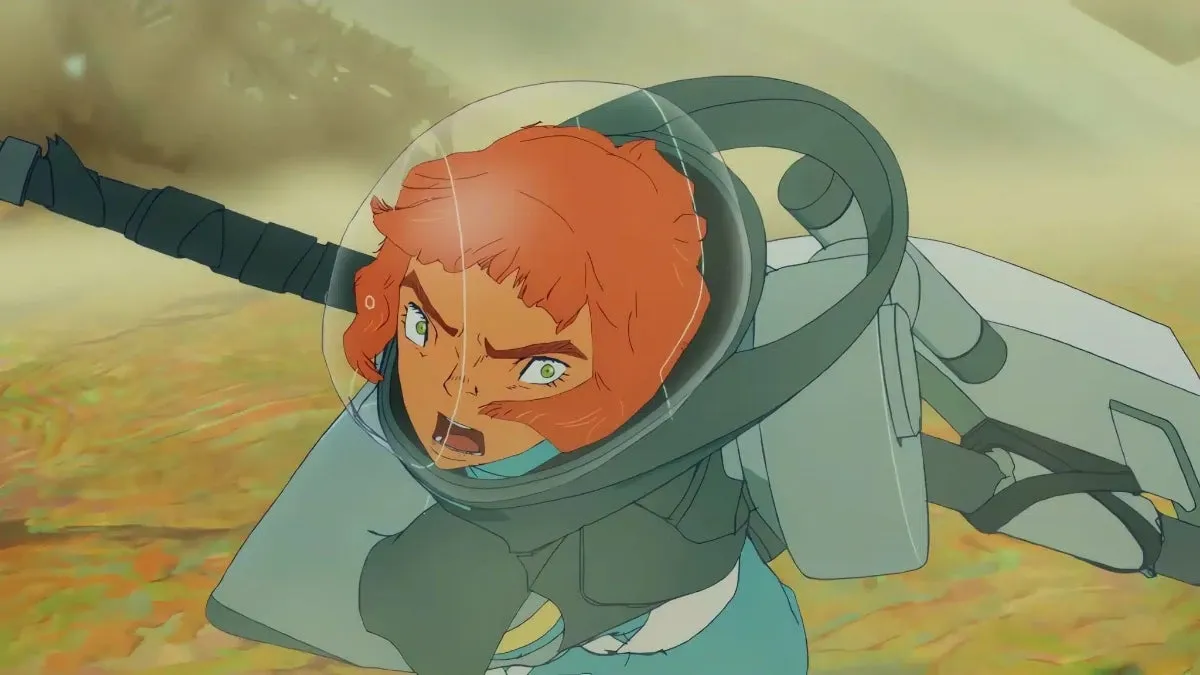
The apocalypse has been downsized, corporatized, and turned into a job. Our protagonist, Rita, is not a soldier destined for greatness but a civilian tech, a cog in the machine built to analyze the inexplicable. This shift is crucial. Her journey is not one of fulfilling a pre-written destiny but of forging a new self from the raw material of terror and repetition.
More importantly, the film posits that Rita was already trapped long before her first death. Her character is a vessel of contemporary ennui, defined by an unspoken trauma that has encased her in a profound isolation. This is a state of emotional stasis that the time loop only externalizes, making it a brutal, literal metaphor for her inability to move past her own history.
She is paralyzed by a past we never fully see, but whose effects are undeniable. The alien threat provides a tangible enemy, but her real struggle is against this internal inertia. By doing so, the film elevates a sci-fi trope into a powerful foundation for a character study about the monumental effort required to break one’s own damaging patterns.
A Fever Dream Rendered in Cel-Shade
The film’s appearance is a spectacle of controlled chaos, a visual philosophy that rejects photorealism for a more potent psychological truth. Studio 4°C, known for its delirious visual explorations in films like Tekkonkinkreet, has crafted a world that feels both tangible and deeply unreal.
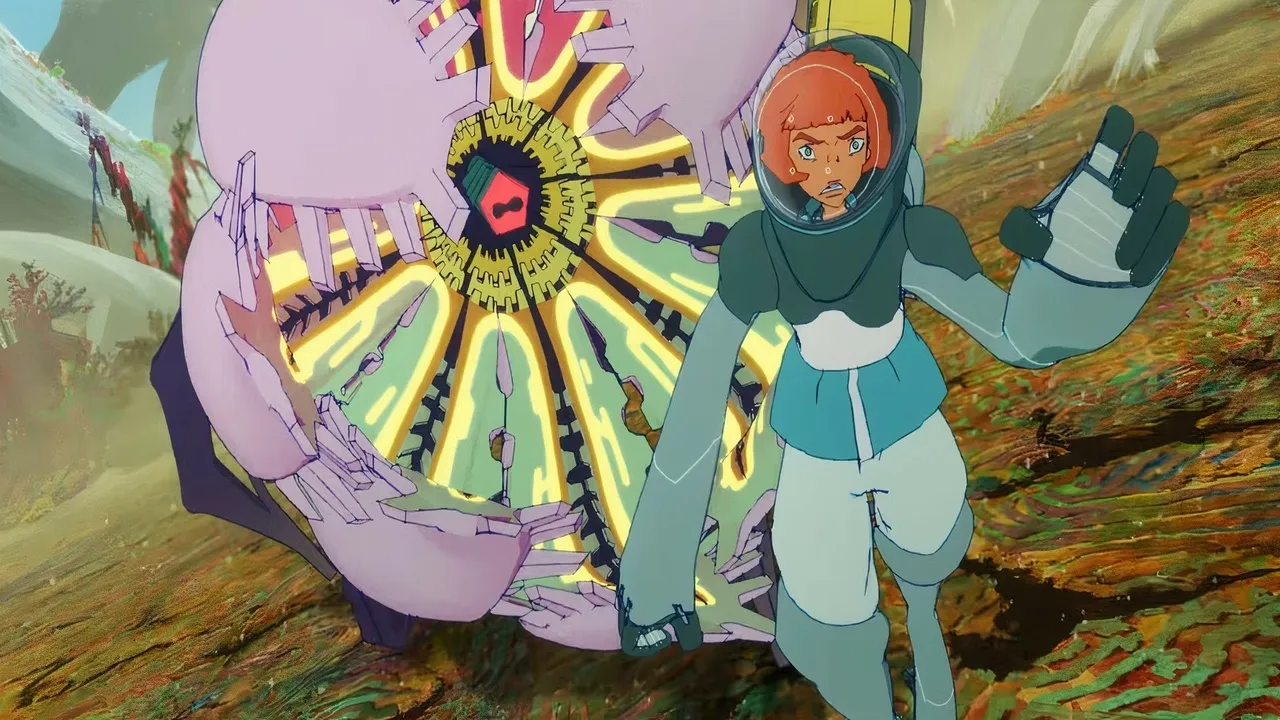
The aesthetic is a dizzying mixture of animation techniques; clean 3D models of characters and mechs are layered with scratchy, nervous linework that makes every frame hum with energy. The world is coated in an oil-slick color palette that shimmers with sickly beauty, representing a kind of beautiful corruption—a poison that is also mesmerizing, not unlike the grim comfort of the loop itself.
This visual language extends to every design choice, creating a coherent, hallucinatory universe. The Earth itself has mutated in response to Darol’s presence, and the mechanical suits the characters wear are bizarrely elegant, with elongated, insectoid limbs that feel more like organic extensions than industrial hardware.
This is not the gritty, functional machinery of Western sci-fi; it’s stranger, more ornate, and unsettling. This dazzling style is not mere decoration. It is the film’s thesis made visible, giving even quiet moments a sense of magnificent dread. The visuals perfectly mirror the protagonist’s fractured mental state and the beautiful, horrifying nature of her predicament.
Roguelike Catharsis
The path to self-actualization, it seems, is paved with countless deaths. The film leans heavily into a video game sensibility, transforming Rita’s struggle into a kind of roguelike catharsis. Each loop is a “run,” a chance to memorize enemy patterns, to perfect a movement, to get one inch closer to surviving the day.
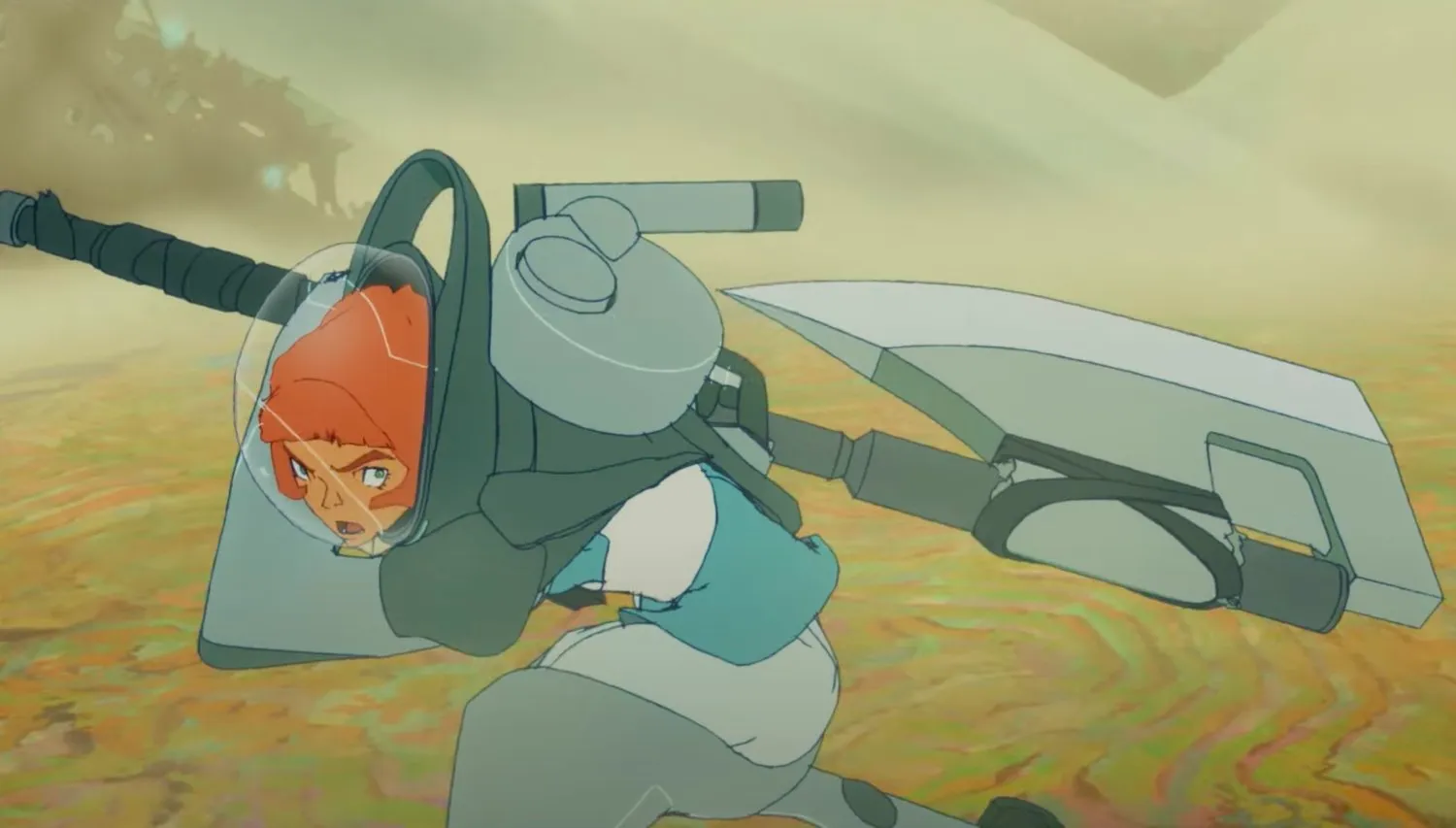
It’s a gamified version of Nietzsche’s eternal recurrence, but with an active, defiant twist: one doesn’t just accept fate, one masters it through brutal practice. The action is fluid and frighteningly fast, but it is the editing that truly captures her progression. The film masterfully splices together moments from different timelines—a step here, a dodge there, a killing blow from a dozen loops away—collapsing time to show her evolution from a stumbling victim to a confident warrior in a seamless montage of learned behavior.
This brutal training regimen finds its emotional anchor in Keiji, another soul caught in the same temporal web. Their shared circumstance forges a bond born of pure desperation, but it becomes something more. He is the necessary other, the external consciousness that validates her experience and prevents her from spiraling into complete solipsism.
Their relationship grounds the kinetic violence, acting as a dialectic that pulls Rita out of her internal monologue. It reminds us that the fight is not just to survive the next few hours, but to find a reason to want a tomorrow, a shared future. It is a shared fight against the abyss of meaningless repetition.
A Betrayal of Thesis
And then, after all this meticulous work, the film loses its nerve and self-sabotages. After spending the majority of its runtime building a powerful and resonant argument about a woman seizing agency in the face of cosmic indifference, the final act commits an unforgivable sin: it sidelines her.
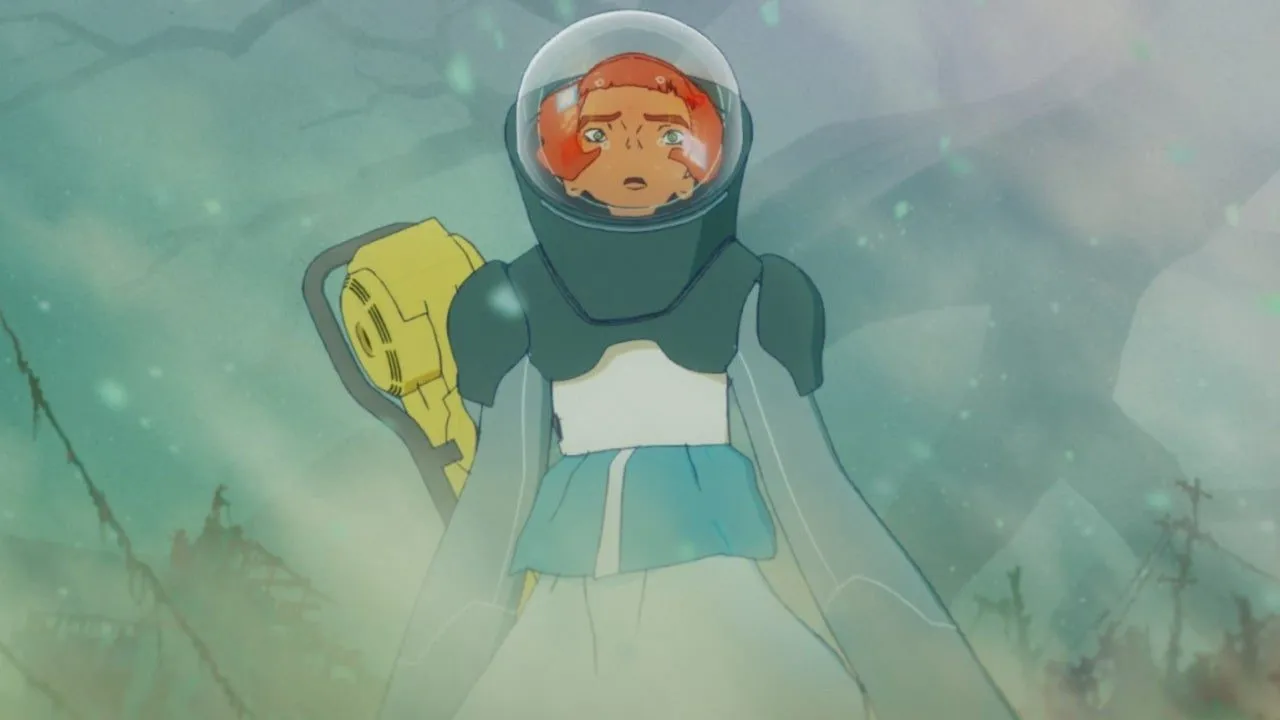
The plot, which had been so focused on her internal and external struggle, suddenly fractures into a series of abrupt, poorly justified twists that feel cheap and unearned. The narrative logic that governed the preceding hour simply dissolves.
The result is a thematic and intellectual collapse. At the most critical moment, the story wrenches the ultimate choice from Rita’s hands, making her a passive spectator to her own climax. It’s a shocking failure of conviction, exchanging a conclusion of profound, earned agency for a moment of hollow narrative surprise. This decision is not merely a weak plot point; it is a fundamental betrayal of the movie’s entire philosophical foundation.
An ending that should have been the powerful culmination of her painful journey is rendered emotionally inert, a hollow victory that feels both unearned and deeply dissatisfying. The film chooses to follow a more conventional, and frankly less interesting, path, leaving a scar on an otherwise brilliant piece of work.
All You Need Is Kill is an anime film adaptation based on the light novel of the same name by Hiroshi Sakurazaka. It was produced by Warner Bros. Japan with animation by Studio 4°C. The film premiered on June 9, 2025, at the Annecy International Animation Film Festival.
Full Credits
Director: Kenichiro Akimoto
Writers: Yuichiro Kido, Hiroshi Sakurazaka
Producers & Executive Producers: Eiko Tanaka, Noriko Dohi
Cast: Ai Mikami, Natsuki Hanae
Composer: Yasuhiro Maeda
The Review
All You Need Is Kill
A visually dazzling and intellectually ambitious film that spends two-thirds of its runtime building a profound study of trauma and agency, only to crumble under the weight of a catastrophic third act. Its breathtaking artistry and compelling character work are undeniable, but they are ultimately betrayed by a failure of narrative conviction. It's a beautiful, frustrating, and deeply flawed masterpiece that almost was.
PROS
- A stunning and psychologically resonant visual style that feels wholly unique.
- A deep, introspective character study of trauma, isolation, and self-actualization.
- An intelligent, action-packed execution of the time-loop mechanic as a tool for character growth.
CONS
- The narrative completely falls apart in a rushed and illogical final act.
- It abandons its protagonist's agency at the story's climax, undermining its core themes.
- The resolution feels emotionally hollow and unearned.