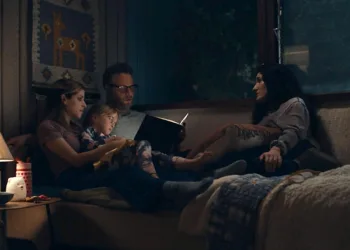























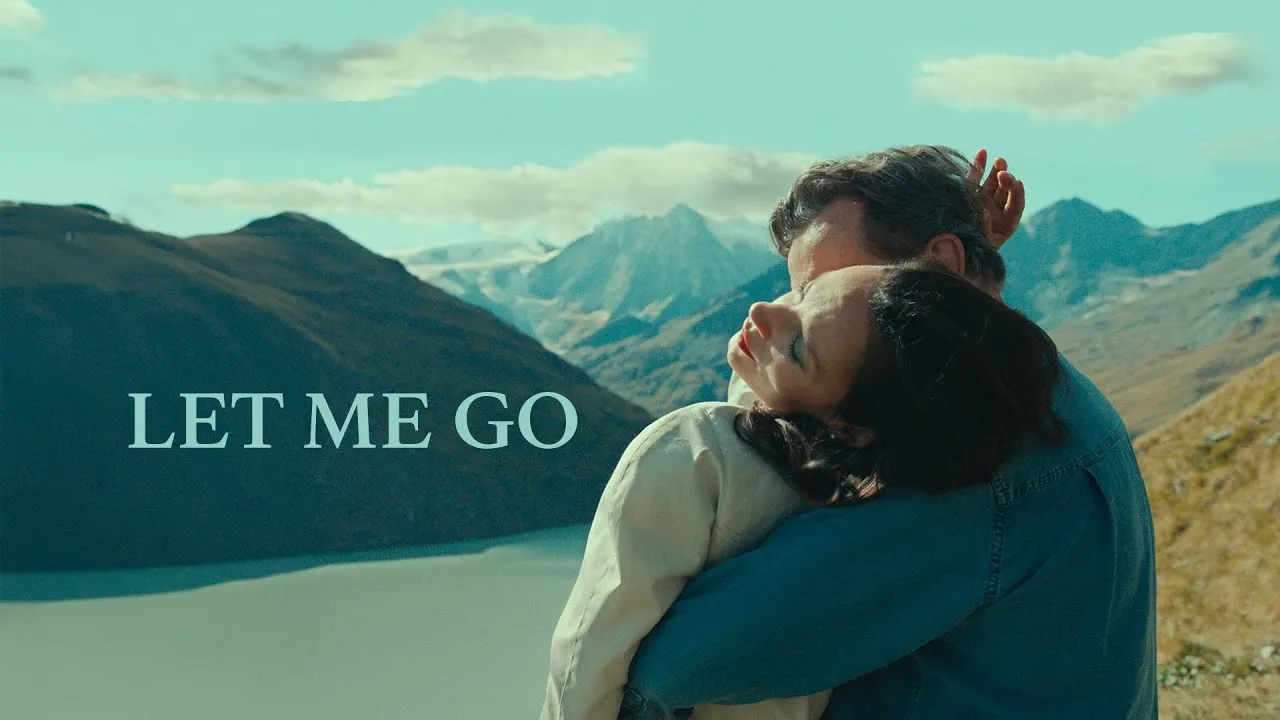

In a placid Swiss town, Claudine lives a life of immense precision. By trade, she is a seamstress, her days measured by the careful stitches she puts into garments for the local women. Her existence is anchored by her role as the sole caretaker for Baptiste, her adult son who lives with a disability.
This life is one of quiet, predictable rhythm. Yet, every Tuesday, this rhythm is deliberately broken. Claudine dresses with an understated elegance, takes a train, and then a tramway that ascends a mountain to a remote hotel. . Her purpose there is a peculiar, controlled transaction.
She seeks out brief, calculated encounters with male tourists, a part of her schedule as managed and impersonal as a business appointment. The film immediately establishes a quiet, observational distance, a chilly atmosphere that seems to emanate directly from Claudine herself.
The Architecture of Deception
The weekly excursions to the mountain hotel are not simple acts of impulse; they are carefully staged pieces of theater. Claudine’s method is that of a hunter: she identifies her target, men traveling alone, and confirms their departure is imminent. This precision guarantees the encounter remains a self-contained event with no emotional loose ends.
The atmosphere of these meetings is thick with a strange banality. There is no pretense of romance, only a direct, almost clinical, approach to a transaction that benefits both parties. She offers physical intimacy, and in return, she harvests stories. She probes for details about street life in Florence, the feel of the air in Hamburg, crafting a mental map of places her son will never see and a father he will never know.
This gathered intelligence becomes the thread she uses to weave her central fiction. As a seamstress, she spends her days mending fabrics for others; in this secret life, she stitches together a paternal narrative for Baptiste from the borrowed scraps of strangers’ lives. The letters she writes are artifacts of a profound paradox.
They are acts of immense maternal care, designed to insulate her son from the truth of his abandonment. They are also the chilling products of a woman so emotionally fortified against the world that her only way to express love is through a meticulous, calculated lie. The entire ritual serves as an intricate suit of armor, a sophisticated defense mechanism that allows her to manage a basic human need while ensuring her own heart remains untouched and invulnerable.
The Unscheduled Arrival
A system built on such rigid control is inherently vulnerable to the unpredictable. The disruption materializes not in the managed space of the hotel lobby, but through a chance encounter on a tramway. Michael, a journalist in town for a project, represents an element of pure serendipity in Claudine’s engineered world.
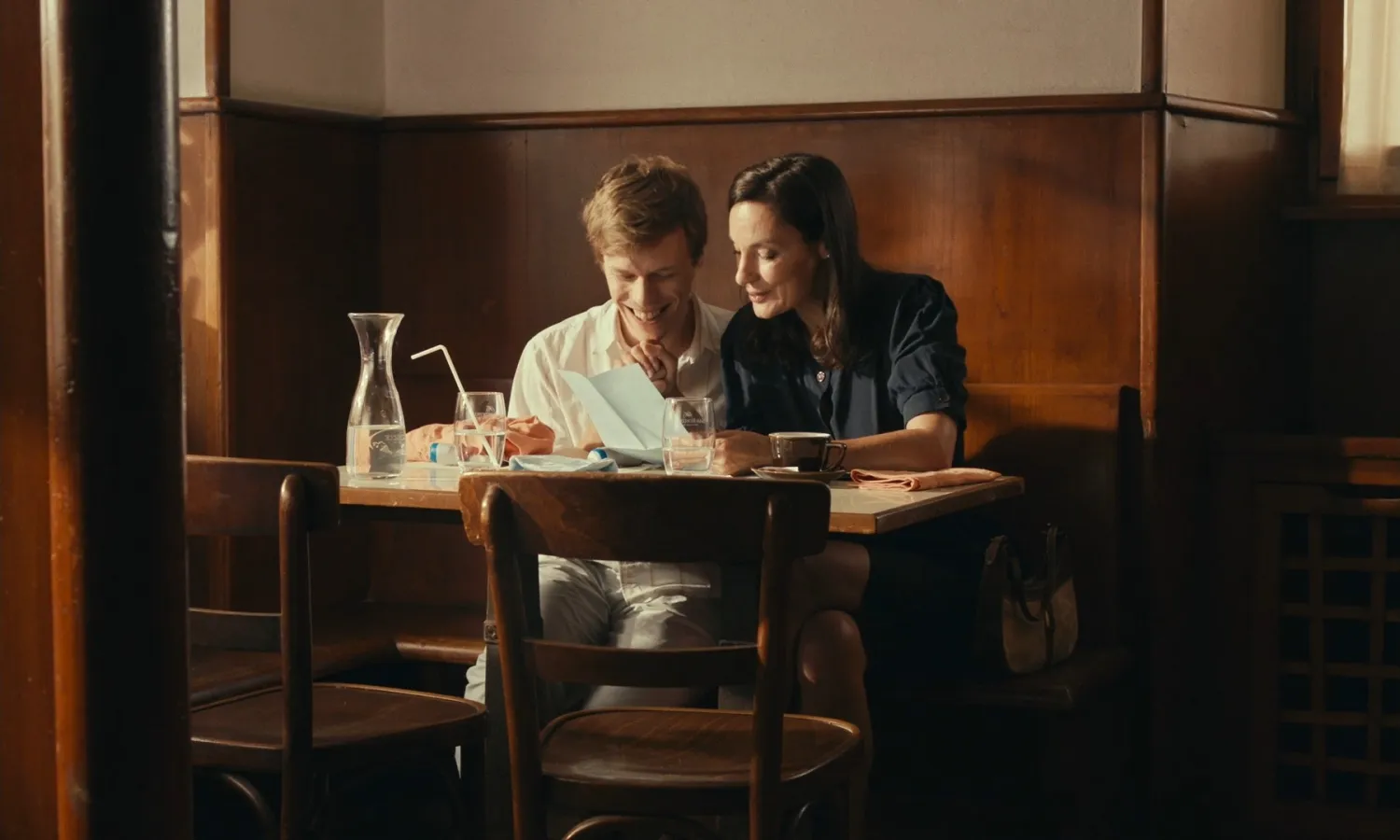
His approach lacks the familiar cadence of her targets; it is defined by a genuine curiosity that seems to look past the glamorous facade she presents. He is interested in her, not just the persona she projects for these fleeting moments. When he decides to extend his stay, with the explicit aim of seeing her again, he breaks the foundational rule of her system: transience. His choice to remain introduces a variable she cannot control.
His persistence acts as a solvent on her carefully constructed defenses. The internal conflict is not a quiet intellectual debate; it manifests in her actions. Her movements lose some of their clockwork precision, her composure shows hairline cracks, and her carefully managed schedule begins to fray.
For the first time in years, she is faced with the dizzying possibility of a shared future, a concept her entire adult life has been designed to prevent. This emotional awakening forces a practical and agonizing crisis.
A real relationship requires space, time, and an emotional availability she has never permitted herself. Suddenly, the abstract notion of Baptiste moving to a group home becomes a tangible, weighty decision. It presents a stark choice between a potential, terrifying personal freedom and the continuation of her sacred, all-consuming maternal duty.
A Portrait in Ice and Longing
The film’s weight is carried almost entirely by Jeanne Balibar, whose portrayal of Claudine is a masterclass in controlled turmoil. Her performance is intensely physical. She uses a rigid posture and deliberate, elegant gestures to build the character’s external shell, a perfect picture of continental poise. Yet, her face, often framed in close-up, becomes a landscape of warring emotions.
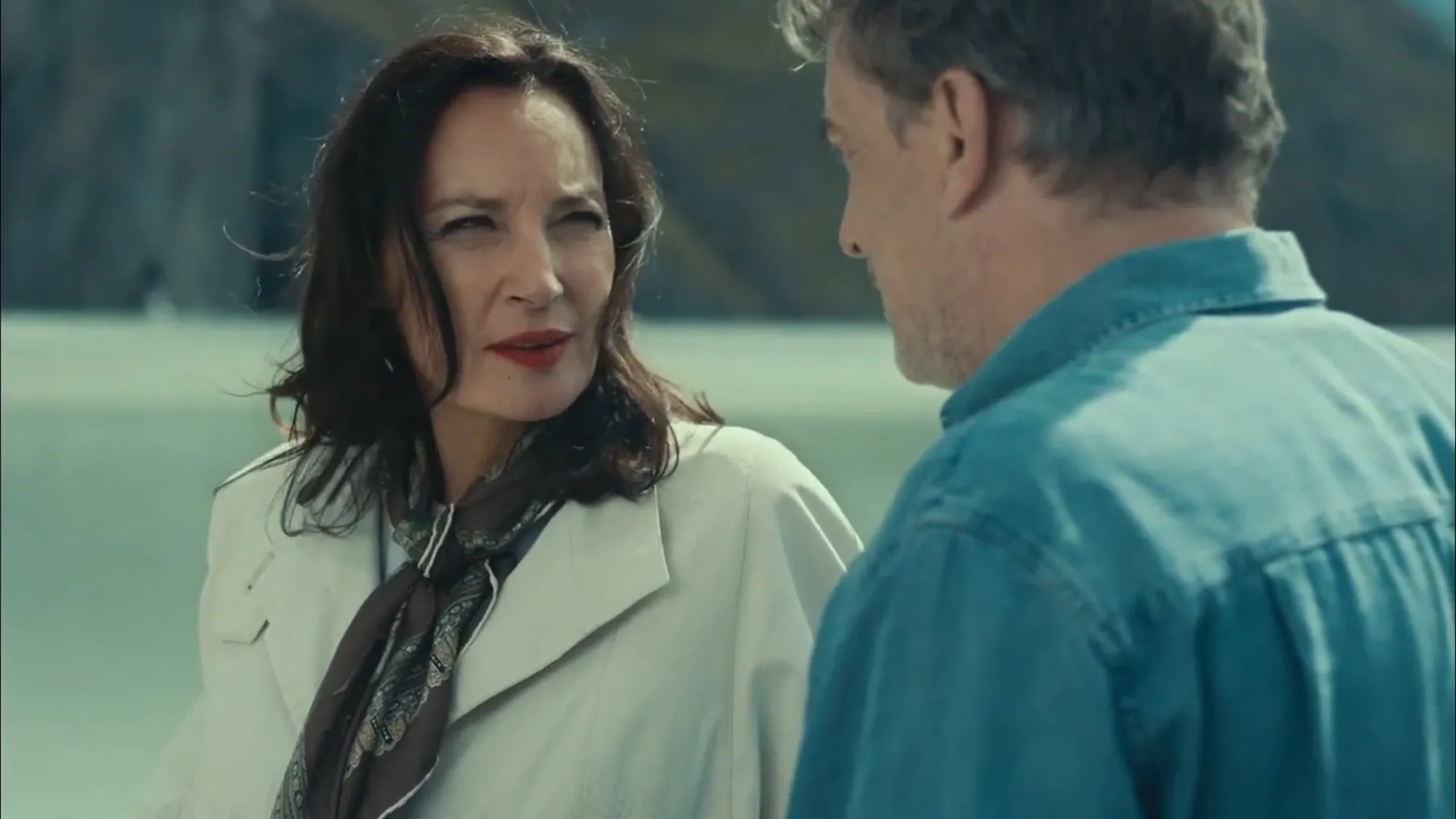
A flicker in her eyes or a subtle tension in her jaw reveals the deep well of longing and resentment churning beneath the icy surface. She embodies the film’s central contradiction: the glamorous, self-possessed woman in the trench coat and sunglasses is a phantom, a role she performs with practiced skill to navigate the world. .
Director Maxime Rappaz constructs a world that mirrors Claudine’s inner state. The late ’90s setting feels less like nostalgia and more like a time capsule, trapping Claudine in an era just before the digital age would have made her deceptions impossible. The visual style is polished and crisp, yet the color palette is cool and muted, imbuing every frame with a sense of emotional chill.
The majestic, imposing Swiss Alps are not a romantic backdrop; they are a beautiful prison, their scale emphasizing her profound isolation. The film’s meditative pacing invites observation, not judgment, allowing the audience to sit with the discomfort of her life. It wisely refuses a simple romantic resolution. Claudine’s final state is not one of magical escape. It is a quiet, painful confrontation with the life she has made, an acceptance of its intricate, unresolvable truths.
“Let Me Go” is a 2023 film that premiered at the Cannes Film Festival on May 20, 2023. “Let Me Go” can be streamed on Film Movement Plus, and is also available to rent or purchase on Apple TV.
Full Credits
Director: Maxime Rappaz
Writers: Maxime Rappaz, Florence Seyvos, Marion Vernoux
Producers: Gabriela Bussmann, Yan Decoppet
Cast: Jeanne Balibar, Thomas Sarbacher, Pierre-Antoine Dubey, Véronique Mermoud, Alexia Hébrard, Marie Probst, Yvette Théraulaz, Adrien Savigny
Director of Photography (Cinematographer): Benoît Dervaux
Editors: Caroline Detournay
Composer: Antoine Bodson
The Review
Let Me Go
A quiet and meticulously crafted character study, Let Me Go is anchored by a masterful performance from Jeanne Balibar. Director Maxime Rappaz captures a world of profound emotional isolation with a chilly, elegant precision. While its deliberate pacing and emotional distance may prove challenging, the film offers a powerful, unflinching look at the complex architecture of a single life. It is a haunting and intellectually rewarding piece of cinema that lingers long after the credits roll.
PROS
- A commanding and nuanced central performance by Jeanne Balibar.
- Atmospheric direction with a strong, cohesive visual style.
- A complex and thoughtful exploration of duty, desire, and identity.
- An intelligent script that avoids simple resolutions.
CONS
- The deliberate, meditative pace may feel slow to some viewers.
- Its emotional coolness and detached tone can create a barrier.
- A minimalist plot that may not satisfy those seeking conventional drama.