

























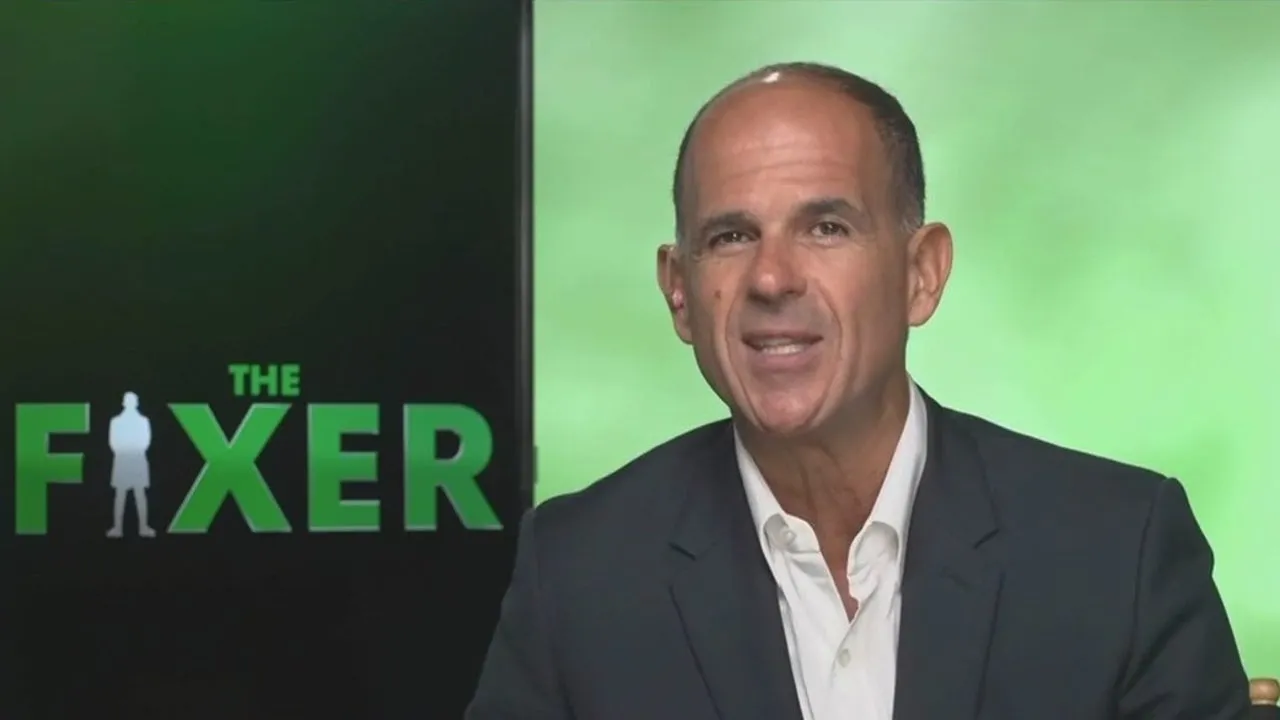

“The Fixer” brings billionaire entrepreneur Marcus Lemonis to network television in a familiar role: as a savior for small businesses on the brink. As the CEO of major companies like Camping World and Beyond, Lemonis applies his extensive experience to the problems plaguing local establishments across America.
Each episode presents him with a new company facing a crisis, from declining profits to dysfunctional leadership. He arrives not just as a consultant but as a potential investor, looking to diagnose the core issues that are holding a business back.
The show positions Lemonis as a blunt, no-nonsense operator whose goal is to cut through excuses and identify a path to profitability. He looks at every aspect of an operation, from the balance sheets to the personalities in charge, in his search for businesses worth saving.
The CEO and the Chaos
At the center of Marcus Lemonis’s universe is his deceptively simple mantra: “People, Process, Product.” This three-pronged fork is what he uses to poke and prod at every flailing enterprise, and it’s in the first of these—the People—where the show finds its most compelling, car-crash-adjacent drama.

The “Process” and “Product” are often straightforward problems of logistics and quality control, but the “People” are a glorious, tangled mess of ego, fear, generational baggage, and spectacular self-delusion. Lemonis operates as a business therapist whose couch happens to be a struggling retail floor. He understands that a faulty inventory system is easy to fix, but a faulty owner is a project.
We see this unfold with excruciating clarity at Perspirology, a trampoline gym concept from a married couple. One location is thriving; the second, in Middletown, New Jersey, is a cavernous, empty money pit losing $50,000 a year.
Lemonis walks into the depressingly gray and uninviting space and immediately targets the co-owner, Jason. With the calm demeanor of a man asking for the time, Lemonis lays out the grim math. Jason’s response is a masterclass in avoidance. He proudly declares he is “bad at math”—a statement that should be grounds for an immediate forfeiture of one’s LLC.
He seems more concerned with the Sisyphean task of washing and folding the gym’s towels than with basic metrics like customer retention, a number he does not know. Lemonis’s questioning is relentless and surgical. He doesn’t scream like some other television saviors. He just asks the next logical question, letting the owner’s ignorance hang in the air until it suffocates them. Jason isn’t just a bad businessman; he’s a man so terrified of the big picture that he’s retreated to the laundry room.
The same diagnostic rigor is applied to Jazz Audio, a Long Island car stereo shop that time forgot. The owner, Gene, presents himself in his pitch as a titan of aftermarket sound, boasting a profit of $450,000. Lemonis, intrigued, makes the trip and finds a business preserved in amber from 1998.
The displays are ancient, the inventory is gathering dust, and the process is whatever Gene feels like doing that day. Most damning are the “People.” His installation crew, men who have worked for him for decades, are shells of their former selves, worn down by Gene’s constant micromanaging and verbal lashings. Lemonis, who started his career doing similar work, connects with them instantly. He sees their skill and their pain.
He uncovers that Gene’s profit numbers were a work of fiction, a desperate lie to get the famous fixer in the door. Here, Lemonis the character becomes most defined: he is a walking P&L statement with a surprisingly sharp eye for the human cost of a badly run business.
The Blueprint Has a Few Cracks
For all the satisfaction of its diagnostic core, the show’s architecture is wobbly, built on a foundation of questionable reality TV conventions. Each episode kicks off in a cavernous, anonymous warehouse that looks like the world’s most depressing convention center. Here, a handful of businesses get a 90-second chance to pitch Lemonis.

The segment moves with the ruthless, impersonal efficiency of a casting director looking for a specific “type”: the Confidently Clueless, the Desperate Dreamer, or the Outright Deceiver. Businesses are dismissed with a speed that borders on whiplash, making one wonder if the selection process is based on sound financial opportunity or a producer’s keen sense for who will generate the most on-screen conflict. It’s a strange, tacked-on overture that feels less like due diligence and more like a contrived bake-off for dramatic potential.
Once a subject is chosen, the show finds its rhythm in the investigation, but the pacing collapses entirely in the final act. The last ten minutes are a frantic sprint through the resolution, a chaotic montage of deal negotiations, renovations, and follow-ups. The catharsis promised by the entire “fixer” genre is denied to the viewer. We are owed a satisfying reveal, a moment of transformation that justifies the emotional journey. Instead, “The Fixer” often delivers a shrug.
The big renovation at the Perspirology gym is a prime example of this narrative malpractice. The “after” shot is a masterclass in minimal effort, revealing a room that is identical to the “before” except for a change in the color of the mood lighting and the addition of neatly folded towels at each trampoline station. It’s the television equivalent of being told the “new you” simply involves better posture and a different shirt. The triumphant music swells, but the visuals whisper, “We ran out of time and budget.”
This rushed feeling extends to the investment itself. The moment Lemonis decides to write a check, which should be the episode’s climax, is treated as a piece of administrative cleanup. It happens at the very end, an anticlimax that feels more like a contractual obligation than a genuine partnership.
For a host whose previous television venture on another network was dogged by legal claims from past participants, this persistent lack of transparency about the deals is a glaring flaw. The check feels less like a capital injection and more like a prop in the episode’s final scene, handed over just before the director yells “cut.” Adding insult to injury is the painfully obvious product placement, inserted with all the grace of a pop-up ad in the middle of a drama.
Beyond the Balance Sheet
What could elevate this series from a competent procedural into something truly memorable is a story it consistently hints at but never dares to explore: Marcus Lemonis’s own. He occasionally mentions his personal history, noting that he was born in war-torn Beirut, Lebanon, and adopted by American parents. This fact hangs in the air, a ghost in the business-makeover machine.
He is the embodiment of a certain kind of American success story, one that begins elsewhere, forged in displacement and opportunity. This history creates a fascinating, unexamined tension when he confronts a third-generation business owner running his family’s legacy into the ground out of sheer apathy. Does his own journey, from an orphanage to a CEO’s chair, instill in him a lower tolerance for self-pity and entitlement? The show never asks.
The series loves to invoke the powerful, amorphous concept of the “American Dream.” It’s the fuel that supposedly drives every entrepreneur Lemonis meets. Yet the version of the dream presented here is strangely sanitized and incomplete. It’s a dream that seems to belong only to those who were born here, with the show sidestepping the most potent, modern incarnation of American entrepreneurship: the immigrant story.
By failing to meaningfully engage with its host’s own background, the show misses a chance to tell a much richer tale. Imagine an episode where Lemonis connects with a business owner over their shared experience of building a life from scratch in a new country. The advice could transcend profit margins and delve into navigating a new culture, overcoming prejudice, and the unique pressures that come with being the first in your family to build something lasting.
This personal dimension remains the show’s greatest underdeveloped asset. It is the difference between a series about fixing businesses and a series about what it truly means to build a life in America. “The Fixer” is an expert at diagnosing unhealthy companies, charting their pathologies with cold, hard numbers. But it seems unwilling to perform the same deep analysis on its own narrative soul. As it stands, the show knows how to balance a checkbook, but is it willing to check its own pulse?
The Fixer is a new FOX reality television series that premiered on July 18, 2025.
Full Credits
Producers and Executive Producers: Marcus Lemonis, Eli Holzman, Aaron Saidman, Rebekah Fry
Cast: Marcus Lemonis
The Review
The Fixer
"The Fixer" succeeds on the strength of its host, Marcus Lemonis, whose sharp business acumen and no-nonsense style create compelling television. However, the show is hampered by a clunky, rushed format and a frustrating refusal to explore the deeper, more personal story it hints at. It’s an entertaining watch for the moments of chaotic diagnosis but ultimately feels like a missed opportunity for something more substantial.
PROS
- Marcus Lemonis is a compelling and insightful host.
- The interactions with dysfunctional business owners provide genuine drama and entertainment.
- Offers a clear, digestible look at common business failures.
CONS
- The show's structure is uneven, with a rushed beginning and end.
- Renovations and resolutions feel superficial and unsatisfying.
- Fails to explore the richer narrative potential of its host's background.
- Product placement can be distracting and obvious.