









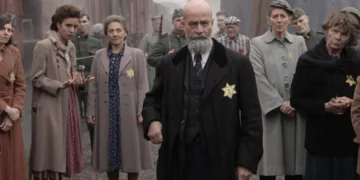

















The apocalypse, when it finally arrived, was not a bang but a gurgle. In the near-future of Hubert Davis’s The Well, the world’s water has become a clear and present poison, tainted by a virus that sentences its drinkers to a slow death. This global catastrophe is the backdrop for an intensely local story.
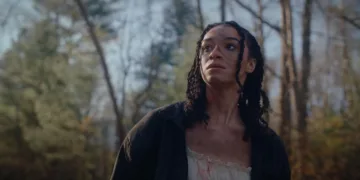
We meet a family—teenage Sarah (Shailyn Pierre-Dixon) and her parents, Paul (Arnold Pinnock) and Elisha (Joanne Boland)—who have positioned themselves as the luckiest, or perhaps most cursed, people on Earth. They are guardians of a secret, a deep well that miraculously provides clean, life-sustaining water.
Their existence is a quiet portrait of paranoia. The family homestead is ringed with tripwires and makeshift alarms, each bell a testament to their fear of discovery. They live in a state of suspended terror, knowing their liquid gold makes them a target. The outside world finally breaches their fortress with the arrival of an injured stranger.
Shortly after, their well’s filter—the very heart of their survival—fails. This mechanical breakdown forces Sarah from the nest, sending her on a mission into a world where a sip from the wrong stream is a death sentence. The stage is set not for an epic war, but for a somber examination of survival on a human scale.
The Aesthetics of Attrition
The film’s greatest strength is the world it builds, a place that feels less designed and more archeologically discovered. This is an apocalypse of tangible decay, a subgenre we might call “post-apocalyptic quietism.”
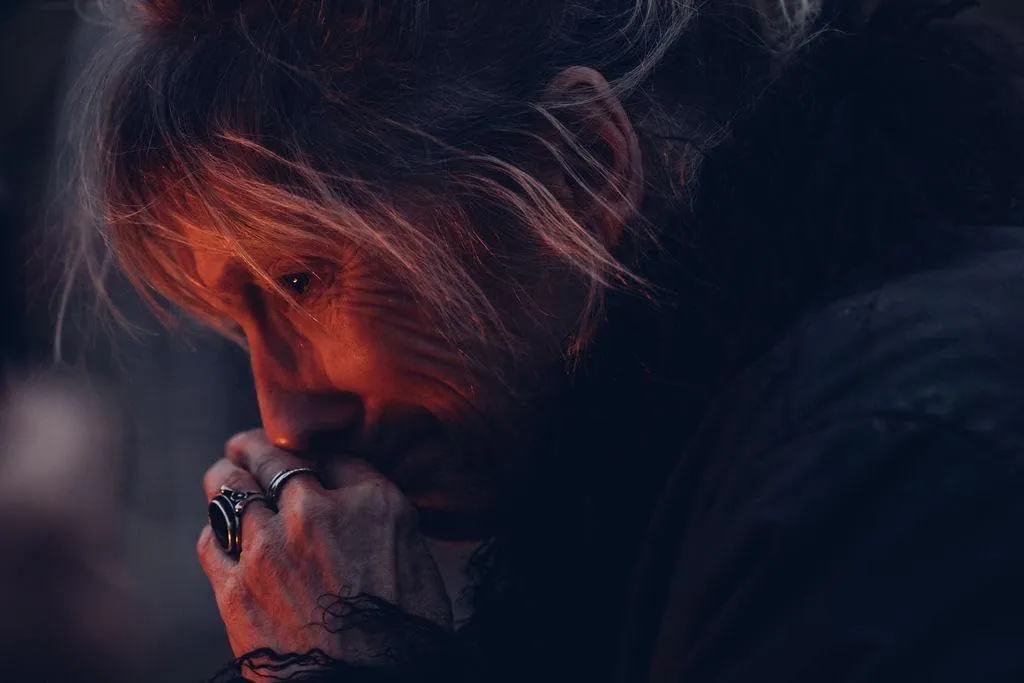
Cinematographer Stuart James Cameron paints with a palette of rust and rot, lingering on the skeletons of industry: forgotten CN rail cars oxidizing by the track, factories slumping into the earth, and riverbeds cracked like old pottery.
These are not just background details; they are silent monuments to the industrial hubris that birthed this disaster. The texture is so convincing you can almost smell the damp and metal dust. This is a world that ended with a whimper, its infrastructure simply left to expire from neglect.
Amid the ruin, nature stages a slow, patient coup. Autumnal forests appear to be consuming the evidence of human failure. This is not the angry, vengeful nature of other eco-thrillers, but something far more unnerving: an indifferent force simply reasserting its presence.
The details extend to the survivors. Their clothes are worn and practical, visibly mended with a care that speaks to a new, forced sustainability where nothing is disposable. Their homes are ad-hoc constructions of salvaged parts—a motor home bolted to a plastic shed—creating a lived-in authenticity that many bigger-budgeted films miss.
This commitment to a grounded, physical reality gives the story a powerful anchor. The environment is a character in itself, one that speaks volumes about the past without a single line of exposition. It is a beautifully rendered vision of what comes after.
A Tale of Two Tensions
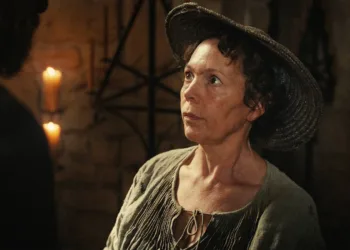
The film’s narrative engine, however, runs on two different speeds, one of which frequently stalls. Sarah’s primary quest to find a replacement part leads her to a small community run by Gabriel (a criminally underused Sheila McCarthy).
This is where the film’s dramatic pulse falters. Gabriel, the supposed antagonist, leads her tiny flock with the gentle charisma of a substitute teacher guiding a difficult class. Her cryptic philosophies and polite inquiries generate almost zero menace.
Her authority is a complete mystery, and her community seems less like a dangerous cult and more like a book club that has run out of wine. This lack of a compelling opposing force renders the central conflict philosophically flimsy and dramatically inert. The result is a main plot that drifts along like a lazy river, dangerously low on genuine stakes.
The film’s actual suspense is found entirely in its secondary plot. The father, Paul, consumed by a desperate need to find his daughter, gives the film its raw, beating heart. Arnold Pinnock’s performance is a masterclass in controlled panic; his face is a mask of fear and grim determination. He embodies a righteous, kinetic anger—a remnant of the old world’s instinct to do something—that the rest of the film lacks.
His frantic search through the desolate landscape provides the story with the propulsive energy and emotional weight the main plot is missing. This structural imbalance is the film’s biggest flaw; it asks us to invest our attention in a low-stakes fable while the far more gripping thriller unfolds in the periphery.
The Currency of Trust
The Well is ultimately less interested in the mechanics of survival than in its ethics, a focus that feels pointed in a world increasingly anxious about its own resources. The central question is not how to find water, but what happens to human decency in a world stripped bare. When institutions collapse, trust retracts to its smallest possible unit: the family.
The film’s drama emerges from the painful, necessary process of expanding that circle again. Here, trust is the scarcest resource, a commodity more precious and far more dangerous than the water itself. The well is not just a source of life; it is a secret, a burden, and a magnet for violence—the physical manifestation of the family’s isolation.
Director Hubert Davis, with his background in documentaries, sidesteps the grand spectacle typical of the genre. He applies a documentarian’s lens, finding drama in quiet observation. This explains both the film’s strengths (its potent authenticity) and its key weakness (its muted tension). It is a story about community, family, and the possibility of rebirth even after the world has ended.
The film’s final answer, delivered in its quiet, life-affirming closing scenes, seems to be a fragile yes to the question of whether goodness can persist. While its pulse is often faint, its thoughtful consideration of hope in a hopeless place offers a meaningful statement. It suggests the work of rebuilding begins not with filters and machines, but with a simple, terrifying act of faith in another person.
The Well premiered at the Fantasia Film Festival in Montreal on July 21st.
Full Credits
Director: Hubert Davis
Writers: Michael Capellupo, Kathleen Hepburn
Producers: Coral Aiken
Executive Producers: Damon D’Oliveira, Clement Virgo, Arnold Pinnock
Cast: Sheila McCarthy, Noah Lamanna, Natasha Mumba, Jim Carey, Shailyn Pierre-Dixon,
Director of Photography: Stuart James Cameron
The Review
The Well
The Well is a visually stunning piece of "post-apocalyptic quietism," boasting some of the most tangible world-building in recent memory and a fiercely compelling performance from Arnold Pinnock. Its thoughtful examination of trust is admirable. The film is hobbled, however, by a central plot starved of tension and an antagonist with no real menace. The experience is more intellectually stimulating than dramatically satisfying—a beautifully crafted container with not quite enough inside.
PROS
- Authentic and highly detailed post-apocalyptic world.
- A powerful and emotionally resonant performance by Arnold Pinnock.
- A timely premise that feels uncomfortably close to current global anxieties about resource scarcity.
- A reflective, human-scale story that ends on a note of hope.
CONS
- An underdeveloped and non-threatening primary antagonist.
- The main storyline suffers from slow pacing and a general lack of suspense.
- An imbalanced narrative where the secondary plot is much stronger than the main one.
- Some key characters and plot motivations feel under-explained.