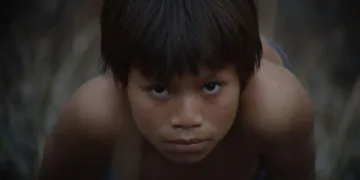


















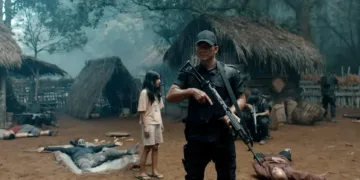









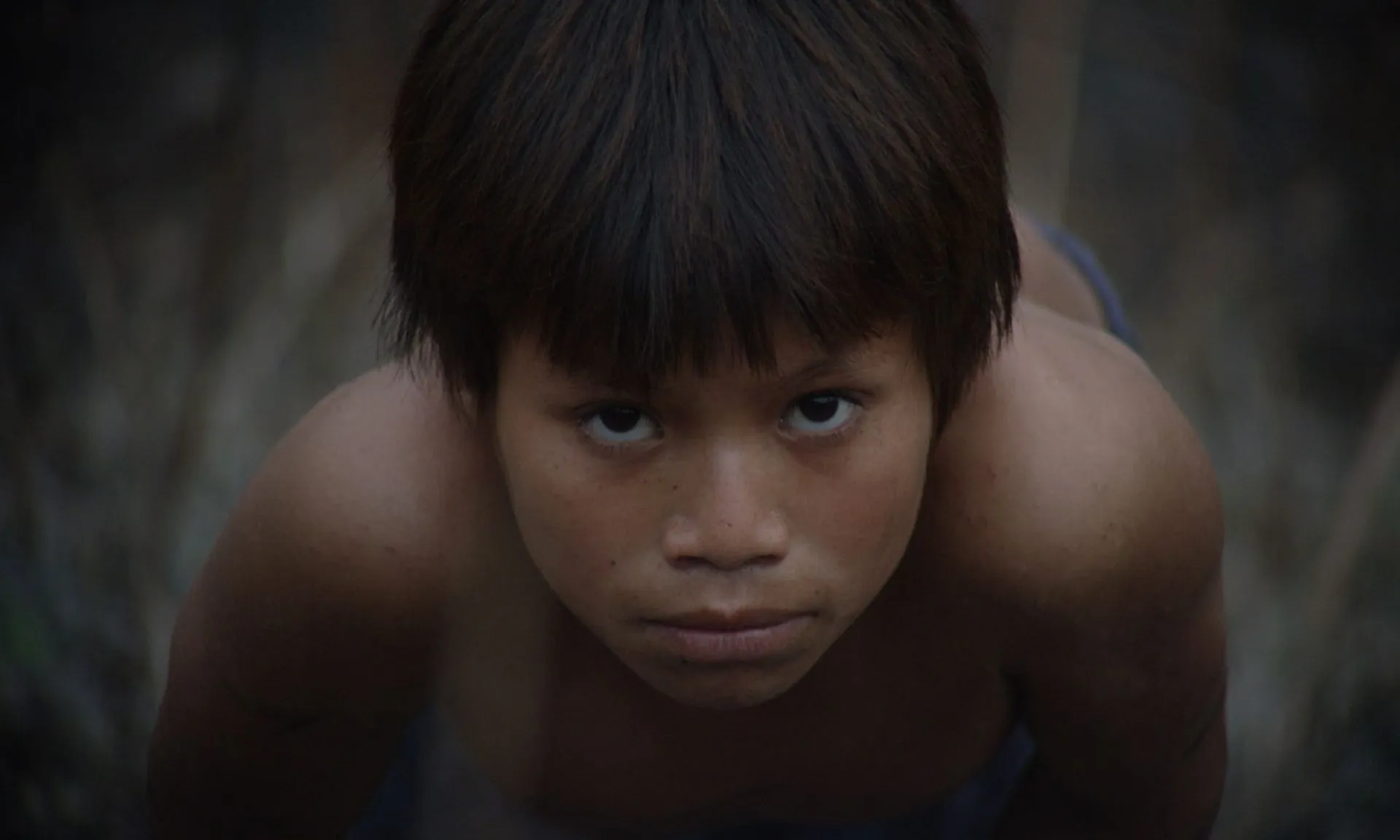

Canuto’s Transformation breathes the dense air of the Brazil–Argentina borderlands, home to the Mbyá-Guarani. This unhurried, intricate film, co-directed by Ariel Kuaray Ortega, a voice from within the community, and Ernesto de Carvalho, revolves around a single legend: the man named Canuto is said to have become a jaguar. The form confronts the viewer from the first moments.
The work mixes raw documentary, purposeful fiction, and staged re-enactment. It functions as a meta-documentary that records the legend and the collective labor of making the film. The camera remains steady and patient, attentive to daily rhythms and the slow current of oral history. It searches for a truth that hides beneath what sight offers, a truth that arrives like a murmur from the forest.
Myth, Memory, and the Human Animal
The problem of metamorphosis turns into a philosophical snare. Re-enactments loosen the knot between history and invention, opening a path where fictional form may carry a cultural truth. The film echoes jepotá, the Mbyá-Guarani idea of mysterious passage between human and animal.
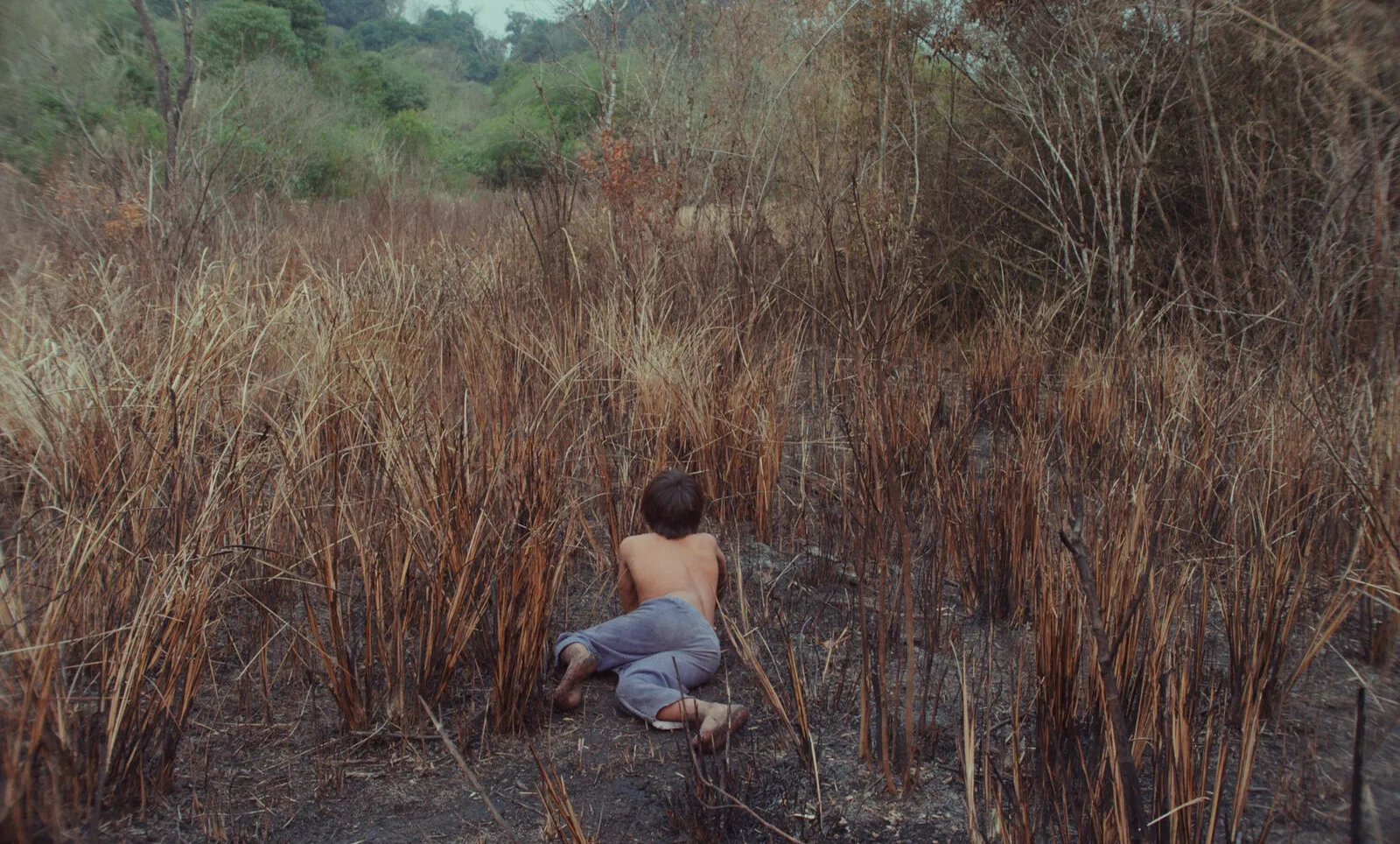
The story moves across several planes that keep shifting underfoot: the founding legend, intimate testimonies, staged sequences, and the seven-year record of making this work. A long shadow persists over these layers. The change that claims Canuto may point toward another disappearance in the era of the desaparecidos.
The myth can resemble a shelter assembled by a community to hold terror and grief. Sublime wonder and dread work side by side, and that tension powers the film, rooting its magic in a hard reality. Canuto’s fate, carried in communal memory, becomes a dark mirror for the human condition and a question that refuses to close.
Also Read






The Space of Decolonial Practice
Canuto’s Transformation operates as collective authorship and a decolonial practice shaped from within. Members of the Mbyá appear as actors, crew, and audience, watching rushes that return their lives and myths to them. The film speaks of an enduring struggle.

It names a fraught relationship with past military tyranny that laid claim to their lands. The argument is direct and present, concerned with life now and with histories of resistance. Romantic haze never appears. Religious practice and daily necessity arrive without softening.
A moment of sharp emblematic force comes with the discussion of a flimsy, award-winning community center designed by an external white architect. Villagers plan to dismantle it. The detail lands like a verdict, exposing a deep rift between outside design and lived reality. The work carves out its own ground against a long record of encroachment.
The Intimacy of the Gaze
The co-directors show a practiced sensitivity and guide an experiment that belongs to the Mbyá. The piece feels grown rather than manufactured, made by and for its subjects. Long, unbroken scenes and attentive cinematography invite an immersive presence, as if the viewer stood within the same space.
Ariel Ortega’s grandfather holds the moral weight of the film. His presence is grave and tender, his oral history carrying centuries of struggle. These testimonies form the most intimate passages here. The film also reveals its making. Ortega steps into the role of Canuto after deciding that his chosen actor could not meet the task.
The choice reads as a search for truth that passes through a body and a voice. What emerges is an intimate amplification of shared trauma and a fierce cultural legacy, spoken in the language of myth and made visible through patient observation. Uncertainty remains, as it should. The jaguar moves at the edge of the frame, and the question of transformation keeps breathing.
Canuto’s Transformation is a unique Brazilian film that blends documentary and fiction to explore a Mbyá-Guarani community’s legend. The movie premiered in 2023, notably winning the Best Film award in the Envision Competition at the International Documentary Film Festival Amsterdam (IDFA). It recounts the story of Canuto, a man from the community who is said to have suffered a transformation into a jaguar. The film also chronicles the collaborative process of the Mbyá people—including the co-director Ariel Kuaray Ortega—to re-enact and preserve this complex, generational tale. Information on a major theatrical distributor or wide streaming platform is currently not widely publicized, but it has screened on platforms like True Story (in certain regions) and at numerous international film festivals.
Credits
Title: Canuto’s Transformation (A Transformação de Canuto)
Distributor: Enquadramento Produções, Vídeo nas Aldeias, True Story
Release date: 2023 (World Premiere at IDFA)
Rating: 18 (CTBA)
Running time: 130 minutes, 131 minutes
Director: Ariel Kuaray Ortega, Ernesto de Carvalho
Writers: Ariel Kuaray Ortega, Ernesto de Carvalho, Miguel Antunes Ramos, Patrícia Ferreira, Ralf Ortega
Producers and Executive Producers: Leonardo Mecchi, Vincent Carelli, Ernesto de Carvalho
Cast: Fabricio “Álvaro” Benitez, Thiny Ramirez, Carla Benitez, Ariel Kuaray Ortega
Director of Photography (Cinematographer): Camila Freitas
Editors: Ernesto de Carvalho, Tatiana Almeida
Composer: Caio Domingues, Nicolau Domingues
The Review
Canuto’s Transformation
Canuto’s Transformation dissolves the rigid boundary between historical document and living myth. It is a profound, unhurried examination of identity, land, and the political shadows that demand a mystical explanation. The strange tale of a man becoming a jaguar speaks of deeper cultural wounds and the fierce resilience of communal memory. This film stands as a vital, self-authored testament to enduring Indigenous resistance.
PROS
- Achieves a powerful emotional core through the grandfather's oral history.
- Features a unique, challenging hybrid style of documentary and fiction.
- Thematic depth explores complex cultural concepts like jepotá and political trauma.
- Represents authentic community authorship and decolonial filmmaking practice.
- Offers an unflinching, non-romanticized view of Mbyá-Guarani life and struggle.
CONS
- The deliberately unhurried pace may challenge viewers accustomed to faster narratives.
- The multi-layered, ambiguous structure requires sustained analytical engagement.