

























![Kingdom Hearts Collection [I-III] Review](https://gazettely.com/wp-content/uploads/2026/10/Kingdom-Hearts-Collection-I-III-1-360x180.webp "Kingdom Hearts Collection [I-III] Review: KHII Holds Steady as Newer Entries Fluctuate 37")





Yves Montmayeur’s Sangre Del Toro presents an 85-minute portrait of Guillermo del Toro, a celebrated filmmaker whose work evokes the beautiful grotesque. The documentary moves with brisk concentration, stays with its subject, and sets aside the routine chorus of outside commentators.
Its aim is to sound the core passions and preoccupations that shape his cinema, a collage of guiding ideas rather than a career ledger. The camera observes del Toro at public appearances and in seated conversations, offering direct access to his reflections on horror, fantasy, and the human condition. Timed with the premiere of his Frankenstein project, the film opens a small door onto a mind that lives with the fantastic as daily weather.
A Cabinet of Foundational Horrors
The film plants its footing in del Toro’s exhibition “En Casa Con Mis Monstruos” in Guadalajara, where he moves through a private collection as a curator of his own interior. The structure follows themes and lines of influence, not a simple chronology of films.
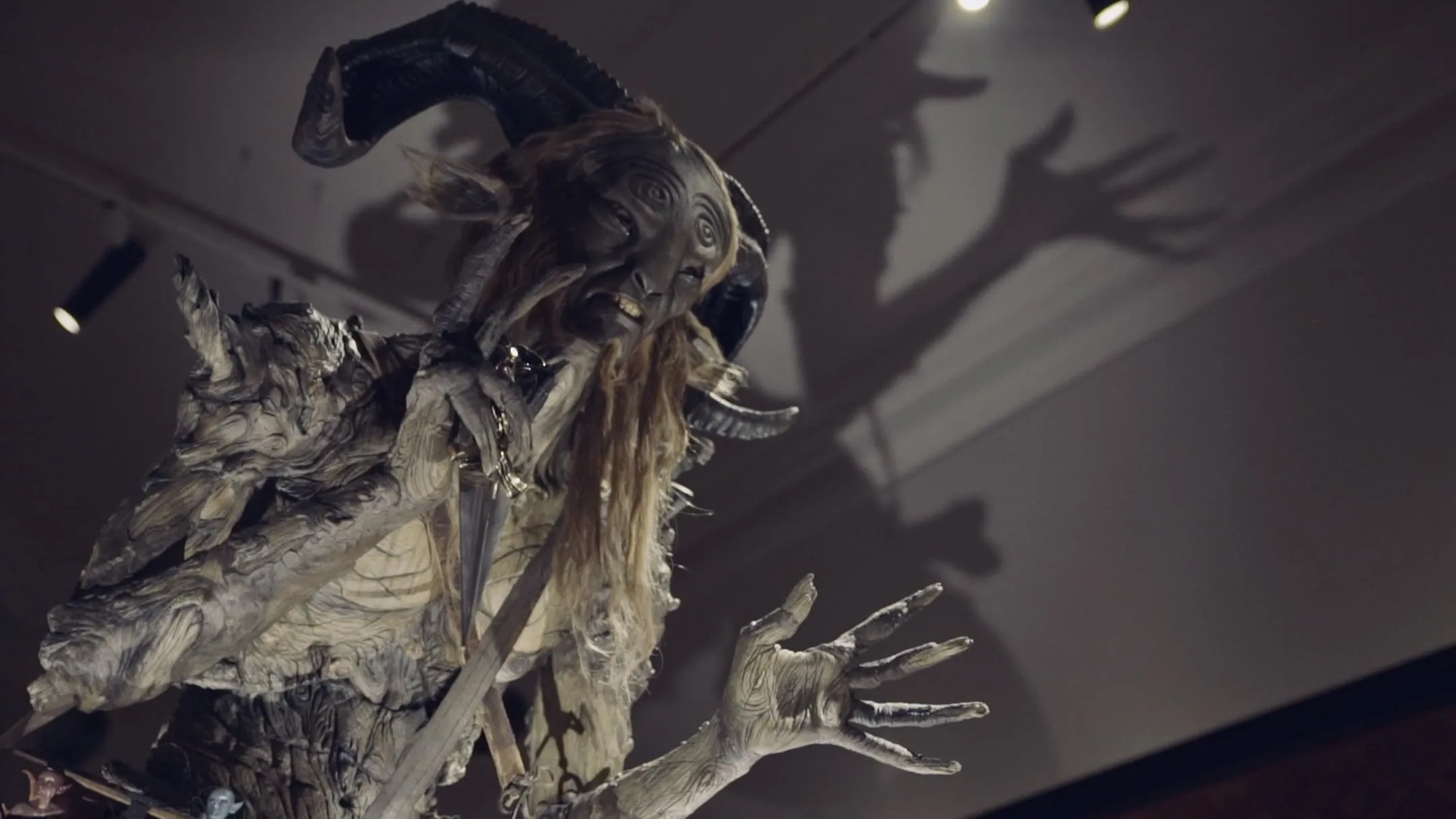
The ground of his sensibility appears with clarity: a boyhood fixation on death and disease paired with an affection for classic Universal monsters. He explains how a Mexican inheritance, with its frank relation to death and its surreal streaks, shapes his aesthetic, and he cites the force of muralist José Clemente Orozco.
His view of creativity stands in a shared conversation that stretches across time, with praise for figures such as Junji Ito and the macabre anatomies of Honoré Fragonard. He works in constant dialogue with the dead and the made. The closing chapter, devoted to Mary Shelley’s Frankenstein, affirms that literature and art remain the soil from which his filmography grows.
The Generosity and the Void
Del Toro speaks with real generosity about process and belief, aligning himself with misunderstood creatures he names as outsiders. That stance permits a free mixing of genres and motifs, and he builds intricate narrative matrices where “ghosts, fascism, fantasy, and civil war” share space.
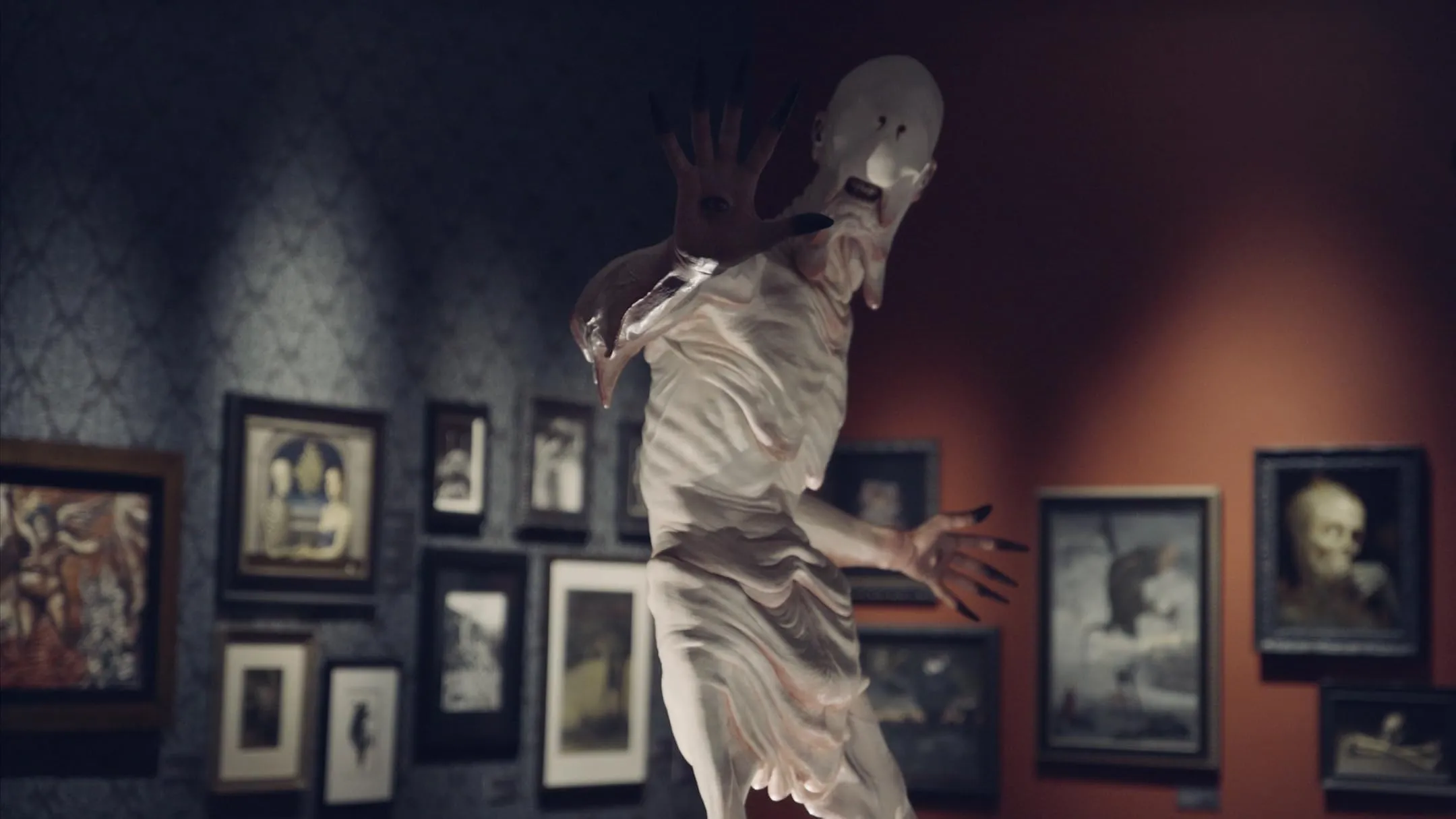
The film includes clips from his work, including Pan’s Labyrinth, and it features collaborators such as designer Eugenio Caballero. These inclusions serve argument and illustration, not a parade of greatest hits. His appetite feels inexhaustible, marked by a decades-long collection of more than 15,000 comics. A darker current still moves beneath the talk.
He describes a traumatic, unhappy childhood and the social violence he witnessed in Mexico. He speaks of monsters that inhabit the heart and the head, yet he does not fold those insights back into a direct account of his wounds. A reserve lingers around the most private chamber, a chosen distance that protects pain and preserves mystery.
The Proof of Magic
Montmayeur’s method avoids structural experiment and stays close to the subject, which yields an intimate study of an inner terrain. The film sets aside stylistic gambits and follows a clear path into the “art of a creator.” Del Toro remains sharp and jovial company, a presence that radiates life, and he defines art as the “only proof of magic in the world.”
The documentary grants access to that claim, mapping the eccentric circuitry of a creative mind. It sketches a man inside his cabinet of curiosities, a curated view of the mechanisms that shape his worlds. The final feeling is one of contact with a complex figure and a durable respect for his vision, paired with the sense that the deepest rooms of the maze stay sealed, perhaps by necessity, perhaps by care.
Sangre Del Toro is a feature-length documentary by Yves Montmayeur exploring the life, work, and creative psyche of celebrated Mexican filmmaker Guillermo del Toro. The film is largely structured around del Toro’s personal reflections, his foundational influences, and his “En Casa Con Mis Monstruos” exhibition in Guadalajara. It premiered as part of the Venice Classics section at the Venice Film Festival in 2025. As it is a documentary with multiple production companies and a world sales agent (Brilliant Pictures), its current viewing platform or wide distribution channel may vary by region; viewers should check local listings or streaming platforms for availability.
Credits
Title: Sangre Del Toro
Distributor: Brilliant Pictures (World Sales)
Release date: August 2025 (Venice Film Festival Premiere)
Running time: 85 minutes
Director: Yves Montmayeur
Writers: Yves Montmayeur
Producers and Executive Producers: Jad Ben Ammar, Marc Bikindou, Sean O’Kelly, Thierry Tripod, Damien Le Boucher
Cast: Guillermo del Toro, David Cronenberg, Eugenio Caballero, George A. Romero, Terrence Fisher, Junji Ito, Honore Fragonard
Director of Photography (Cinematographer): Raphaël Aupy, Vincent Gonon
Editors: Matthieu Brunel
Composer: Yoko Higashi
The Review
Sangre Del Toro
Sangre Del Toro is a focused, concise portrait of a visionary artist. It trades innovative documentary form for generous access to del Toro's intellectual landscape, particularly his fascination with monsters, death, and the synthesis of Mexican and gothic art. While the film beautifully illuminates his creative process and foundational myths, it respects the director's boundaries, leaving the viewer hungry for more intimate details about the man behind the elaborate cabinet of curiosities. It is a rewarding study of an artistic mind.
PROS
- Provides generous access to the filmmaker’s intellectual landscape.
- Deep thematic exploration of influences and philosophy.
- Focuses solely on del Toro; avoids distracting interviews with peers.
- Effectively uses the "En Casa Con Mis Monstruos" exhibition as an anchor.
- Eloquent musings on art, culture, and the nature of monsters.
CONS
- Documentary form is not innovative or experimental.
- Avoids deep personal introspection (e.g., childhood trauma).
- Relationship with loss and personal trauma remain unexplored.
- Film clips feel supplemental to the core discussion of ideas.







