

























![Kingdom Hearts Collection [I-III] Review](https://gazettely.com/wp-content/uploads/2026/10/Kingdom-Hearts-Collection-I-III-1-360x180.webp "Kingdom Hearts Collection [I-III] Review: KHII Holds Steady as Newer Entries Fluctuate 37")



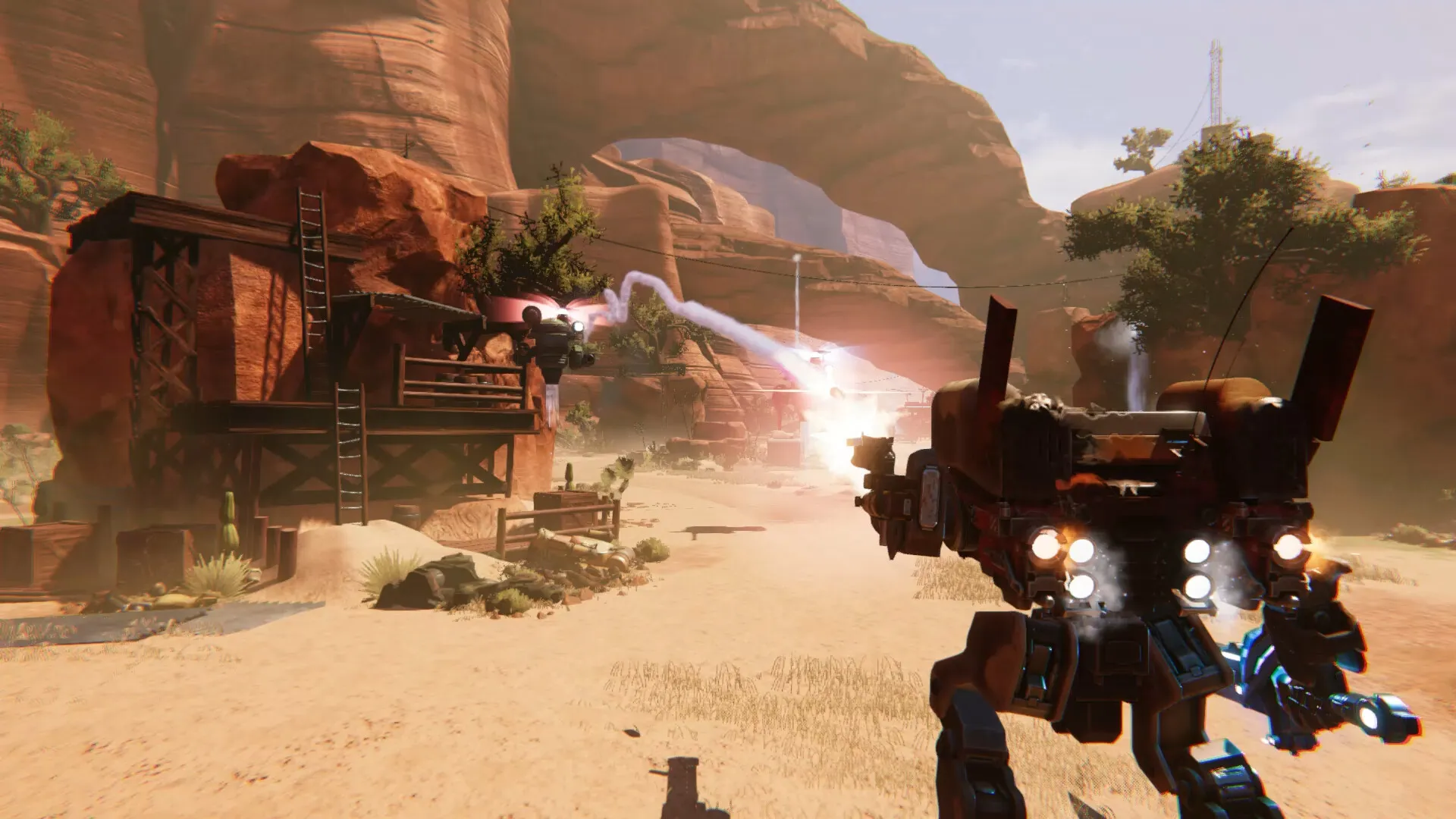

Bounty Star: The Morose Tale of Graveyard Clem sets its sights on a post-apocalyptic Western across the Red Expanse, a future take on the American Southwest marked by bandits, ragged settlements, and roaming dinosaurs. The premise follows Clementine “Graveyard Clem” McKinney, a disgraced ex-soldier and veteran mech pilot. She failed to protect a town under her watch, an event that wrecked her standing and explains her mournful nickname.
A friend grants her a lifeline through a battered workshop that doubles as a farm. From that base, she resumes work as a bounty hunter in a configurable Raptor Mk.II combat mech. The game pairs explosive sorties with quiet routines at home and frames Clem’s path as a steady attempt to reconcile with the past and shape a workable future.
A Warrior Poet in the Red Expanse
The narrative centers on a precise portrait of Clementine. Her look tells a story: a harsh burn along her neck, deep scars across her face. Personality traits land with clarity. She speaks with a Southern twang, drinks, smokes, and leans into reflection. Post-mission, she climbs onto the Raptor and writes in a journal, reinforcing her own label of “warrior poet.” The script threads lighter touches through heavy material.
Clem consults her stuffed dinosaur, Jeremy, to think through problems, and collapses onto her bed after long days in a bit that reads as physical comedy. The result is a lead who carries wounds, humor, and self-awareness in equal measure.
The plot builds on a revenge and redemption structure mapped onto a Western that trades six-shooters for armored frames. That foundation supports an arc from “graveyard to farmyard,” with each chapter linking action in the field to change at home. Presentation lifts the story. Dialogue lands with precision, and the voice work stands out.
Renée Faia’s turn as Clem delivers hardness where needed and an undercurrent of warmth that keeps the character human. Side characters add angles to Clem’s choices. A reformed bandit and a steak-suited vendor function as foils and sounding boards, turning conversations into checkpoints for her growth. The setting leans into dusty maps and a fitting country soundtrack, and the contrast between quiet nights on the homestead and chaotic contracts on the sand gives the world a steady pulse.
The Rhythm of Raptor Combat
Most play unfolds inside the Desert Raptor MKII on bounty missions. Combat favors deliberate action and tangible weight. Movement recalls the committed feel of classic MechWarrior entries rather than a breezy arcade fighter. Timing matters.
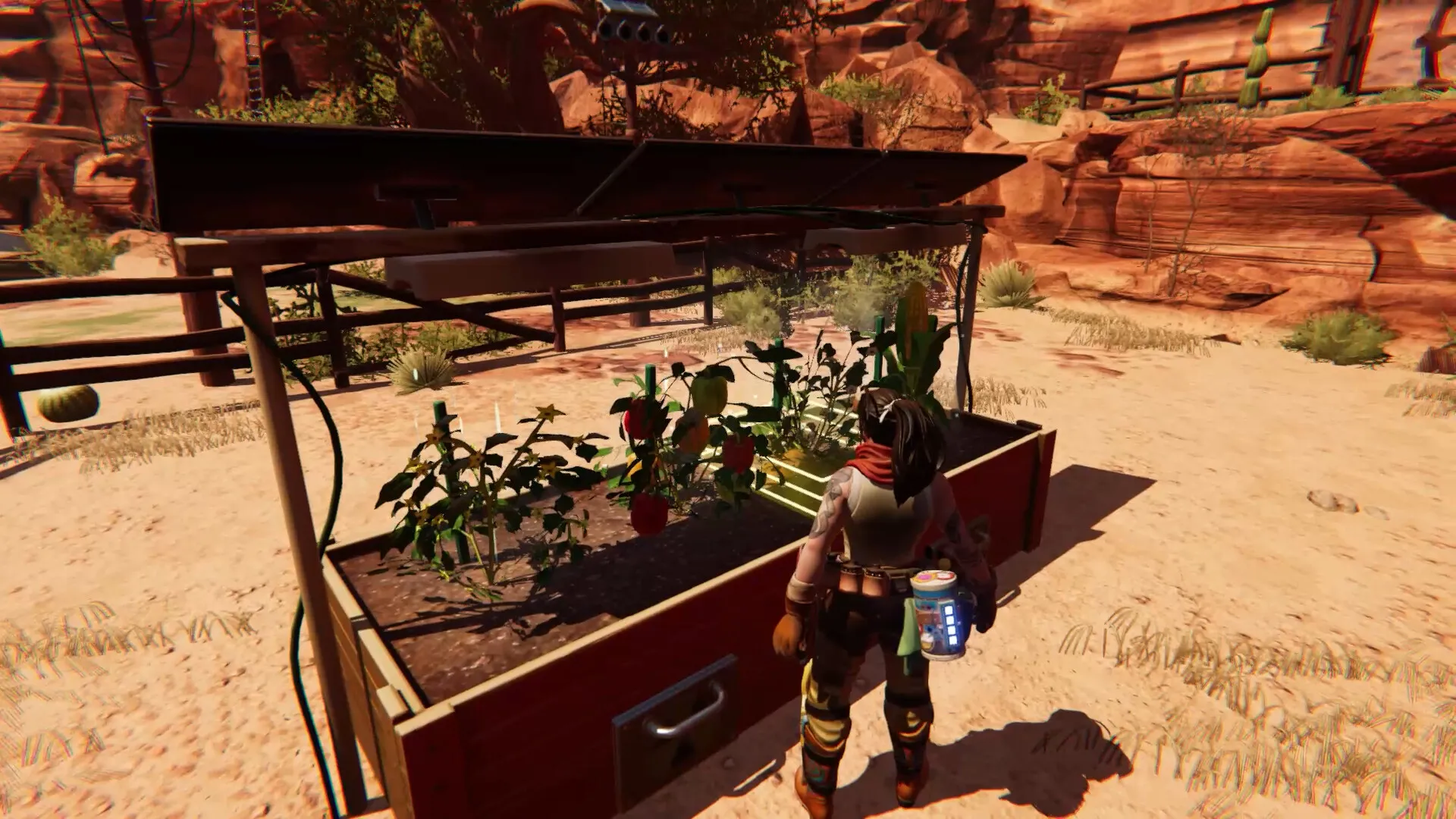
A chainsword swing carries heft, and a double-barreled shotgun demands spacing and rhythm. The system supports gun canceling and melee tricks, so a player can dash back while pumping out a shotgun blast or create openings with quick repositioning. The cadence encourages planning, reads, and measured aggression.
Buildcraft sits at the center of survival. The Raptor accepts hammers, flamethrowers, grenade launchers, and more, slotted into a damage triangle labeled Blade, Bludgeon, and Boom. Enemy armor types interact with that triangle, so mission prep turns into a matchup puzzle.
The Heat System sets a second layer over every decision. Weapons and actions add or subtract heat, and either extreme triggers a short thermal shutdown. Time of day changes the math. Afternoons run hot and reward cooler weapons and careful venting, while nights open room for hotter kits. Loadouts shift around those constraints, which gives pre-mission planning real stakes.
Repetition does creep into the contract board. Optional Low Priority bounties recycle maps and enemy mixes, and that loop can dull the edge of the weapon triangle. Some neutral weapons hit hard across situations and can flatten the incentive to tailor builds. Optional Objectives arrive as time trials or loadout challenges and pay out cash, and the rewards often feel light next to the risk. The combat model still holds a satisfying core rooted in momentum, windows, and gear synergy, and it finds a clear point of reference in the weighty tradition of MechWarrior.
From Cockpit to Coop: The Gameplay Loop
Structure alternates between sorties and homestead work. Bounty payouts feed the workshop farm, which grows into a self-sustaining base. Tasks include coaxing crops from irradiated soil, raising chickens, crafting ammunition and fuel, and cooking meals that grant mission buffs.
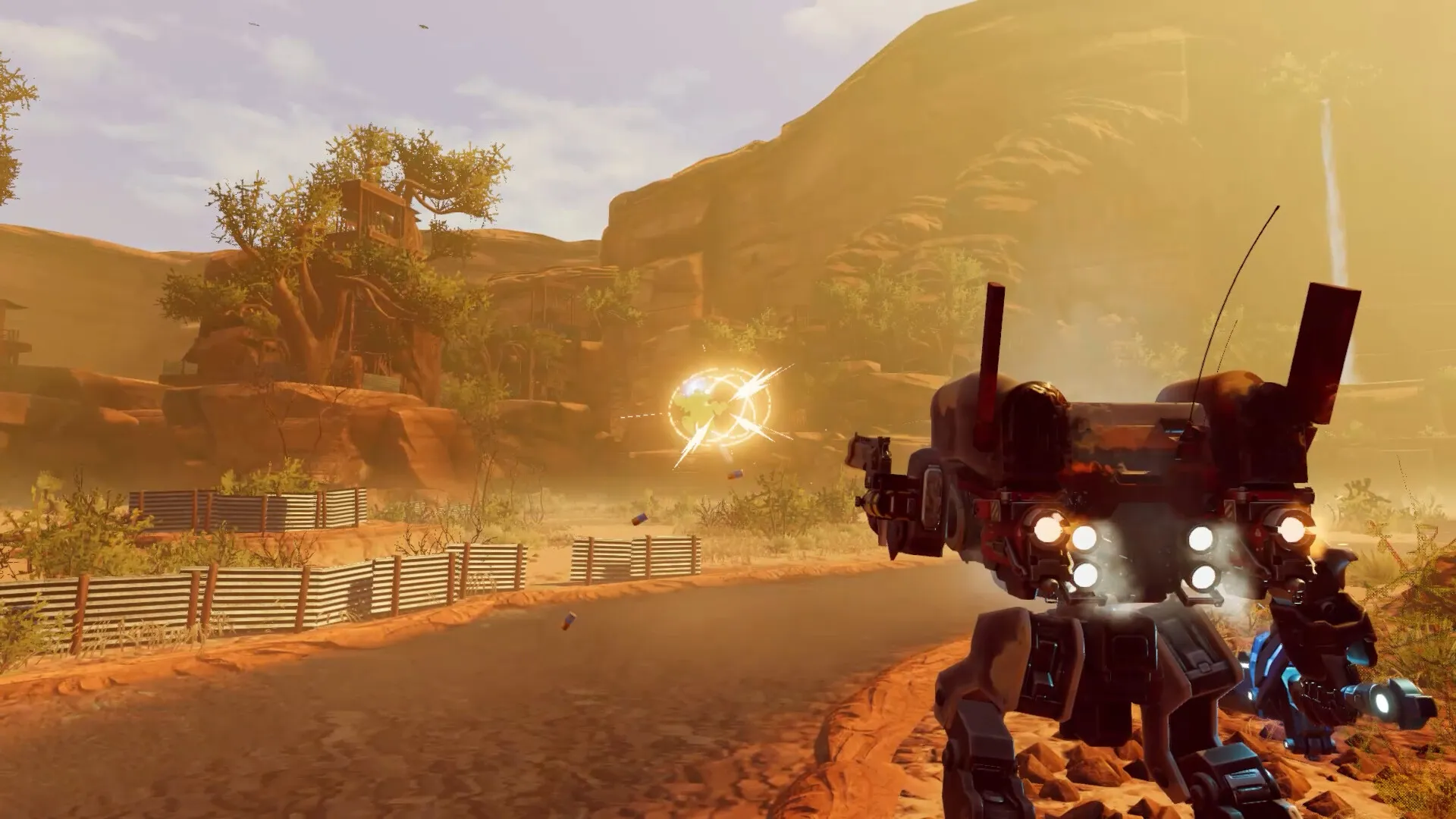
The loop ties narrative to systems. Clem’s effort to rebuild her life tracks with the slow expansion of the workshop, and resource savings on fuel and ammo feed back into the contract grind. The sense of place becomes stronger as machines hum, shelves fill, and pre-mission meals mark the rhythm of a day.
Pacing frictions crop up in these interludes. Watering, feeding, and other chores rely on repeated button presses and turn into routine clicks before automation upgrades arrive. Story progression introduces a bigger snag. High Priority bounties sometimes sit behind grinds through Low Priority contracts or clock cycling to hit a time window. That gate can stall momentum, especially when a plot beat waits on an expensive crafted item. The pause does not grow the stakes; it pads the runway before the next scene.
Production values land with mixed results. The art direction reads clean and cohesive, which matches the Western-mech premise. Human character movement looks stiff, and cutscenes show awkward animation and dropped effects in places. Map assets repeat across missions, which underscores the sense of scale limits. None of this breaks the loop, but these edges keep the experience from feeling seamless. The core still clicks: a grizzled pilot with a battered frame, a ledger of bounties, a farm that turns cash into capability, and a combat model that rewards commitment and planning.
The Review
Bounty Star
Bounty Star succeeds on the strength of its central character, Clementine, whose path from disgraced pilot to rebuilding rancher is genuinely moving. The core conceptual pairing of thoughtful homesteading with highly tactical mech combat is fascinating and provides excellent thematic resonance. However, repetitive mission layouts, tedious chore mechanics, and a structural grind for resources prevent the gameplay systems from achieving true cohesion. The excellent writing and voice acting significantly elevate the experience, making it a worthwhile recommendation for players who can overlook the technical polish issues and structural repetition.
PROS
- Excellent character writing and voice acting
- Compelling sci-fi Western setting and aesthetic
- Deep mech customization and Heat System
- Successful thematic use of homesteading
CONS
- Highly repetitive mission and map design
- Monotonous chore mechanics at the homestead
- Structural grind for story progression
- Lack of technical polish and stiff character movement







