

























![Kingdom Hearts Collection [I-III] Review](https://gazettely.com/wp-content/uploads/2026/10/Kingdom-Hearts-Collection-I-III-1-360x180.webp "Kingdom Hearts Collection [I-III] Review: KHII Holds Steady as Newer Entries Fluctuate 37")





A return home is never a simple act of geography. It is an excavation, a confrontation with the person one used to be and the people who have remained. Bruce Beresford’s The Travellers understands this psychic friction. The film’s catalyst is familiar: Stephen, a successful opera set designer cocooned in the cultural certainty of Europe, is pulled back into the orbit of his Western Australian family by his mother’s failing health.
Luke Bracey portrays him not as a prodigal son seeking forgiveness, but as a kind of cultural ghost, haunting the spaces of his youth while being fundamentally disconnected from them. His arrival forces a reckoning with his father, Fred, a man whose life has curdled into a stubborn, eccentric mess. What unfolds is a quiet, deliberately paced drama about the awkward frequencies of familial love and the unbridgeable distances created by time and choice.
A Triptych of Australian Temperaments
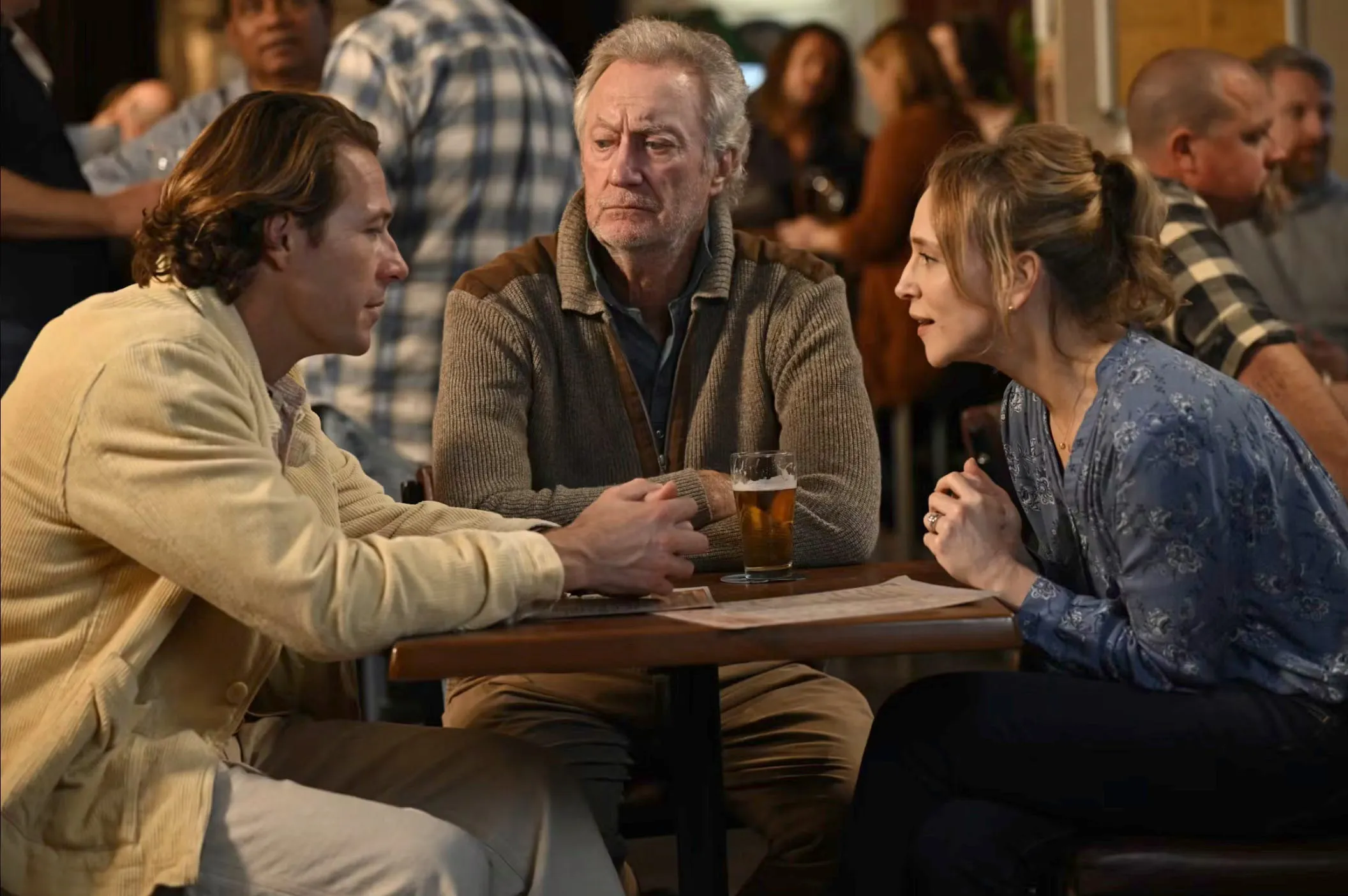
The film’s emotional landscape is defined by the triangle of its central family. Stephen is a man wearing his sophistication like armor. The infamous cravat he sports in the local pub is less a fashion choice than a declaration of difference, a silken barrier against the unpretentious world he fled. Bracey’s performance captures this duality well; his restraint reads as both a quiet internal sorrow and a frustratingly smug aloofness. His profession, designing grand, artificial worlds on stage, seems a perfect metaphor for his detachment from the raw, uncurated reality of his father’s life.
That reality is personified by Bryan Brown’s Fred, a performance that acts as the film’s chaotic, beating heart. Fred is the archetype of the weathered Aussie bloke, but one who has been left to rust. His home is a monument to entropy, and his personal habits (showering with his clothes on to save time) suggest a man whose moorings have slipped. Brown finds the deep pathos beneath the deadpan humor, presenting a figure who is infuriating and pitiable in equal measure. He is a force of nature against which the other, more mannered performances must react.
Susie Porter’s Nikki exists as the essential ballast. As the sister caught between these two poles, she is the film’s anchor to a more recognizable reality. Porter imbues the role with a weary competence, though the script gives her little to do beyond mediate and observe. Her character is a functional necessity, a bridge over which the film’s central conflict travels. The chemistry between the three is one of palpable history, defined more by pregnant pauses and what remains unsaid than by direct confrontation.
Sentiment Over Substance
Bruce Beresford directs with the steady hand of a veteran, crafting a film that feels like a relic from another era of prestige pictures. The visual style is clean and unobtrusive, a quiet stage for dialogue and performance. This creates a slightly theatrical atmosphere, one that amplifies both the emotional sincerity and the script’s most glaring weaknesses.
The film’s central thematic project is an exploration of the Australian “cultural cringe,” that long-standing anxiety about the nation’s relationship with the perceived sophistication of Europe. Stephen’s internal struggle is Beresford’s own, a meditation on the life of an artist who found success abroad.
This personal inquiry, however, translates into a simplistic, binary view of culture. The film’s use of opera is its most curious and telling feature. It becomes a tool of what might be called operatic evangelism, a symbol of high art intended to elevate the humble masses. The scene in which Verdi’s La Traviata brings a rowdy pub to a standstill is a moment of profound tonal miscalculation.
It feels less like an organic development and more like a directorial thesis statement dropped into the narrative, a fantasy of cultural unification that strains credulity. This earnestness spills over into the broader script, which consistently shies away from genuine, painful conflict. It prefers the easy comfort of sentimentality, offering convenient redemptions for antagonistic characters and smoothing the jagged edges of family trauma into a palatable, saccharine shape.
A Quietly Bumpy Ride Home
The primary reason to engage with The Travellers lies in its performances. Bryan Brown, especially, chews through the scenery and the script’s limitations to create a memorable, magnetic character. The film possesses a genuine warmth, a sincerity of purpose that is hard to dismiss entirely.
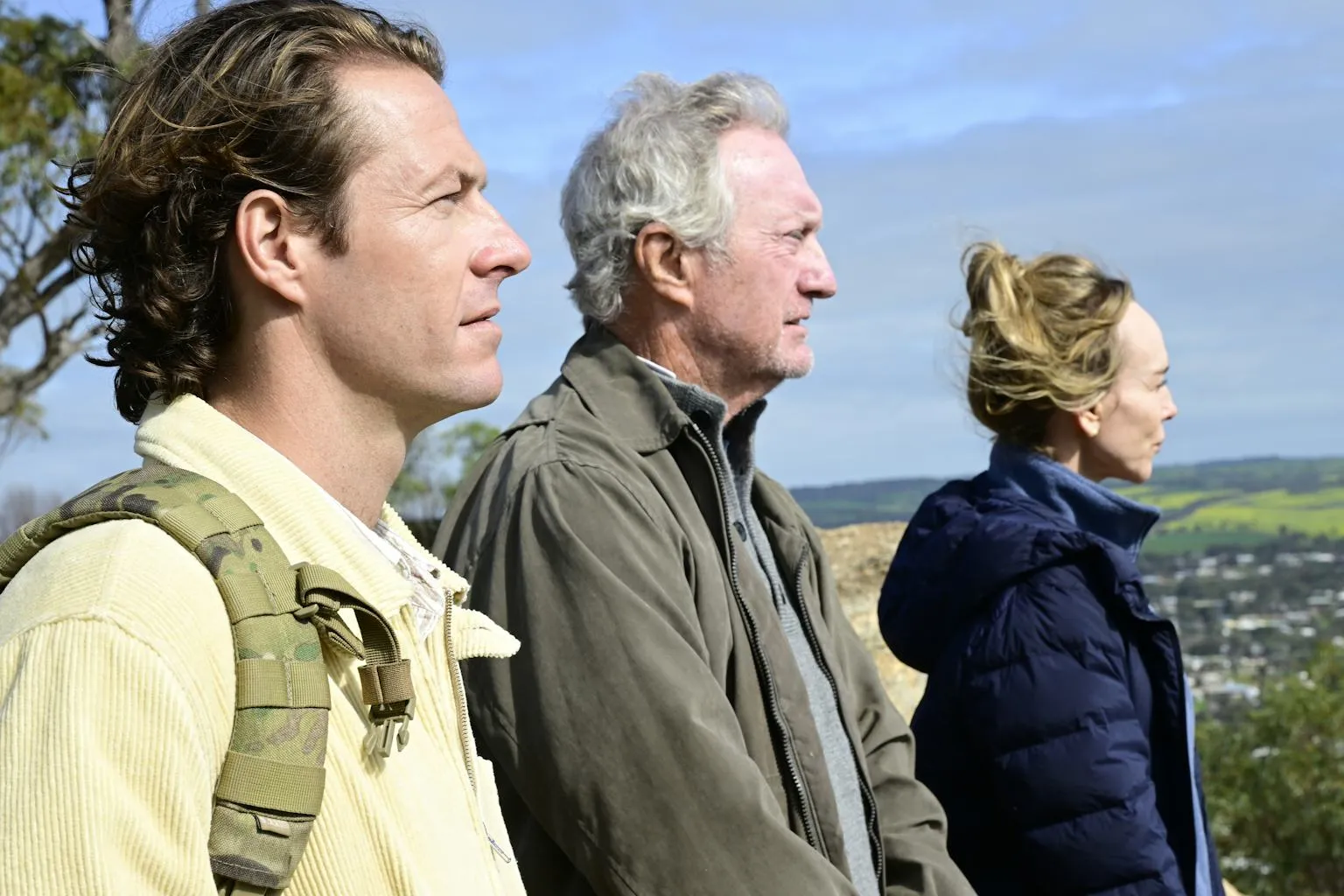
Yet this charm is inextricably linked to its flaws. Its tendency toward mawkishness and its superficial handling of complex themes make for a frustrating viewing experience. The film’s earnestness is its most defining trait, serving as both its greatest strength and its most significant weakness.
This is a picture for a specific audience, one that perhaps yearns for a bygone era of Australian cinema that was less cynical and more emotionally direct. It feels like a conversation with the past, both in its narrative and its execution.
The Travellers is a deeply imperfect and affecting story about the messy business of homecoming and the difficult truces we make with our own histories. It does not unearth any staggering truths, but it tells its gentle story with a conviction that, thanks to its cast, almost feels like enough. It is a worthwhile, if bumpy, trip for those interested in watching a family attempt to navigate the wreckage of its shared past.
The Travellers is a poignant and heartwarming Australian dramedy directed and written by Bruce Beresford. The story centers on Stephen Seary (Luke Bracey), a successful stage designer who returns to his small hometown for what he expects to be a brief visit to say goodbye to his dying mother. The trip quickly unravels into a period of chaos and self-discovery as he confronts unresolved tensions with his estranged father (Bryan Brown), old flames, and other familial responsibilities. The film was distributed by Sony Pictures International Releasing and premiered in Australian cinemas in October 2025.
Full Credits
Director: Bruce Beresford
Writers: Bruce Beresford
Producers and Executive Producers: Michael Boughen, Matthew Street, Kelvin Munro, Antony I. Ginnane, Christopher Mapp, Kathy Morgan, Josh Pomeranz, Bruce Beresford
Cast: Bryan Brown, Nicholas Hammond, Luke Bracey, Susie Porter, Celia Massingham, Harrison Green, Alison McGirr, Sarah Filippi, Julia Moody, Greg McNeill, Warren Lyons, Emilie Lowe, Oliver Wenn, Ryan Graeme Allen, Shubshri Kandiah, Megan Kelly, Dean McAskil, Alison Van Reelen, Tristan Balz, Jared Herft
Director of Photography (Cinematographer): Peter James
Editors: Mark Warner
Composer: George Ellis
The Review
The Travellers
Carried by a magnetic and genuinely moving performance from Bryan Brown, The Travellers is an earnest, heartfelt drama that never quite overcomes its sentimental and simplistic script. While the family dynamics feel authentic and the film possesses a certain old-fashioned warmth, its heavy-handed themes and cloying plot resolutions keep it from achieving real depth. It's an affecting but flawed homecoming, a film whose strong cast deserves a more nuanced story. It's a journey worth considering for the performances alone, though the destination is somewhat underwhelming.
PROS
- An outstanding and charismatic performance from Bryan Brown.
- Strong, believable chemistry between the lead actors.
- A genuine warmth and sincerity in its tone.
- An affecting exploration of strained family dynamics.
CONS
- An underdeveloped script that feels dated and simplistic.
- An over-reliance on sentimentality and mawkishness.
- Heavy-handed themes and contrived plot points, especially regarding the opera motif.
- Limited depth for key supporting characters.