



























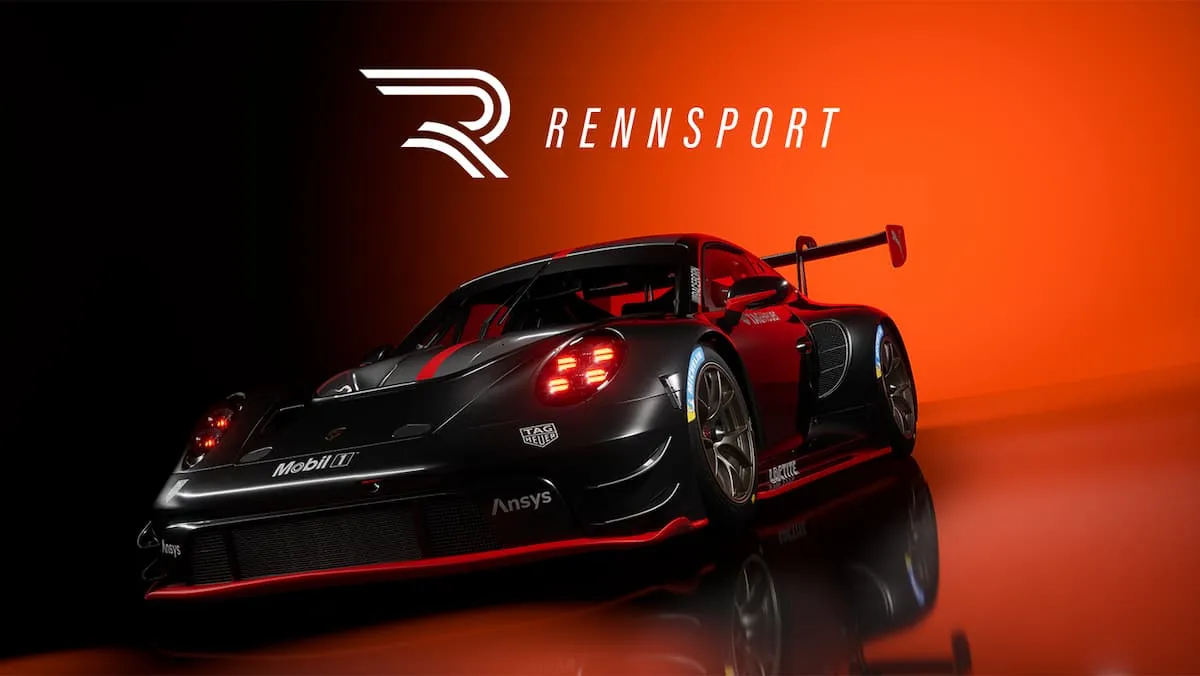

RENNSPORT steps into competitive sim racing as a tightly focused platform, built to channel the feel of cross-platform, organized motorsport. Its identity leans toward a serious simulation that rewards drivers who value realistic physics and strict rule enforcement over casual spectacle.
Rather than mixing sim and arcade flavors, the design leans fully into a no-nonsense standard aimed at high-level eSports play. After an extended spell in PC Early Access, the title reaches a full 1.0 launch on PC, Xbox, and PlayStation, with cross-play unifying the player base. This structure supports a clear goal: a stable competitive framework for demanding virtual motorsport.
Mechanics, Fidelity, and the Driver’s Discipline
The core physics model sets the tone for how players interact with every system. The driving experience feels demanding and authentic, and each car carries a distinct mechanical personality. The nimble Praga R1 and the heavier Audi R8 differ in weight transfer, momentum, and grip thresholds, which asks players to read each chassis carefully. Even minor errors have teeth here. A late brake input or an aggressive attack on a kerb can spin or roll the car, which reinforces the message that this sim expects measured, disciplined control.
Damage modeling strengthens that philosophy. On lower settings, contact can leave bodywork scraped while performance stays intact. Higher difficulty settings feed accidents back into the mechanical layer, where a heavy impact can trigger critical failures that end a run or leave the car stranded. The shift in consequences between difficulties feels uneven, yet the full simulation setup delivers a severe penalty structure that supports the intended high-stakes mindset.
Control support reflects the same focus on player discipline and feedback. The game accommodates both controllers and racing wheels. Controller steering feels responsive, with a convincing sense of weight and resistance. A wheel setup can offer deeper physical feedback, though the quality of that experience depends heavily on the specific hardware, and some wheel configurations feel less refined. Haptic feedback on devices like the DualSense tries to convey the tire’s struggle for grip, but surface detail across different track materials lacks sharp differentiation, which dulls some of the mechanical communication.
Assist systems give newcomers a way into the physics without erasing the learning curve. Traction control, ABS, and a dynamic racing line can help players understand braking zones and corner speeds. Even with these aids, mastery demands long sessions of practice and time trials. The game rewards players who approach it like a technical training program, dissecting vehicle behavior and optimizing lines sector by sector.
Also Read




The E-Sports Infrastructure
Competitive online racing forms the spine of RENNSPORT’s design. The interface backs this with tools that target serious multiplayer use. A highly configurable HUD can display frame rate and network packet data, information that matters for players who treat races as formal competition.
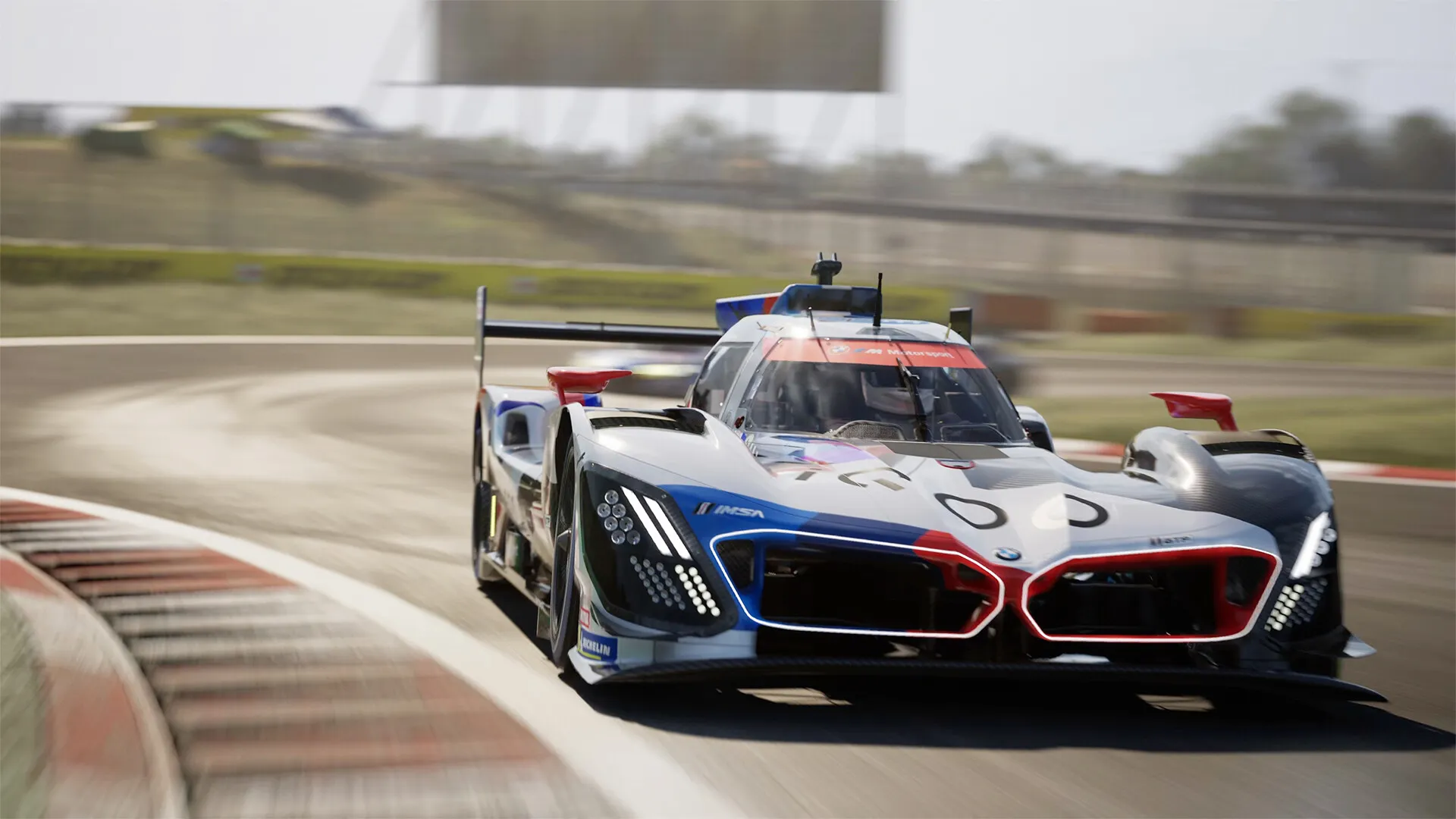
Events follow a full weekend cadence, with practice, qualifying, and race sessions, which reinforces the structure of organized motorsport. A calendar and scheduling system tracks upcoming events and lets players sign up without friction. Cross-play keeps that calendar active by pulling drivers from all supported platforms into one competitive pool.
Rule enforcement translates the sim’s strict philosophy into race control. Track limits are monitored closely, and serious breaches wipe out the lap. An incident points system records contact and mistakes, turning collisions and careless driving into quantifiable penalties. This sets a high standard for clean racing, yet the system sometimes fails to distinguish between aggressor and victim, assigning incident points even when a player suffers from another driver’s mistake. That behavior undercuts the fairness that the rules aim to protect and highlights an area where tuning would improve competitive integrity.
Online performance supports the eSports ambitions from a technical angle. Multiplayer races feel stable, with little perceptible stutter or slowdown even with full grids at high speed. This consistency matters for players who invest time into ranked events or league-style schedules. Matchmaking produces races quickly, and the clear, uncluttered menus make it easy to move from registration screens to the starting grid without friction.
Content Depth and Economic Model
RENNSPORT’s largest pain point lies in its content volume at launch. The standard package offers around 17 to 18 cars and roughly 12 to 13 tracks, including layout variants. For a full-priced sim, this selection feels lean and struggles in direct comparison to rival racing platforms. The game leans heavily on promises of future additions to fill the grid and track list.
The way content and pricing work together can feel confusing. The game now arrives as a paid product and moves away from the Early Access model where core cars and tracks were framed through microtransactions, yet a layered system still remains. Players can purchase cosmetic liveries, including animated designs, with in-game currency.
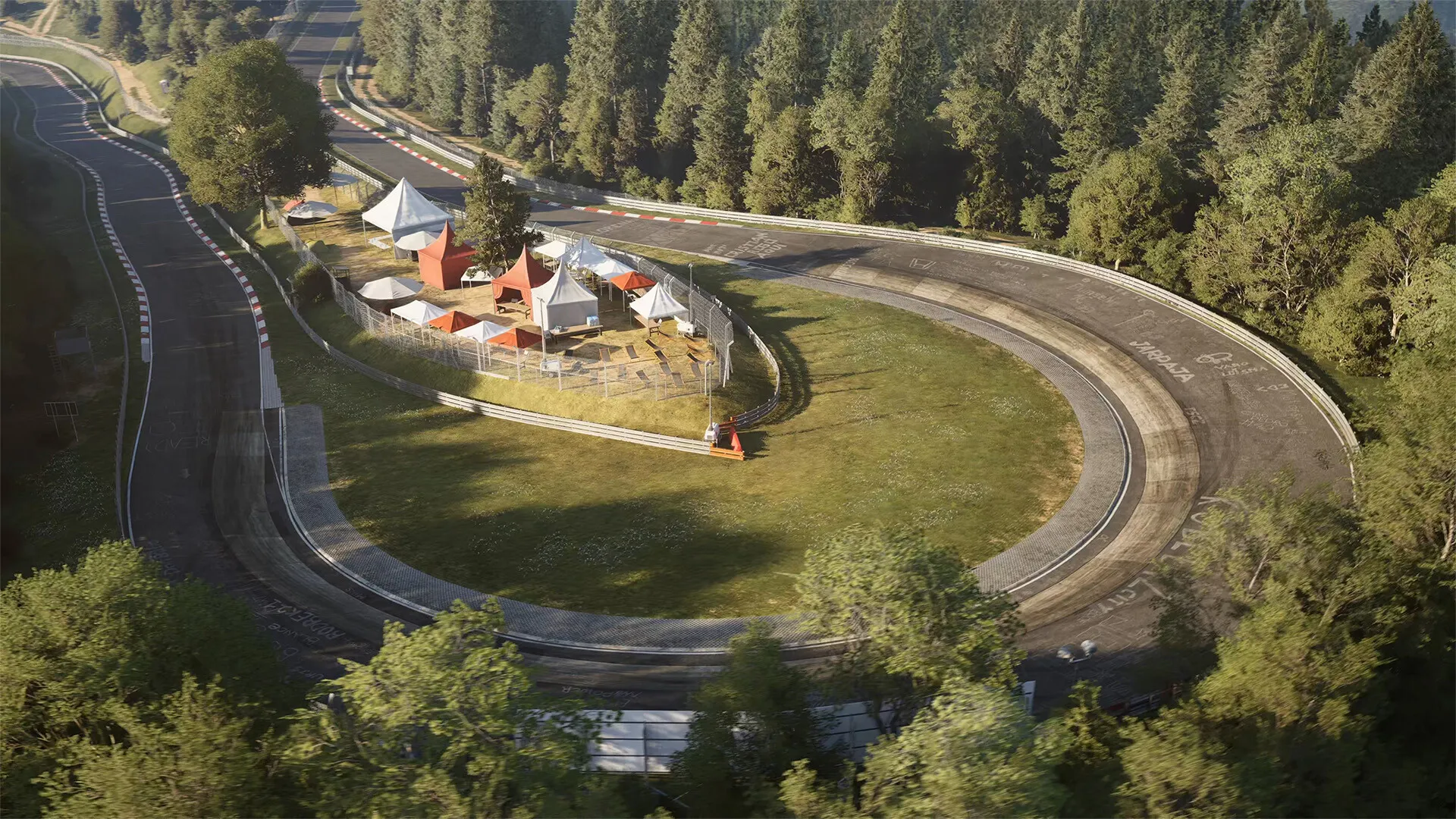
Cosmetic purchases in a product that already feels short on base content raise questions about where development focus sits. On top of that, specific playable pieces, such as the Nordschleife track and a Porsche GT3 R, sit behind the Deluxe Edition pay tier. Locking fundamental sim content behind a higher-priced bundle feels hostile to players who view those pieces as part of a standard circuit and car roster.
Visual quality across the available content does not feel uniform. Custom tracks, such as the circuit built around the game’s logo, present a sharp, polished look. Real-world circuits, by comparison, often carry older visual assets that reveal their heritage and lack modern detail. The car list may be short, yet each vehicle behaves differently on track, and switching between them alters braking points, rotation behavior, and cornering strategies in ways that support a system-driven approach to mastery.
The Sterile Single-Player Ladder
The single-player structure works more like a structured drill than a true campaign. Players progress through a set of short championship cups labeled Rookie, Amateur, and Pro. These tiers frame a ladder of events, but they introduce little personality, narrative, or presentation flair. The result feels like a training ladder built to feed online competition rather than a career mode designed to stand on its own.
Key simulation features are missing from the solo offering. Players cannot tune AI difficulty or adjust how deep the race weekend structure runs. The AI behavior itself often disappoints. Computer-controlled opponents tend to follow rigid driving paths, struggle repeatedly with certain corners, and then swing to sudden aggressive behavior in other scenarios. Important sim features such as safety cars and red flags are entirely absent, which limits the sense of a living race weekend.
Time trial and customized practice sessions provide the strongest tools for offline players. These modes let drivers isolate a track-car pairing and drill specific lines or braking zones for extended periods. For a game that leans so heavily on demanding physics, these modes deliver the practice environment needed to internalize how each car reacts under pressure, even if the broader single-player ladder remains thin.
Presentation, Polish, and Technical Caveats
From a technical perspective, RENNSPORT offers a mixed package. Frame rates during races usually feel stable, which helps immersion during high-speed stints. Visual quality, on the other hand, fluctuates. Car models look respectable, yet many real-world tracks resemble assets from an earlier console era.

Texture pop-in, weak mirror rendering, and a strong temporal anti-aliasing effect that trails ghosted shadows behind cars all chip away at visual clarity. Smaller touches, such as sharp decals and visible tire marks, help sell the illusion of rubber laid down over repeated laps.
Audio design also trails the leaders of the sim racing field. Engine notes do not differentiate car models clearly enough, and they lack the fine-grained texture that many players expect from a meticulous racing simulation. Environmental sounds, like gravel pinging against the chassis, sound convincing and add texture, but they cannot fully mask the generic character of the engine audio.
A cluster of smaller issues signals unfinished polish on the user experience side. Menu navigation feels clumsy at times, and certain screens contain typos and poorly explained settings. A broken day-night cycle speed undercuts attempts to customize race conditions.
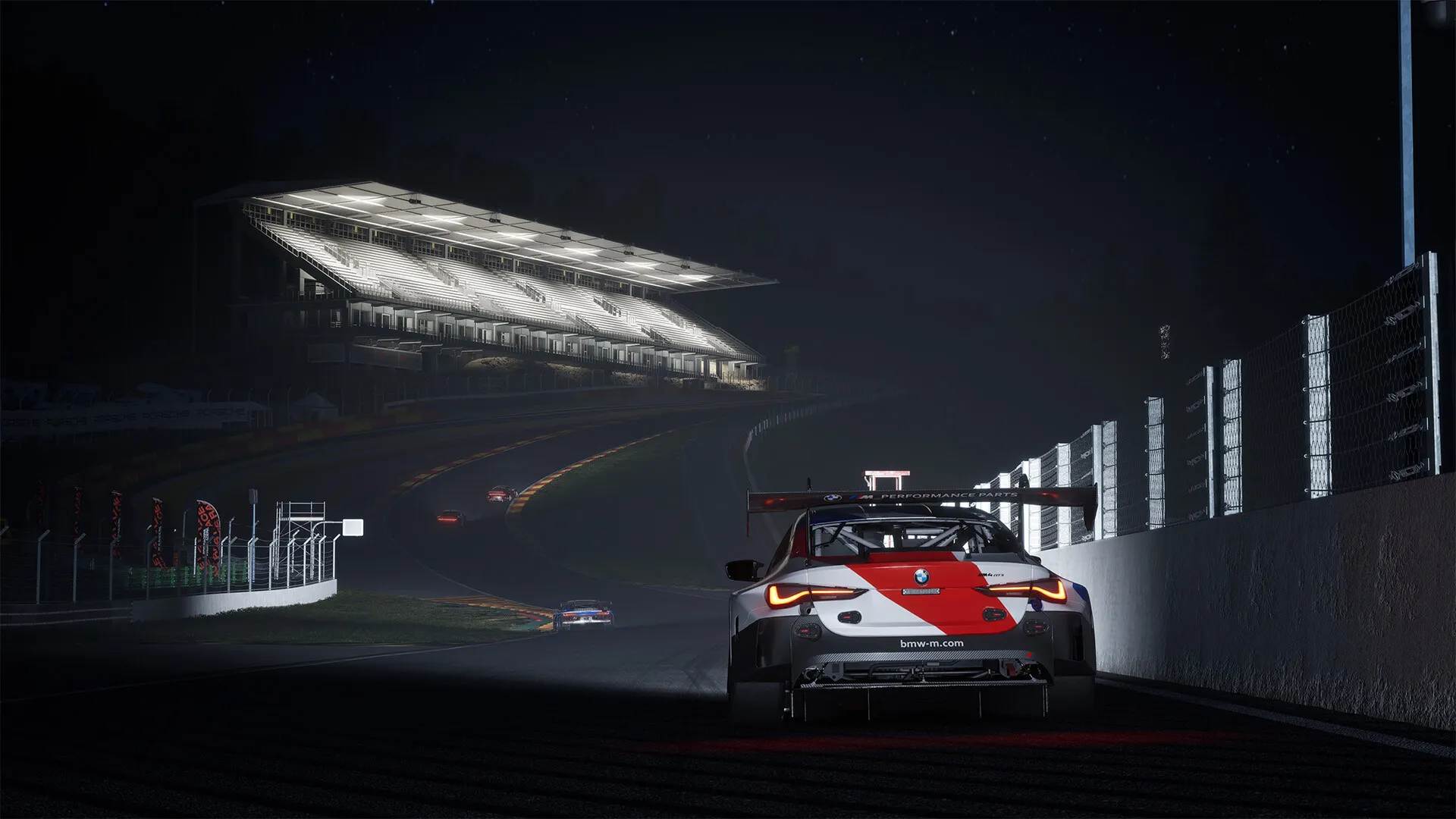
A checkpoint glitch can force a driver who was pushed off the circuit to complete an entire extra lap just to satisfy the system, which feels especially disruptive in a title that builds itself around strict rules and precision driving. Sparse trackside atmosphere and missing crowds leave race days feeling sterile, which clashes with the high-intensity competition that the mechanics and eSports framework try to promote.
The Review
RENNSPORT
RENNSPORT provides a technically competent and demanding core driving simulation, perfectly suited for the competitive eSports racer. However, the experience is severely undercut by a crippling lack of content, a sterile single-player mode, and significant inconsistencies in presentation and polish. As a platform for professional online competition, it has potential, but as a full-priced consumer package, it delivers too little to justify its cost compared to established rivals.
PROS
- Core driving mechanics are solid, demanding, and realistic, appealing to simulation enthusiasts.
- Excellent online stability, cross-play functionality, and organized, structured race events.
- A generous suite of customizable assists makes the demanding simulation approachable for various skill levels.
- Highly flexible display options cater to the needs of competitive drivers.
- Handles surprisingly well on a gamepad, widening the potential audience.
CONS
- Very limited selection of cars and tracks for a full-priced release.
- The campaign is bare-bones, lacks personality, and functions only as basic practice.
- Graphics are dated in places, marked by texture pop-in, poor mirror rendering, and general technical flaws.
- The strict rules sometimes lead to over-zealous penalization, even when a driver is not at fault.
- Gating playable content (like the Nordschleife) behind premium editions while selling cosmetic liveries undermines the value proposition.
- Opponent drivers exhibit inconsistent and often unrealistic "on rails" behavior.