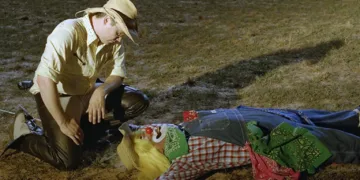





























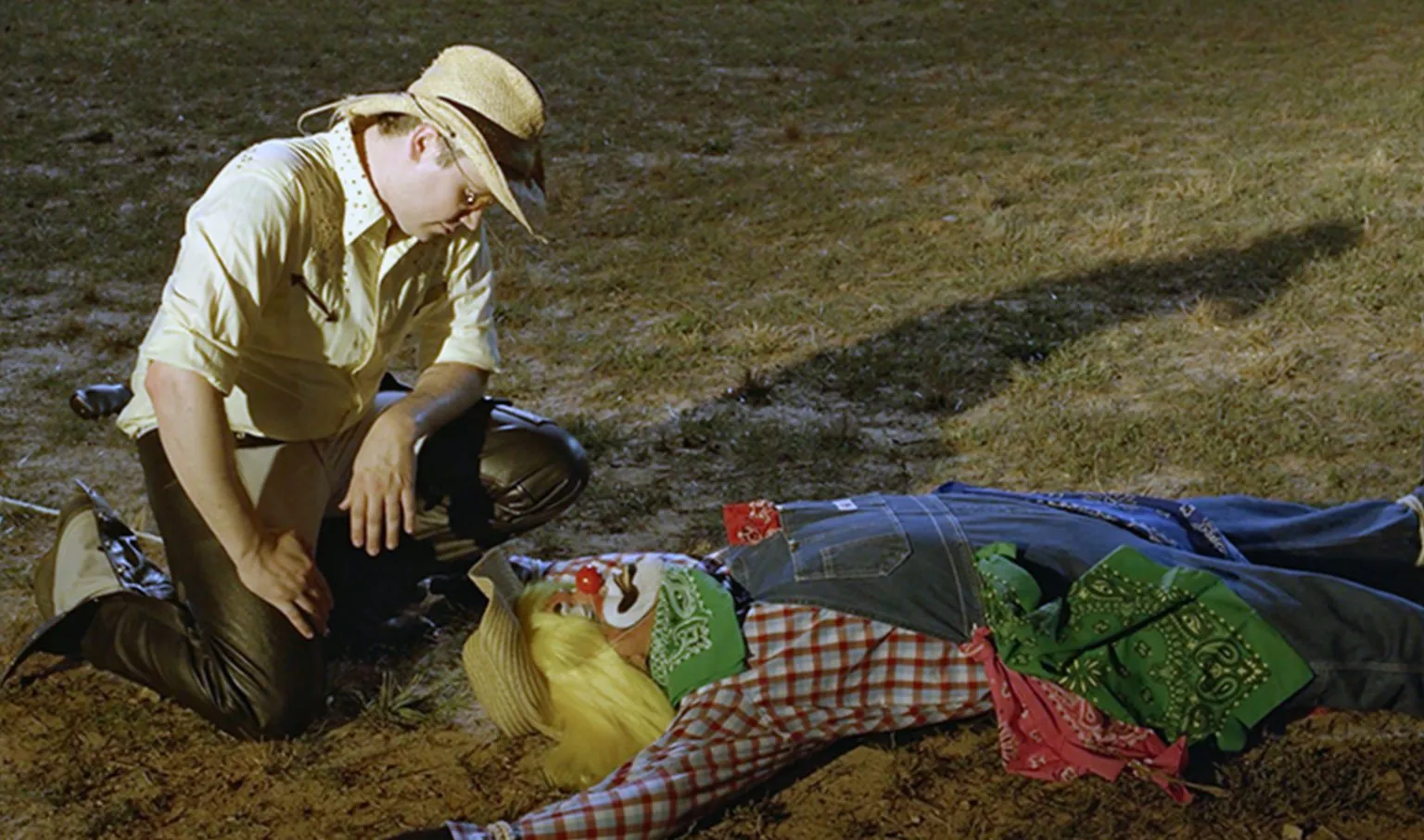

Jaysen Buterin steps into feature filmmaking by taking a worn horror setup and giving it a sharp reversal. Many genre fans go in expecting a red-nosed figure to leap from the shadows as the threat. Here, the clown sits in the role of the victim. Tommy Dos Santos moves through the story as a predator who sees these entertainers as literal monsters. He handles the work with the clinical detachment of an exterminator clearing out a nest of pests.
I remember watching older slasher films where the killer felt like a silent force of nature, an unstoppable presence with no need to explain itself. Tommy lands differently because his violence grows from a specific, twisted logic. He treats his goal like a job with rules, and that mindset makes his calm feel unsettling. He keeps a polite, steady exterior during therapy sessions with Dr. Courtney Lee, masking the internal storm underneath.
His life finds something like an anchor when he meets Eden, and their connection forces a choice between the quiet life she represents and the violent mission he has committed to. The story shifts the power dynamic inside the subgenre, and it reflects a cultural change in how familiar symbols of joy register now, turning a figure tied to fun into a target.
Faces Behind the Paint
Michael Ray Williams portrays Tommy with a range that captures the character’s fractured psyche. He can hold a cold, deadpan stare, then move into moments of intense warmth during scenes with Eden. He plays Tommy’s self-image clearly, too: a man who sees himself as a necessary cleaner for society. That belief keeps him grounded on the surface, even as he commits extreme acts.
Ellie Church brings a steady presence to Eden and creates a natural spark with Williams. She carries the emotional weight that keeps the film from drifting into pure nihilism. I always appreciate seeing icons like Felissa Rose and Judith O’Dea on screen, and their presence links this independent project to the genre’s history.
Vernon Wells adds a gritty noir sensibility as Malcolm Fossor, and his gravelly voice makes Giggles feel like a relic from a different era. Across the cast, the performances give the film a human weight that balances the story’s more eccentric plot elements.
The Architecture of a Lie
The script focuses on how a single falsehood can define a life. Tommy’s hatred begins with a childhood accident in which his parents die after a car swerves around a clown on a bicycle. The driver survives and chooses to blame the clown to escape his own guilt. That lie becomes the catalyst for Tommy’s transformation. It reminds me of how psychological thrillers examine the way trauma can be weaponized, shaped into a story that keeps cutting long after the event.
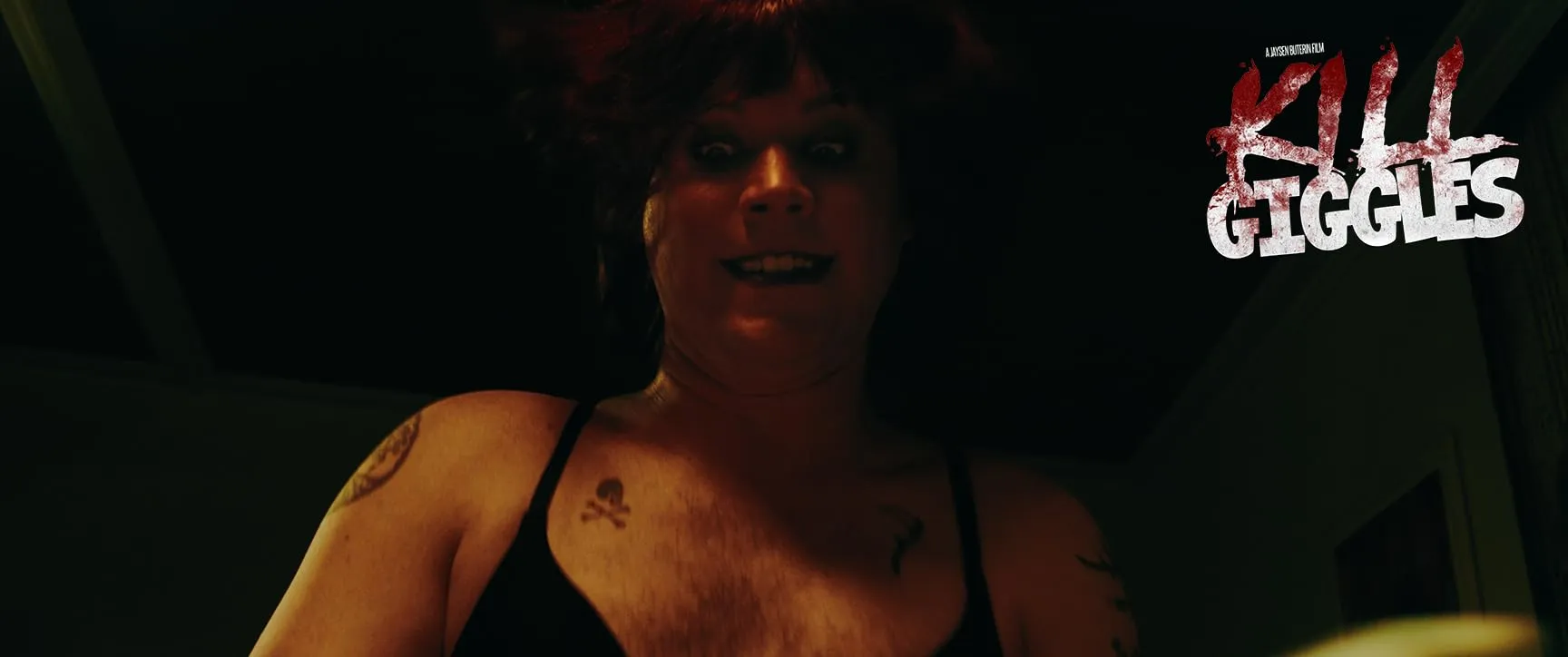
A pivotal flashback shows a young Tommy killing clowns in a theater, and the event leads to an accidental consequence: the dishonest driver dies, too. The plot connects local investigators to Tommy’s history and to his current romance with Eden, using those links to keep past and present in constant conversation.
The non-linear structure keeps revealing how the past remains present in his mind. The film emphasizes external conditioning as a force that can create a killer. By leaning into memory and manipulation, it challenges the standard slasher framework that treats evil as something inherent.
Technical Artistry on a Budget
The film’s visual identity relies heavily on bold color. Lighting choices mirror the saturated palette of a circus, building a mood that feels playful and menacing in the same frame. I’ve noticed independent directors often find clever ways around financial limits, and Buterin does that through form.
He uses specific camera angles and quick cutaways to imply violence that the budget may not have allowed him to show directly. That approach pushes the audience to do part of the work, filling in the gaps with imagination.
His shift from short films shows in the punchy, atmospheric scenes he constructs. Sound design plays a major role, with certain audio cues punctuating the action with real impact. The story can feel crowded with subplots, but the editing keeps bringing the focus back to the central psychological tension. The film carries a raw, artistic texture and keeps its rough edges visible, a look that fits the project’s independent spirit.
The Final Performance
The tension peaks during the confrontation between Tommy and Eden once his violent secrets come to light. The revelation involving Eden’s father creates a direct conflict with Tommy’s lifelong goal, and that connection drives the story into a final twist that resolves the primary narrative arcs. I felt Giggles could have been tied more closely to Tommy’s specific origin story. Making Giggles the primary figure in the original trauma might have strengthened the link between the two men.
The script keeps a dark sense of humor through its dialogue and through the different methods Tommy uses to dispatch his targets. The mix of violence and wit keeps the tone from growing too heavy. The ending gives a clear resolution to the revenge and identity themes driving the story.
The film follows a man named Tommy who is driven by a profound childhood fear of clowns. This terror leads him to hunt down those in makeup with a cold, professional focus. While the project originally appeared at festivals in 2020, it received a wide digital release through Lionsgate this August. You can find it on major streaming platforms such as Apple TV and Google Play, or watch it on services like Tubi. It offers a fresh perspective on the slasher genre by making the traditional monsters the prey.
Full Credits
Title: Kill Giggles
Distributor: Lionsgate, Mad Ones Films
Release date: August 26, 2025 (Digital and On Demand)
Rating: R
Running time: 94 minutes
Director: Jaysen P. Buterin
Writers: Jaysen P. Buterin
Producers and Executive Producers: Jaysen P. Buterin, Jesse H. Knight
Cast: Michael Ray Williams, Ellie Church, Vernon Wells, Felissa Rose, Judith O’Dea, Patrick G. Keenan, Nereida Velazquez, Tom Gore
Director of Photography (Cinematographer): Jesse H. Knight
Editors: Jesse H. Knight
Composer: Ron Wasserman
The Review
Kill Giggles
Kill Giggles is a bold reimagining of the clown-slasher archetype that prioritizes psychological conditioning over mindless gore. Jaysen Buterin succeeds in crafting a world where the hunter and the hunted swap places, anchored by a versatile lead performance. While the narrative occasionally struggles with its own complexity and some technical limitations are visible, the film’s vibrant aesthetic and subversive logic make it a standout for fans of independent horror. It is a creative, colorful, and thoughtful debut that offers a fresh perspective on trauma and the cycle of violence.
PROS
- Flips the "evil clown" trope by making clowns the victims.
- Excellent chemistry and range from Michael Ray Williams and Ellie Church.
- Effective use of saturated colors and atmospheric lighting.
- Focuses on trauma and manipulation rather than just action.
CONS
- The story occasionally becomes overly complex with subplots.
- Some kill scenes are hindered by lighting or camera cutaways.
- Horror icons have limited impact on the core narrative.
- The runtime feels slightly long due to fragmented flashbacks.







