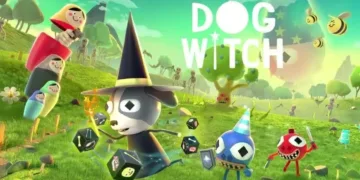


















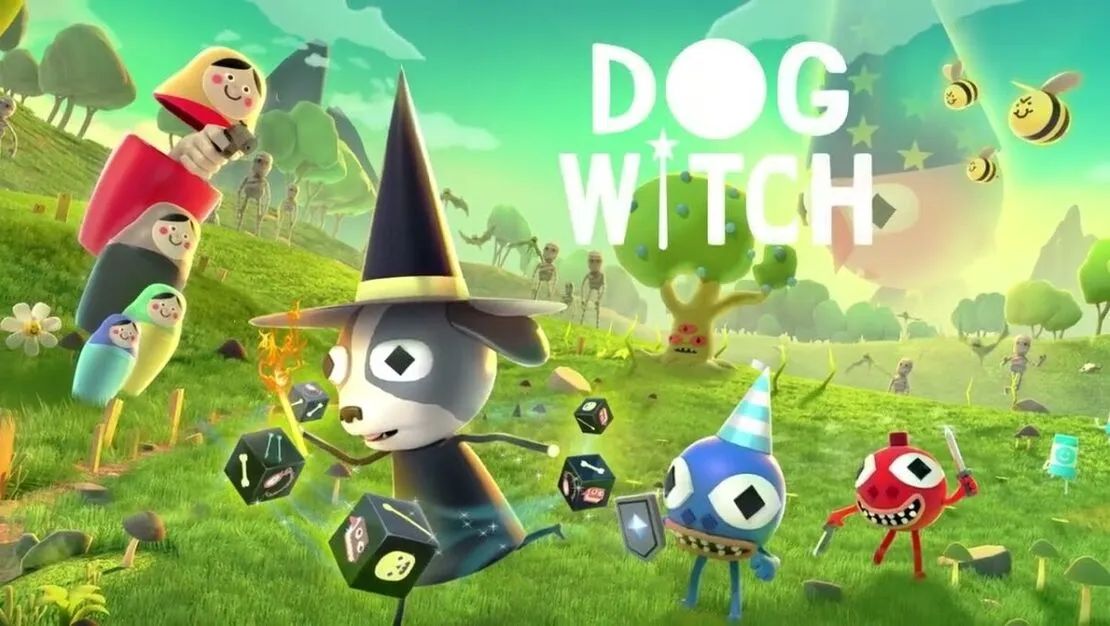

DOG WITCH launched on PC on November 6, 2025, stepping into a deckbuilder space that already has plenty of competition. Developed by Heckmouse and published by Mystic Forge, it puts you in charge of a spellcasting dog pushing through a string of encounters on the way to the Mad Master Wizard. Its first impression comes from the surface: hand-drawn art, a calm jazz soundtrack, and a tone that leans friendly even while the underlying loop stays firmly tactical.
Deckbuilders often present their decision-making through grim mood or high-fantasy tension, and Slay the Spire is a clear reference point for that approach. DOG WITCH goes for comfort instead, dressing its fights in a warm, inviting style. The setup stays simple, but the systems underneath still ask you to think ahead and commit to a plan.
A Canine of Many Coats
DOG WITCH’s personality shows up immediately in how it looks. The game keeps everything cute and approachable, then lets you personalize your lead with more care than you might expect from a run-based strategy title. You choose a breed and fur pattern, tweak the pitch of the bark, and even adjust the tail shape. That early customization does useful work: it makes the character feel like yours before the game starts throwing oddball enemies at you.
That oddball streak is constant once the encounters begin. The enemy list leans into surreal jokes, bouncing from evil milk vending machines to gun-toting matryoshka dolls, with giant bees and angry triangles filling out the gaps. The sound design supports the same vibe.
Jazz rolls through the background and keeps the pace relaxed even when your health bar is in trouble. One design decision pushes you to engage with all of this on your own terms: there is no tutorial. The game drops you into the forest and expects you to learn by watching, testing choices, and absorbing how the rules behave during live fights.
Rolling for Initiative
Combat replaces the usual deck of cards with dice, and that single change reshapes how you read a turn. By default you roll five dice at the start of each round. Each face represents an action, such as dealing damage, building defense, or summoning a minion.
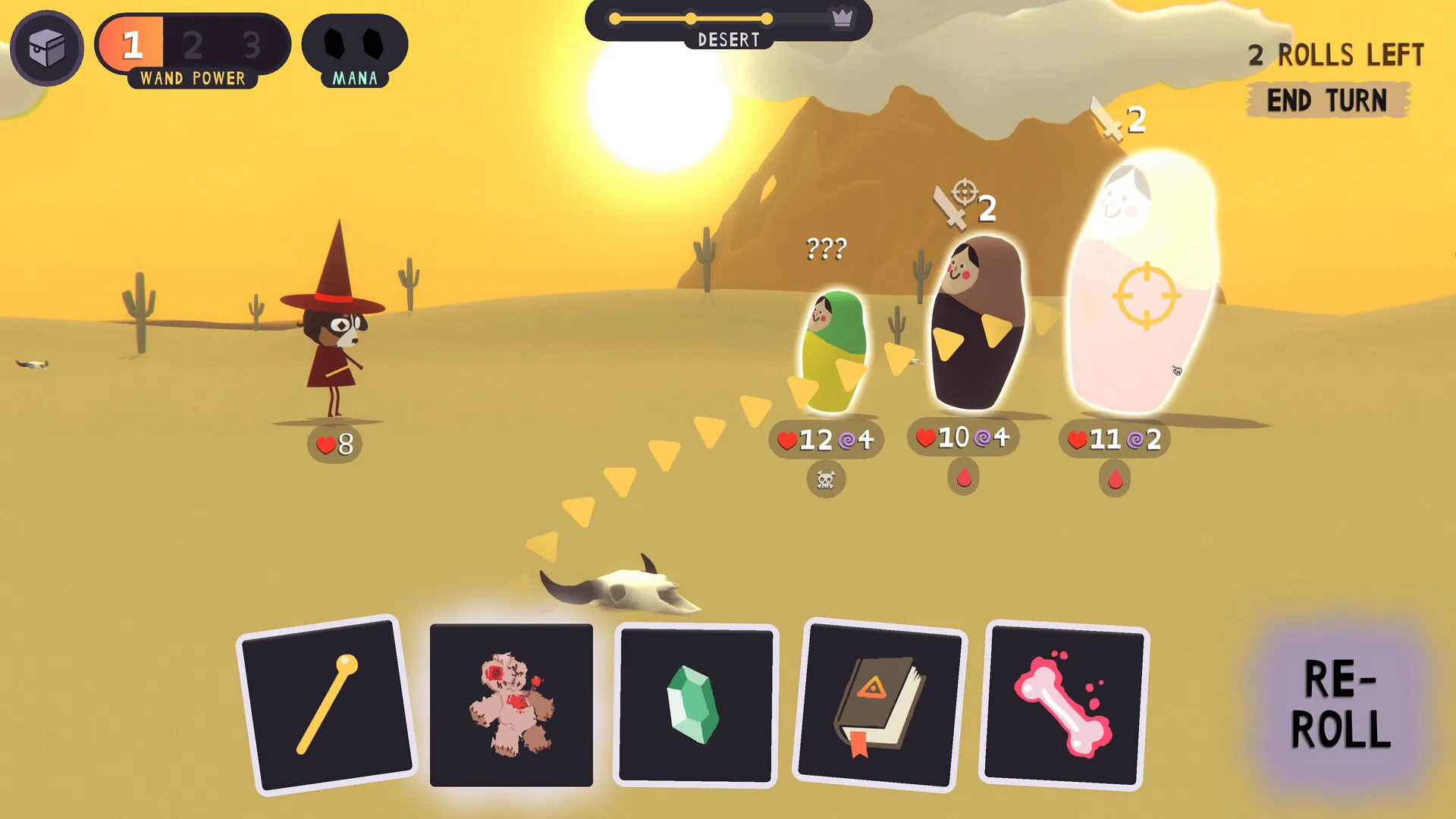
The core twist comes from rerolls. Like Yahtzee, you get two chances to reroll any number of dice, letting you chase specific icons or recover from a rough opening roll. The system becomes less about accepting randomness and more about deciding what to keep, what to throw back, and what outcome you can realistically build toward with limited reroll chances.
Enemy intent is visible, so each turn becomes a response to what the opponent is preparing. Seeing an incoming hit pushes you toward defense or bodies on the board, while a softer enemy action might invite greedier rolls that hunt for damage or setup. That visibility adds structure to the decision-making, because you are not guessing what you need to cover.
Variety comes from how you pursue a win condition. You can invest in small allies that either chip away at health or soak hits for you. You can chase stun tools that remove an enemy turn. You can build charge so the fight pivots around a single heavy special attack. Luck stays present, since dice are dice, but your agency lives in the reroll economy and the choices you lock in after you see both your roll and the enemy’s plan.
Power at a Price
Progression focuses on upgrades that reshape your run in permanent ways. Winning battles hands out rewards that can change dice faces or grant passive benefits, and the game treats these picks as commitments. Once you take an upgrade, it stays with you. You do not rotate it out later, so each reward narrows your identity and pushes you toward a build that becomes harder to abandon with every step forward.
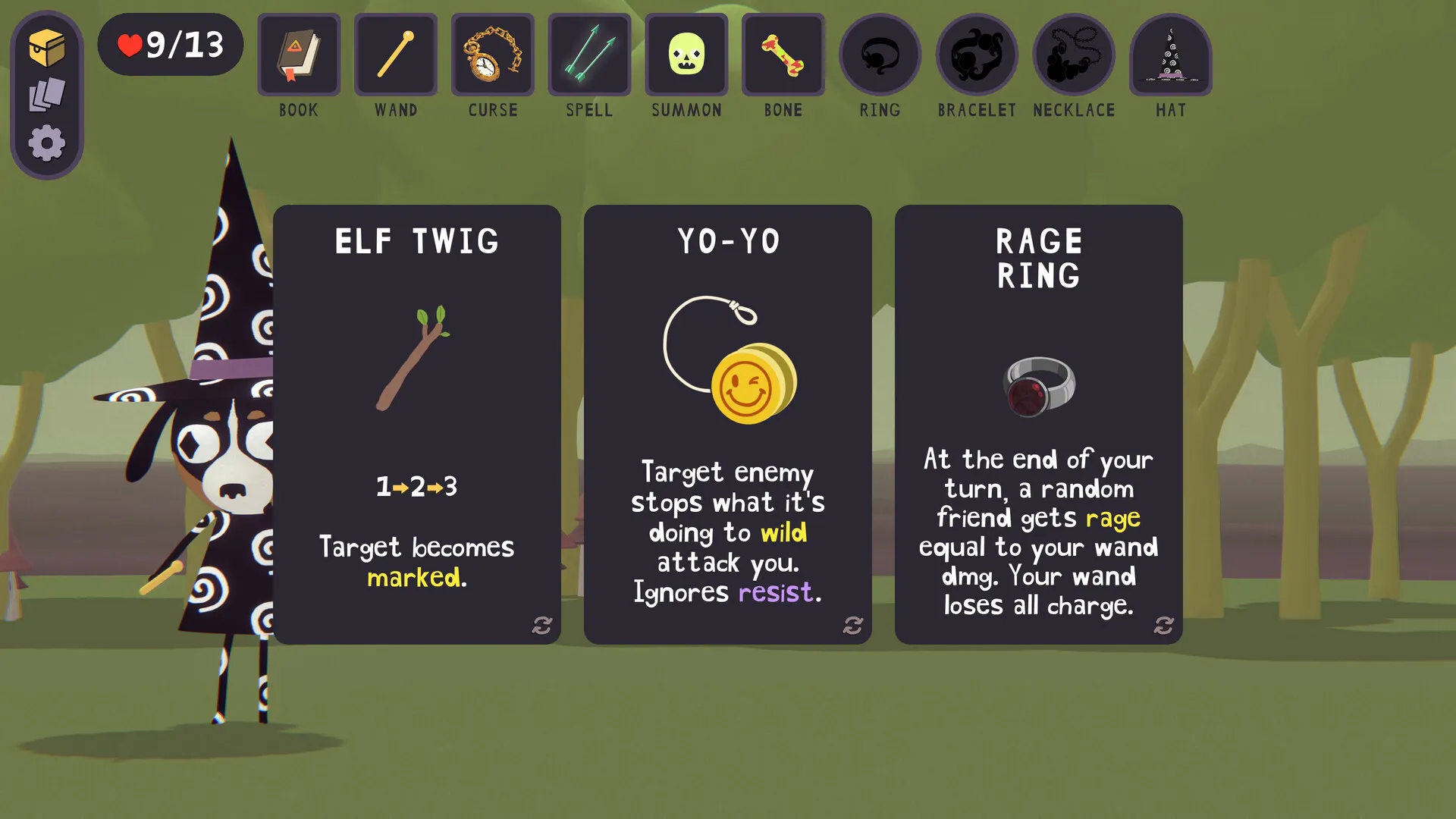
The sharpest decisions come from the “Corrupted” items. These are tempting because they offer meaningful spikes in power, and they also demand health as the entry fee. That cost matters because healing is limited. Opportunities to recover do not come often, and the review’s framing makes it clear that boss victories are one of the rare consistent sources of restoration.
Taking a Corrupted item becomes a math problem you solve with your current health total and your confidence in future damage output. You can grab the power now and try to end fights faster, or you can protect your survivability and hope your current toolkit holds up.
DOG WITCH advertises more than 150 items to find, though repeated appearances can shrink how large the pool feels in practice. Seeing familiar items across multiple runs can speed up your learning curve. It also means experienced players may crack the meta faster than they expect, since a smaller set of common tools is easier to plan around once you recognize patterns.
A Hat for Every Occasion
Runs in DOG WITCH move quickly. Reaching the end credits often lands in the 20 to 30 minute range, and that pacing feeds the “just one more turn” impulse that deckbuilders thrive on. The game tries to protect that replay loop through its Hat system, which functions as a modifier layer tied to unlocks. Hats can shift difficulty or change the rules you play under. One hat supports a “Classic” run, and another can load the experience with harsher penalties for players who want a tougher climb.
Beyond the main campaign structure, Boss Rush and Endless Mode give you alternate ways to stress-test your builds under sustained pressure. The trade-off is repetition. Enemy encounters do not always rotate with enough variety, and item familiarity can build quickly when the same tools appear often.
Longer sessions can start to blur together for that reason. DOG WITCH lands best as a casual pick: a low-stress palate cleanser that still offers real tactical choices, especially between heavier games that demand longer runs and denser mental overhead.
The Review
DOG WITCH
DOG WITCH is a delightful, bite-sized deckbuilder that charms with its hand-drawn aesthetic and cozy jazz atmosphere. While the dice-based mechanics offer a fun twist on the genre and the risk-reward systems provide some strategic depth, the experience is held back by a lack of variety in enemies and items. It serves best as a relaxing, casual diversion rather than a deep, endlessly replayable roguelike.
PROS
- Charming hand-drawn art style and character customization.
- Relaxing jazz soundtrack creates a unique atmosphere.
- Accessible but strategic dice-based combat.
- Creative and humorous enemy designs.
CONS
- Limited enemy variety leads to repetition.
- Item pool feels smaller than advertised, reducing long-term replayability.
- Lack of a tutorial may confuse newcomers.
- Runs are often too short to build deep, complex strategies.