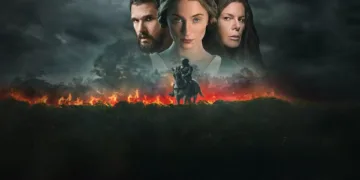












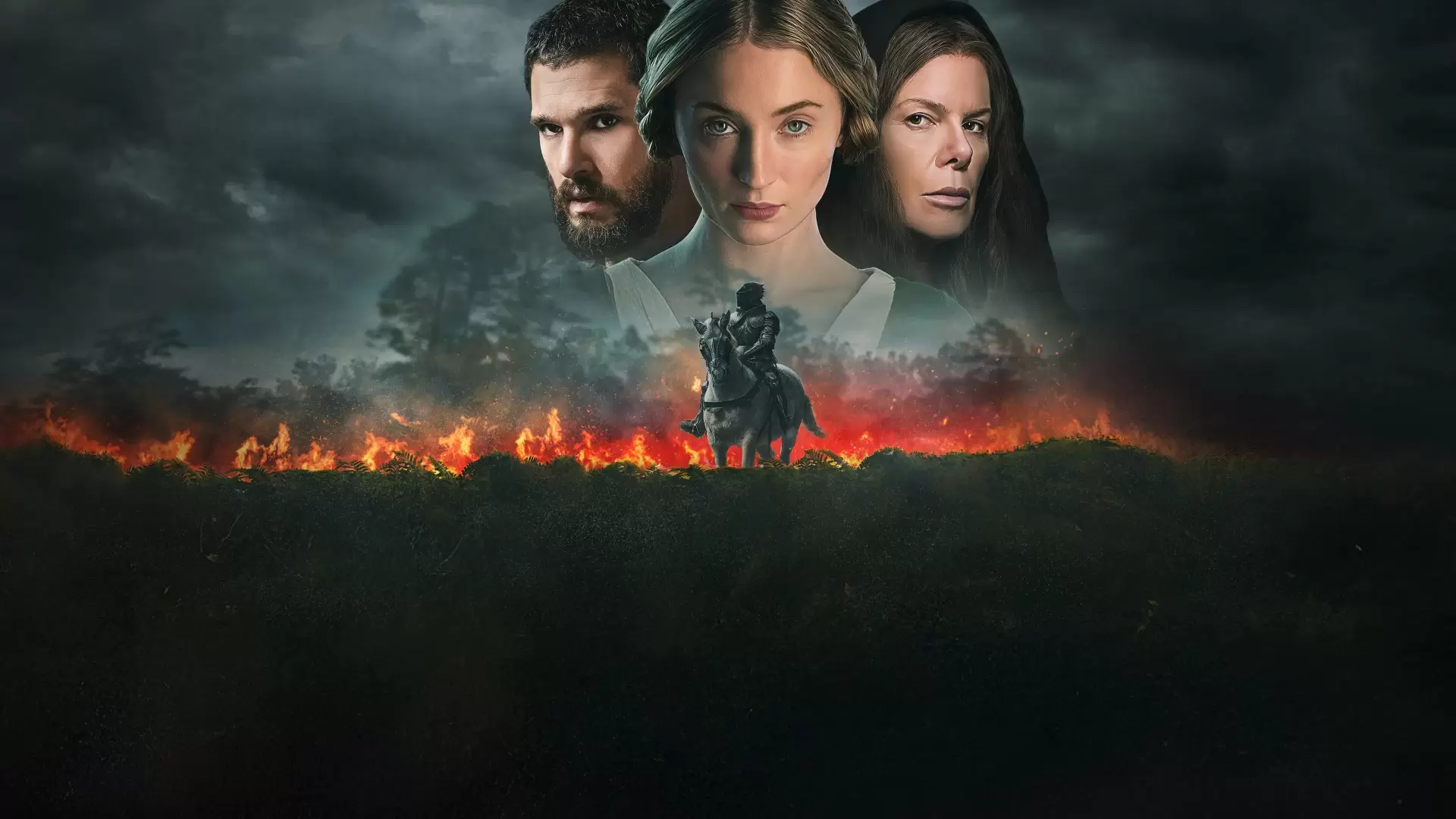

Natasha Kermani stages a story in the grim shadows of 15th-century England where the War of the Roses fractures daily life into shards. The film anchors itself in bleak historical terrain. Two women, Anne and her mother-in-law Morwen, live at the extreme margin of society in a decrepit, rotting cottage. Anne waits for her husband Seamus, who vanished into the distant conflict years earlier.
Survival requires choices that erode ordinary moral language. Anne tends meager crops while Morwen supplements their existence through secret violent robberies of passing travelers. The fragile domestic balance collapses when Jago, a childhood friend and fellow soldier, returns bearing dark tidings about Seamus. A rapid, bitter struggle for control follows.
A spectral armored knight patrols the bordering woods on a pale horse and imposes a supernatural chill on the practical horrors of hunger and exile. The figure inserts dread into the tactile world of filth and hunger. The tale isolates a hard conflict between a domineering elder and a young woman reaching for autonomy. The Cornwall countryside provides a fogbound, suffocating sky. The environment acts like an accomplice to the characters’ descent into brutality. Visual framing keeps them locked in permanent twilight. Every shadow hides a moral compromise.
A Study in Feral Pragmatism and Icy Restraint
Performances register along a spectrum from raw theatricality to tight, minimalist suppression. Marcia Gay Harden embodies Morwen with a ferocious Grande Dame Guignol intensity. She speaks with a heavy guttural growl shaped by a countryside dialect and punctuates sentences with sudden, explosive aggression. Her body often crouches in the dirt as if guarding a territory. Harden’s grimace reads like a study in feral pragmatism. The character moves through devotional language into frantic, murderous behavior with a kind of pious conviction that explains and normalizes violence. Lighting digs into the deep lines of her face and maps a history of grief.
Sophie Turner replies to that chaos with icy stillness and precise calculation. Her Anne opens as a submissive, grieving wife and then shifts toward a demanding autonomy. Turner relies on micro-expressions to show a mind constantly solving survival problems. Gears seem to turn behind her blank stares. Those blank expressions function as a defensive architecture against encroaching madness. She makes silence a weapon. The viewer supplies judgment to a face that refuses easy reading.
Kit Harington arrives as the wedge between the two women. His return unearths buried truths about the battlefield and the fate of Seamus. He wraps manipulation in the language of familiarity. The hearthlight catches deceit in his eyes. Ensemble friction is palpable: Harden radiates a chaotic force while her scene partners stay measured.
A suggested romantic thread between Anne and Jago registers as clinical, almost scientific. The central emotional lever remains the toxic interdependence between Anne and Morwen. Their shared scenes crackle with suppressed rage and mutual reliance. The film functions as a psychological thriller that wears a period costume.
Textures of Despair and Expressionistic Shadows
Visual choices define the limits of this world. Julia Swain frames misery with a surprisingly crisp color palette. The camera lingers on the gritty textures of the forest floor and the filthy cottage walls. The lens treats dirt and grime as a second skin that clings to flesh and thought. Banks of fog and mist erase the horizon and produce a claustrophobia born of weather. Characters are physically marooned on a small patch of land. The Cornwall coast becomes a desolate canvas for expressionistic framing.
Production design amplifies the weight of survival. Costumes hang in heavy, sodden layers of peasant fabric. The overall aesthetic leans into muddy realism. Piercing that drab field is the armored knight whose helmet recurs as a visual motif. The gleam of his armor slices the surrounding decay and announces a steady, distant threat that resembles an old nightmare made manifest.
Sound design tightens the screws on tension. Jamal Green composes a score that uses heavy, thudding cues to insist on fear. The deeper force comes from environmental sound: the wind’s relentless howl, the snap of twigs, the small, sharp noises that register as danger. The soundscape makes viewers feel stranded beside the characters. Neo-noir techniques in shot selection and sonic emphasis pass judgment on the bleak setting.
Saints, Sinners, and the Architecture of Survival
Folk horror mechanics operate here as tools for existential inquiry. Rural isolation, old superstitions, and severe elements combine to fracture the human psyche. Landscape functions as catalyst for breakdown. Thematic pressure emerges where survival collides with gendered expectation.
War draws men away to die and leaves women to adopt violent measures to avoid starvation. Poverty becomes the engine behind atrocity. The script treats free will as a precarious commodity in a world governed by violence. Morwen frames her bloody work in sacramental language. Anne faces a test of whether her moral compass can resist the crushing weight of hunger.
Religious performance layers the narrative. Both women keep an outward show of Christian piety while acting with internal savagery in the shadows. Morwen uses religious language as a tool to direct Anne and to isolate her from desire. Ethical gray areas widen with each fresh wound.
The armored knight functions as a persistent symbol in this moral wasteland. He signifies the lingering trauma of war and blurs the line between human killer and possible curse. The script preserves an ambiguity about his essence.
The crucial center of the carnage is a struggle for female self-determination. Anne works to break free from the pull of a manipulative elder and a deceitful friend. Her arc reads as a deliberate rejection of passive roles imposed by a patriarchal order. She selects a grim path forward. Free will appears to be purchased in bloody installments.
Atmospheric Dread and the Mechanics of Fear
Narrative architecture favors slow-burning pressure over immediate physical action. Atmosphere constructs dread through repetition and tightening distrust. Terror accumulates in the small rituals of daily life. A boiled potato eaten in silence becomes an instrument of anxiety. Pacing mirrors the protagonists’ mental erosion. The audience occupies a waiting room of unease.
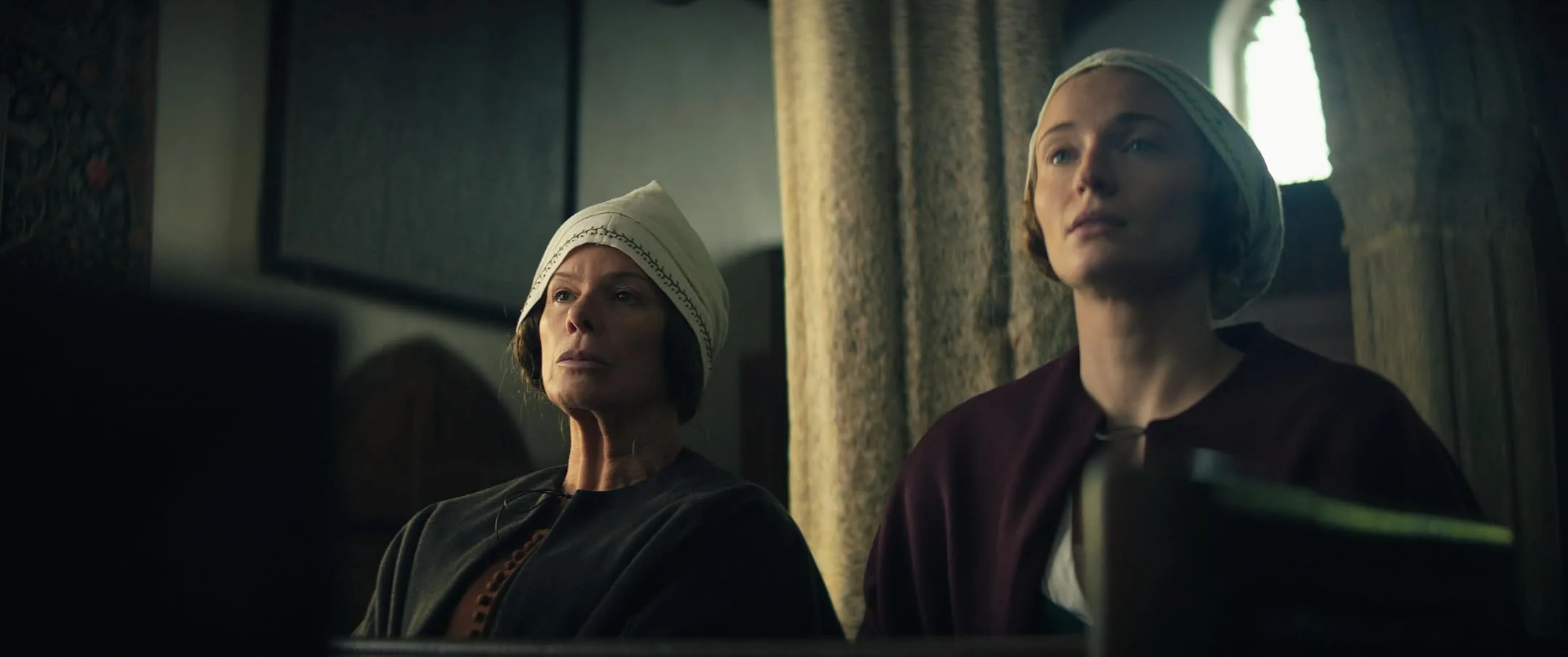
Horror techniques on display depend on familiar tropes. The script returns often to dream sequences that deliver jolting images. Characters wake from violently surreal visions with a repeated questioning of reality. Repetitive nightmares reduce their efficacy after multiple appearances. Sudden loud shocks interrupt the whisper-quiet claustrophobia of the cottage. Camera angles grow more warped as pressure mounts.
The plot borrows from a classical noh-theatre parable and transposes that structure into 15th-century England, which alters the cultural charge of the material. The transposition replaces the original Eastern mysticism with a European flavor of feudal misery. The screenplay also adjusts the source ending to produce a different thematic result for the female protagonist.
Supernatural uncertainty drives the third act. The armored knight and the hinted curses remain open to interpretation. The script balances acute psychological collapse against suggestions of ghostly intrusion. Viewers must decide whether the terrors arise from fractured minds or from an enchanted forest.
The concluding sequence accelerates. The delayed resolution of Jago’s battlefield account marks a pivot for Anne. The exposed violence forces decisive action. The final stretch focuses on Anne’s confrontation with the forces that seek to keep her trapped in the decaying cottage. Neo-noir fatalism threads through the last scenes and leaves a bitter aftertaste. The film refuses tidy explanations or clean absolution.
The Dreadful is a gothic horror film set against the backdrop of the 15th-century War of the Roses in England. It stars Game of Thrones alumni Sophie Turner and Kit Harington as a couple, alongside Marcia Gay Harden as a domineering mother-in-law. The story follows their isolated struggle for survival which is interrupted when a man from their past returns, unleashing a series of events involving a mysterious knight and a potential curse. Released on February 20, 2026, the film is available in select theaters and on digital platforms.
Where to Watch The Dreadful (2026) Online
Full Credits
Title: The Dreadful
Distributor: Lionsgate (United States), True Brit Entertainment (United Kingdom)
Release date: February 20, 2026
Rating: R
Running time: 94 minutes
Director: Natasha Kermani
Writers: Natasha Kermani
Producers and Executive Producers: Sophie Turner, Luke Daniels, Patrick Muldoon, Patrick Hibler, Greg Lauritano, James Herron, Tim Wu, Bull Blumenthal
Cast: Sophie Turner, Kit Harington, Marcia Gay Harden, Laurence O’Fuarain, Jonathan Howard
Director of Photography (Cinematographer): Julia Swain
Editors: Jeff Betancourt, Gabriel de Urioste
Composer: Jamal Green
The Review
The Dreadful
Natasha Kermani’s The Dreadful is a visual feast of medieval misery that ultimately starves its own narrative. While the film successfully transposes its Japanese source material (Onibaba) into a fog-drenched Cornwall, it struggles to maintain the same visceral tension. The result is a slow-burn psychological thriller that excels at "vibes" but falters during its predictable, "girl-boss" adjacent final act. It is a must-watch for fans of folk horror aesthetics and Marcia Gay Harden’s feral energy, but a disappointment for those seeking a propulsive plot or a meaningful Game of Thrones reunion.
PROS
- Marcia Gay Harden delivers a ferocious and go-for-broke performance that carries the energy of the entire film.
- The cinematography utilizes fog and grit to create a masterful sense of environmental entrapment.
- The script offers a sharp exploration of gendered violence and the crushing desperation of poverty.
- The production design features exceptional textures that ground the story in a hauntingly realistic world.
CONS
- The glacial pacing often causes the narrative to stall and makes the runtime feel burdensome.
- The plot relies too heavily on tired dream sequences and predictable jump scares to generate friction.
- A lack of genuine chemistry between the leads makes the central reunion feel hollow.
- The final act pivots into a modern tone that feels far too sanitized for such a bleak setting.