





























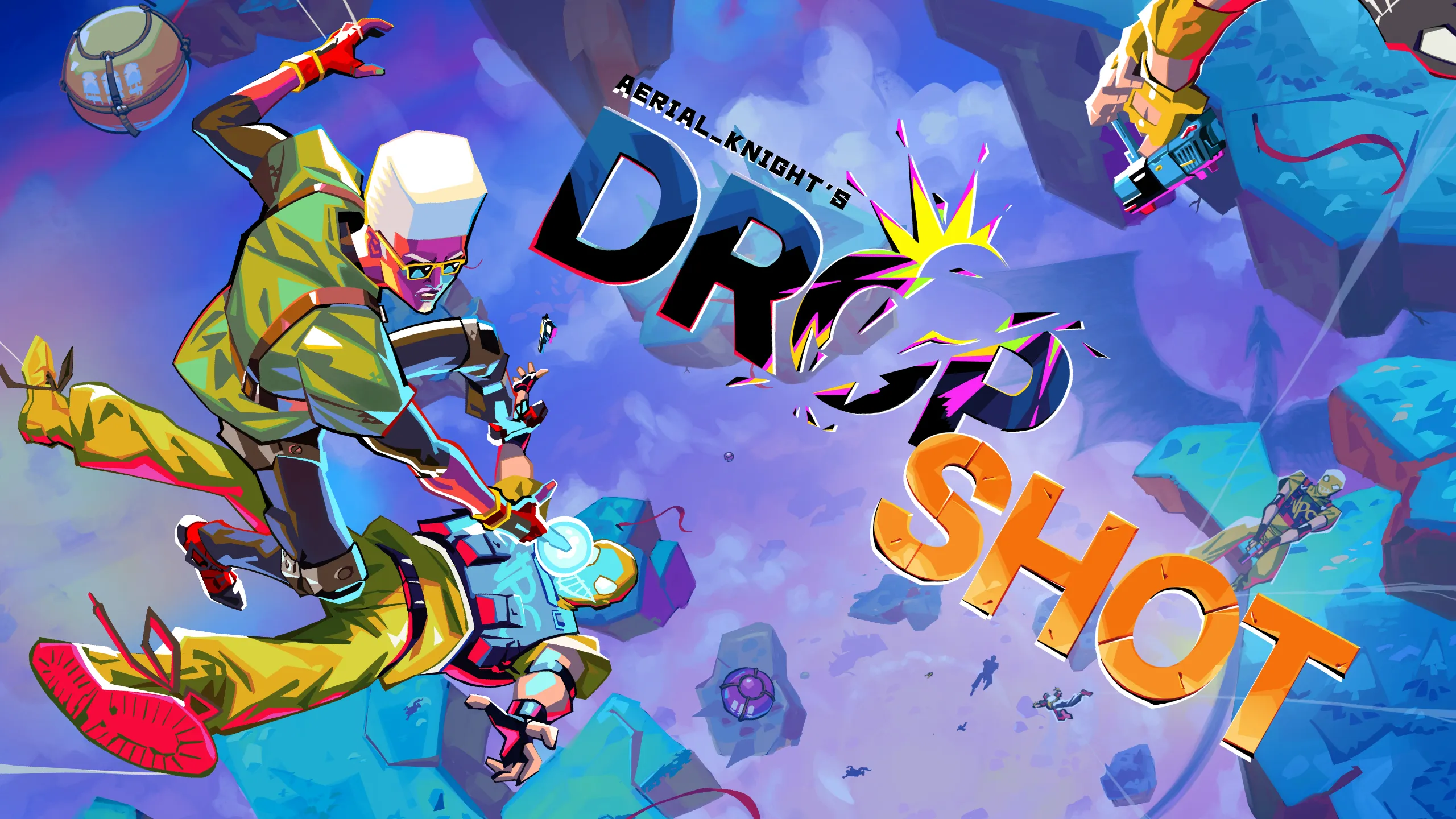

Aerial_Knight’s DropShot drops you into a setting where physics and biology tilt toward high-octane absurdity. Detroit-based developer Niel Young builds on the stylistic groundwork of his earlier work and channels it into a first-person shooter built around constant motion. You play as Smoke Wallace, marked by purple skin after a radioactive dragon bite that took his family.
That loss fuels his drive for payback and leaves him able to fire projectiles from his fingertips. The narrative keeps things lean and pointed, giving Smoke a clear target and a reason to keep throwing himself into danger. Each stage begins with Smoke launching from an aircraft to meet mercenaries and enormous reptiles while falling through open air.
With no parachute, the game makes freefall feel like a rule you have to accept, then learn to exploit. That restriction matches Smoke’s reckless need for revenge, since the mechanics keep pushing you forward with the same urgency the story assigns to him. The result lands like a feverish hit of 90s arcade energy, where the theme arrives fast and stays tied to the immediate pressure of staying alive long enough to settle a vendetta.
The Mechanics of Vertical Momentum
The foundation is fifty levels built as vertical shooting galleries, with movement locked into a steady descent. You can’t pause the fall, and you can’t freely spin your view, so the game commits to a single direction of play and asks you to handle everything inside that constraint.
The pace recalls high-speed indie action like Neon White, where success comes from reading space quickly and treating movement as a problem you solve in real time. Here, positioning hinges on slipstreams, airborne currents that give short bursts of speed to help you clear hazards and line up the next threat. Those boosts become the closest thing to a movement toolkit, and learning where to catch them matters as much as aim.
Combat is built around discipline. Smoke fires in limited bursts, with a ten-shot cap before his fingers need a reload. You refill ammo by hitting orange balloons scattered across the skyline, which turns resource management into a targeting test that happens mid-plunge.
That constraint ties player decision-making to the environment: you’re always weighing the next enemy against the next balloon and deciding where to spend shots. A melee punch adds a last-ditch option for threats that get too close, useful when a mistimed shot leaves you in someone’s line of fire.
Stages stack hazards into a moving obstacle course, mixing rotating lasers, floating islands, and jagged rock formations that force constant adjustments. Two hits wipe the attempt and restart the stage, so survival depends on clean execution and quick recovery after small mistakes. A fixed X-shaped reticle near the middle of the screen does a lot of heavy lifting.
It confirms contact before you even fire, which helps track tiny enemies against a wide, warped horizon where depth can be hard to judge at speed. Timing matters because Smoke’s shots lose effectiveness at short range. Fire too early and the target drifts out of reach; fire too late and you eat return fire while scrambling for space. The loop pushes spatial awareness into the foreground, keeping the mechanics technical without burying the player in complicated inputs.
Escalation and Strategic Customization
The game breaks up its structure with special stages spaced at regular intervals. Every five levels, it pivots into a big boss fight or a pure speed race, and that cadence keeps the descent from blurring together. Boss encounters pit you against dragons and tanks suspended by parachutes, demanding sustained fire and careful planning around the ammo limit. Dragons throw fireballs you have to shoot out of the air, setting up a back-and-forth rhythm that echoes classic light-gun design, where the real challenge comes from reacting cleanly under pressure.
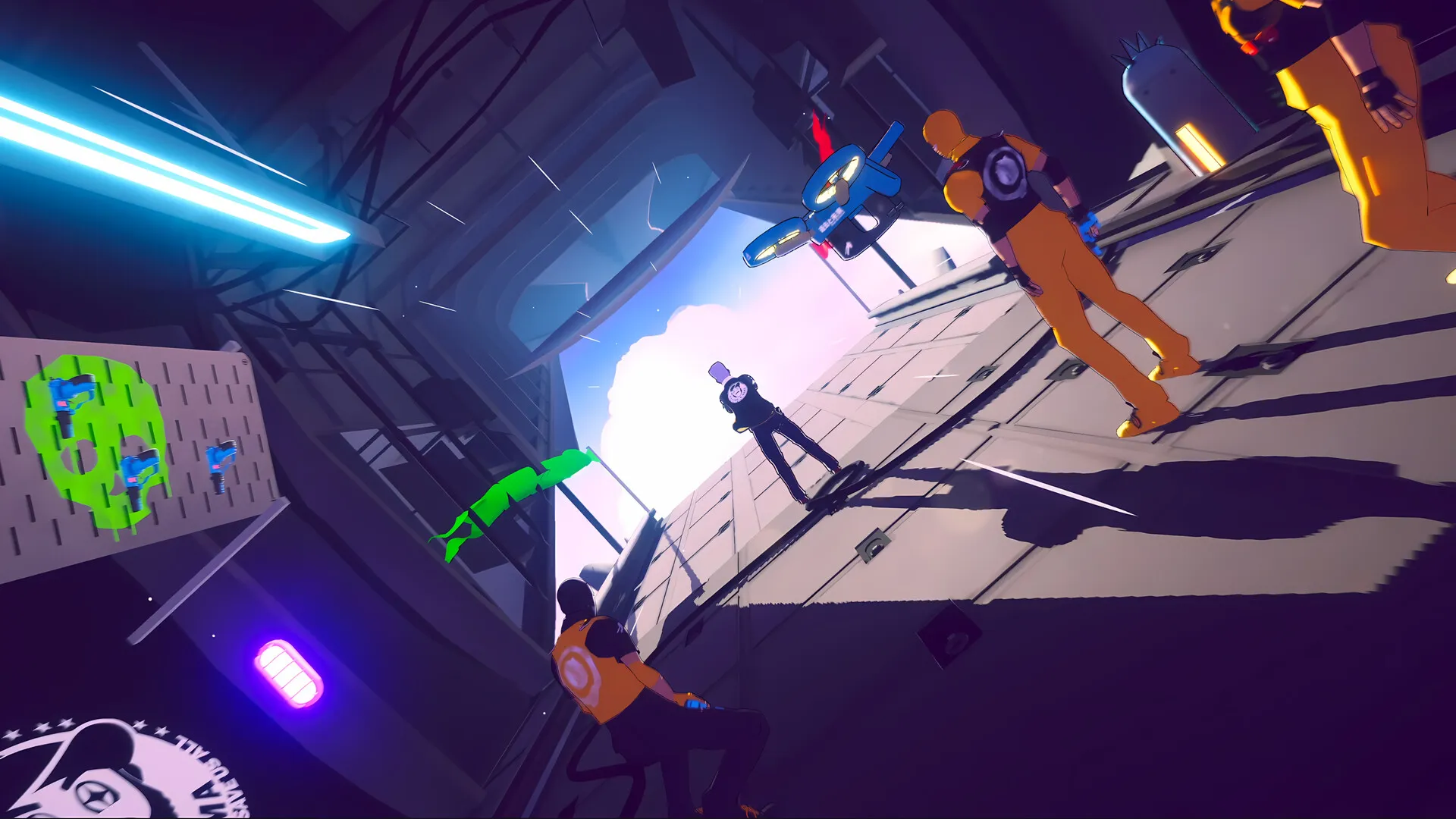
Racing stages change the priorities by removing combat and focusing on movement. You chase a rival to reach a falling golden egg, and winning depends on threading every speed tunnel while dodging debris. In these moments, slipstreams and tunnels stop being optional boosts and turn into the route itself. The most important “choice” becomes how aggressively you commit to risky lines in exchange for speed, since a slight misread can cost the run.
The difficulty spikes in the last ten levels as hazard density climbs and enemy fire grows more aggressive. The game offers a strategic counterweight through dragon eggs that grant randomized power-ups like shields or multi-directional fire. Those bonuses connect directly to the glasses Smoke wears, and you pick the shades from the main menu before each drop. That pre-run selection becomes the clearest expression of player agency in the design, because it sets the tone for how you want to approach a stage.
A defensive option can make survival feel steadier in dense late-game patterns, while an offensive setup can help keep momentum during boss fights where sustained damage matters. It’s a simple layer of planning that still carries real weight because the rest of the game keeps you locked into the same forward fall. The glasses choice shapes how you solve the same core problem, and it changes the feel of a run without asking you to learn a new ruleset.
Aesthetic Identity and Longevity
The game’s look lands as its loudest calling card. Cel-shaded visuals paint the world in sharp purples and blues, creating a surreal glow that keeps your eyes trained on the fall line and the next threat. The palette feels like a living painting soaked in acid color, and that exaggeration fits the premise of fingertip gunfire and mid-air dragon fights. A funky, rhythm-driven soundtrack locks into that mood, carrying Smoke Wallace’s confidence and turning each descent into something like a choreographed act of destruction, where motion and music keep time together.

Progression sticks to arcade values. Each level grades you on speed and accuracy, handing out letter ranks that reward precision and route efficiency. Chasing S+++ demands perfect hits and fast clears, which frames mastery as a replay goal rather than a slow drip of upgrades. Completionists can unlock cosmetic sunglasses that change Smoke’s appearance, reinforcing the game’s interest in style and self-expression through small visual rewards that sit alongside the mechanical chase for better ranks.
The campaign runs about three hours and comes without global leaderboards or online features, so improvement plays out as a private contest against your own performance. As an experimental indie release, it leans into brevity and impact, presenting a focused mechanical hook and letting it carry the full experience.
The controls stay readable for casual players, while dedicated score-chasers get depth from routing, ammo discipline, and the pursuit of flawless execution. The end result is a tight, arcade-inspired sprint built around freefall pressure, clean decision-making, and the satisfaction of finally nailing a run that once felt impossible.
The Review
Aerial_Knight's DropShot
Aerial_Knight’s DropShot is a vibrant, unhinged arcade experience that thrives on style and a bizarre premise. While the "magic finger gun" combat and high-speed races provide genuine thrills, the experience is occasionally grounded by inconsistent ammo placement and stiff lateral movement. It is a bold, experimental palette cleanser that favors flair over depth. For those who value aesthetic attitude and quick, challenging bursts of gameplay, it is a ride worth taking, even if the descent feels a bit uneven.
PROS
- Striking, high-contrast cel-shaded aesthetic.
- Funky, rhythm-driven soundtrack that enhances the pace.
- Unique and creative boss encounters.
- High replayability for score hunters and completionists.
CONS
- Limited enemy variety across 50 levels.
- Inconsistent placement of ammo balloons can cause frustration.
- Lack of global leaderboards or multiplayer features.
- Movement can feel restricted during dense hazard sections.







