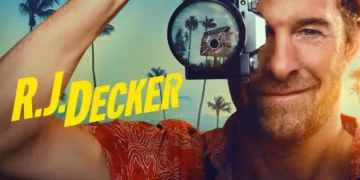























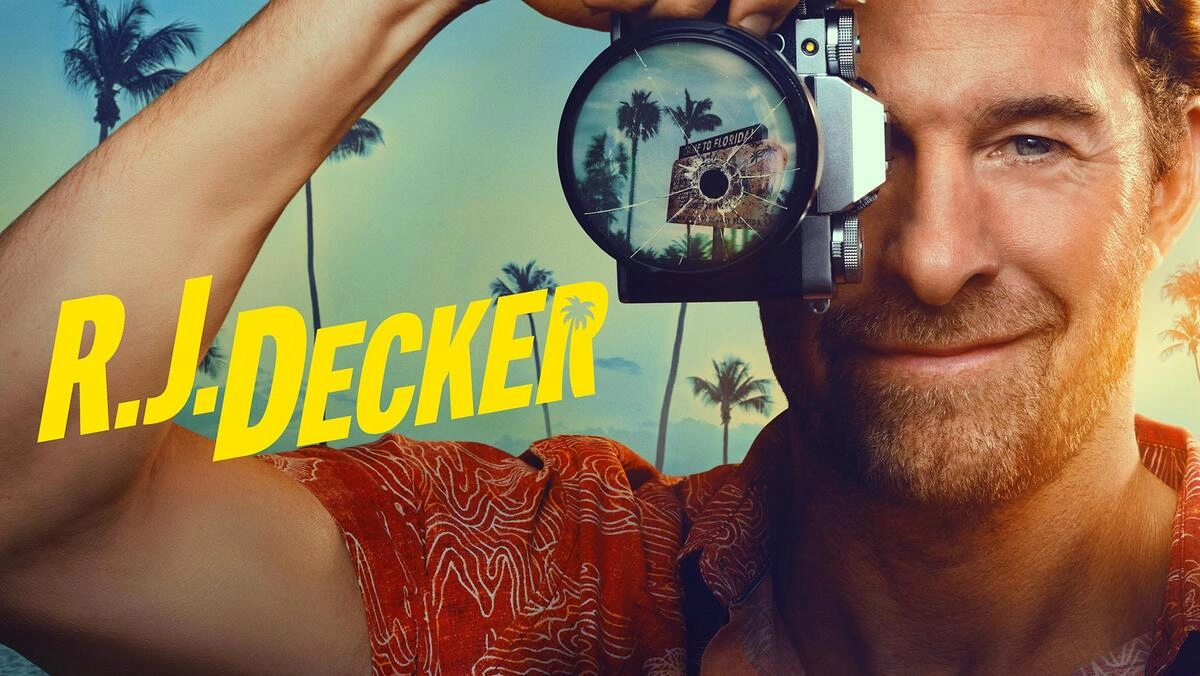

RJ Decker arrives on ABC as a sun-baked procedural soaked in the humid disorder of South Florida. Adapted from Carl Hiaasen’s Double Whammy, the series follows a former photojournalist rebuilding his life after an eighteen-month prison sentence. Decker lost his career after assaulting a senator’s son. Now he works as a private investigator from a trailer park being slowly menaced by a sinkhole, which is one way for real estate to develop comic timing.
Photography remains his greatest advantage. He notices what other people miss, which gives the show a clean investigative engine. Fort Lauderdale fills up with oddball criminals and a loyal circle that includes his ex-wife, her detective spouse, and a former cellmate newly rich from a lottery win.
The show runs on weekly mysteries, with a serialized search for justice involving a murdered former colleague supplying the emotional pull. Decker wants his professional life back, and he must sort through a tense connection with the woman whose testimony helped convict him. The swampy setting becomes a character in its own right, a place where the bizarre has clocked in for a full shift.
A Cast of Misfits and Found Family
Scott Speedman plays Decker with easy charm and a welcome lack of tortured-guy theatrics. He gives us a man who knows he made serious mistakes and carries that knowledge without turning every scene into a rainy monologue.
His move from photographing the news to investigating crimes feels credible because both jobs depend on seeing clearly. His camera records the truths other people overlook. His home on the lip of a sinkhole gives the series a neat visual joke about his social and financial position. Subtle? Hardly. Effective? Absolutely.
Kevin Rankin gives the show much of its comic pulse as Wish Aiken. Wish is an ex-con whose post-prison life improved with the help of a lottery jackpot. He owns the bar that serves as the cast’s gathering spot, and he becomes Decker’s enthusiastic partner on investigations. His loyalty has a loose, streetwise quality, giving the series a human counterweight to its procedural machinery.
The domestic arrangement gives the show a fresh charge. Adelaide Clemens plays Catherine, Decker’s journalist ex-wife, and their friendship feels genuine. Bevin Bru plays Mel, Catherine’s wife and a police detective who gives Decker access to law enforcement information. Their clashes carry the snap of mutual respect. Sofia, their daughter, sees Decker as an uncle, which gives the show a gentler note amid the crimes, scams, and Florida-grade foolishness.
Jaina Lee Ortiz brings precision and bite as Emi Ochoa, a lawyer from a powerful family. Her past role in Decker’s imprisonment leaves a cloud over every interaction. Her current help, which includes legal access and social influence, functions as restitution. Their dynamic creates steady friction. Decker must decide how much help he can accept from the person linked to the collapse of his first career.
The High Tide of Florida Weirdness
Fort Lauderdale operates as the show’s rulebook. The writers lean into the Florida Man tradition through cases involving illegal Venus flytrap smuggling and a male strip club named Manatease. That title alone deserves a plaque. The comedy lands because the details feel specific. Wish offers free drinks to anyone who can prove they once inspired a strange local headline. That kind of regional texture keeps the mystery format lively.
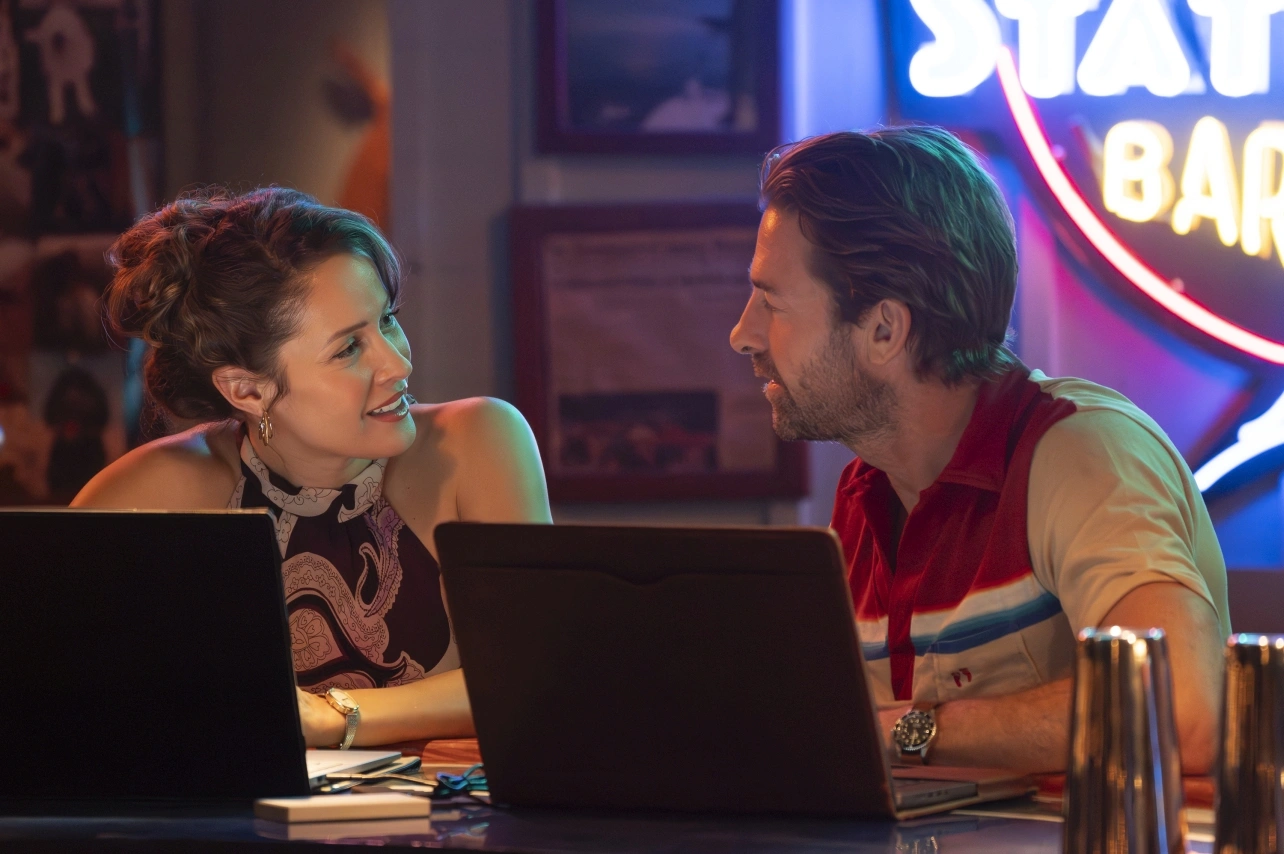
The environmental imagery sharpens Decker’s inner life. The sinkhole eating away at his trailer park turns his unstable future into geography. The scuzzy, damp reality of his world clashes with the polished power surrounding the Ochoa family. The show keeps a bright, breezy surface, steering clear of the gloomy noir look associated with many private-eye stories. That visual choice lets the series handle grim material, including strangulation, while retaining its comic fizz.
The case-of-the-week format suits the material. Each episode gives the audience a self-contained puzzle and moves the serialized story forward in measured increments. Decker develops through small wins. The show treats his civilian investigator status with a wink. He has no official authority, so he depends on his instincts, his camera, and his ability to read a scene. This gives the series a crisp update of classic private-eye television, filtered through humidity, bad decisions, and a local-news headline waiting to happen.
Focus and Frame: The Art of the PI
The production design keeps Decker’s photojournalist background in view through a clear visual grammar. Camera motifs reflect the way his mind works. Framing often imitates a professional lens, catching small clues and quick reactions before they slip away. This makes his investigative skill feel earned. He sees patterns because he has trained himself to look.
The cinematography captures South Florida heat as a physical force. The lighting makes the air feel damp and heavy. The show draws a sharp visual line between the cramped prison flashbacks and the open, sunlit outdoor scenes in the present. That shift reflects Decker’s move from confinement into a risky form of freedom.
The pacing stays nimble by switching between weekly cases and the Clay Gregory arc. Flashbacks give shape to Decker’s downfall and explain his connection to the victim of his assault. They add context without draining the present-day momentum. The sound design helps pin the setting in place. Elvis Presley songs bring a specific Floridian nostalgia, giving the show a lived-in texture.
The dialogue stays sharp and dry, favoring quick wit over bulky exposition. That economy keeps the episodes moving. The series trusts viewers to pick up visual cues, character shifts, and tonal signals. The humidity does plenty of narrative lifting, which feels appropriate for a show where the air practically has union representation.
Second Chances in the Sunshine State
The show studies the ethics of watching. Decker spent his earlier life behind a lens, observing events at a distance. His new work pulls him into the search for justice as an active participant. The trauma of witnessing a colleague’s murder shapes his methods and gives his odd tactics a darker charge. He understands what it means to be boxed in by a system with little interest in nuance.
That experience shapes his version of justice. He shows compassion toward petty criminals acting from desperation. He understands how thin the line can be between a mistake and a criminal act. The main conflict sets his personal code against the entrenched power of the Ochoa family. He does not make grand speeches about regret over his temper. He accepts the legal consequences and keeps moving, bruised pride and all.
His connection with Emi gives the redemption story its sharpest edge. She carries a moral debt from her part in his sentencing, and her choice to help him links his past to a possible future. The search for closure over his murdered colleague gives the series needed weight and keeps the comic brightness from floating away.
Decker wants financial and emotional stability in a world that seems ready to swallow him whole, sometimes quite literally. His second chance becomes a way to protect people with few allies. The question lingering in the Florida heat is simple enough to sting: can anyone move forward while the past is still parked in the driveway?
R.J. Decker premiered on ABC on March 3, 2026. The series airs every Tuesday at 10:00 p.m. EST. Viewers can watch new episodes on the broadcast network or stream them on Hulu starting the next day. This production follows a former photographer working as a private investigator in Florida and is based on a popular novel.
Where to Watch R.J. Decker Online








Full Credits
Title: R.J. Decker
Distributor: ABC, Hulu
Release date: March 3, 2026
Rating: TV-14
Running time: 42, 45 minutes
Director: Paul McGuigan, Tara Nicole Weyr, Holly Dale, Christine Moore, Michael Lehmann, Seith Mann, Ken Biller
Writers: Robert Doherty, Liz Friedman, Ken Biller, Jason Tracey, Jamie Savarese, Juan Carlos Fernandez
Producers and Executive Producers: Carl Hiaasen, Paul McGuigan, Carl Beverly, Sarah Timberman, Robert Doherty, Jason Tracey, Barbara D’Alessandro, John Radulovic, Scott Speedman
Cast: Scott Speedman, Jaina Lee Ortiz, Kevin Rankin, Adelaide Clemens, Bevin Bru, Mélodie Rose Romano, David Zayas, Stephen Bishop
Director of Photography (Cinematographer): Oliver Bokelberg, Ron Fortunato
Editors: Joshua Charson, Gerald Valdez, Susan Vaill, Mark Manos, Anna Terebelo
Composer: Sean Callery
The Review
R.J. Decker
RJ Decker breathes fresh air into the procedural landscape by trading grit for sunshine and genuine character depth. Scott Speedman delivers a grounded, likable performance that anchors the show's more eccentric Florida Man detours. The series manages to feel familiar yet distinctive. It balances quirky weekly mysteries with a strong personal redemption arc. It succeeds as a smart, humid, and frequently funny update to the classic private investigator format.
PROS
- Scott Speedman’s charismatic and grounded lead performance.
- Authentic and humorous use of South Florida settings and local lore.
- Strong supporting cast, specifically Kevin Rankin’s portrayal of Wish.
- Visual motifs that effectively utilize the protagonist’s photography background.
CONS
- The pilot episode carries a heavy load of exposition.
- Certain crime premises lean too far into the absurd.
- The central romantic connection lacks development in early chapters.