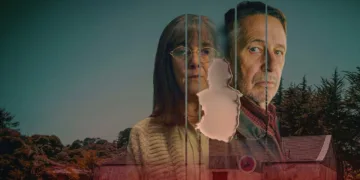

























Someone Has to Know begins with a familiar premise and then refuses the easy machinery that usually comes with it. In 1999, a young man named Julio goes out to a discotheque and never returns home. From that moment, the series turns a missing-person case into something far heavier. Julio’s disappearance tears through his family, unsettles a whole community, and exposes the uneasy relationship between public grief and private silence.
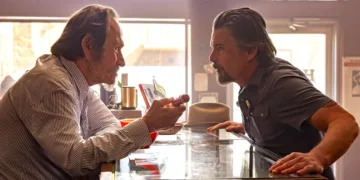
Vanessa, Julio’s mother, becomes the force that keeps the story moving. Her search pulls the case out of police files and into the streets, where posters, rumours, and accusations start to circulate. Detective Montero steps in as the investigator trying to make sense of a case full of weak testimony and shifting stories. Then there is Father Andrés, who hears a confession linked to Julio’s fate and finds himself locked between religious obligation and plain human decency.
That triangle gives the series its shape. This is a sombre, tightly wound study of grief, guilt, secrecy, and the way a town can look directly at a wound while still refusing to name what caused it. The fact that the story draws from a real unsolved Chilean case hangs over every scene. It gives the series a grim patience, along with the sense that answers may exist without ever becoming accessible.
A Mystery Built on Delay, Silence, and Friction
The early episodes establish a strong narrative hook. Julio vanishes after a night in a crowded club, and nobody seems able or willing to say what happened. That contradiction becomes the engine of the show. A boy disappears in public, surrounded by people, and the truth still slips away. The title works as accusation and thesis at the same time.
The writing builds tension through accumulation. Each new witness, suspect, or memory fragment appears to bring the case closer to clarity, then nudges it back into uncertainty. Leo, the nightclub owners, the bouncer, and the mute witness all seem central for a stretch. Then their importance shifts, weakens, or mutates into something murkier. The investigation moves in circles that feel intentional. This is a series about partial knowledge, damaged memory, and the way fear can deform every statement before it leaves a person’s mouth.
That approach carries real dramatic value. It captures the exhaustion of living inside an unresolved case, where every lead creates hope and then drains it. The priest’s confession thread sharpens this tension further. The audience knows that Father Andrés is carrying something vital, which turns every scene around him into a study in suppression. He is sitting next to the answer, spiritually handcuffed.
Still, the series asks for a great deal of patience. Across eight episodes running around 40 minutes each, the slow-burn structure starts to test its own limits. There are stretches where the drama feels less like pressure building and more like the story treading water in heavy shoes. The lack of clean breakthroughs suits the material, since this case resists neat narrative design. Realism alone does not always solve the problem of momentum. At times, the show seems so committed to emotional attrition that it forgets a story still needs shape. That does not ruin the series. It does leave certain passages feeling longer than their ideas can support.
Three Burdens at the Center of the Story
The strongest element in Someone Has to Know is the way it anchors the case in three distinct emotional states. Vanessa embodies grief in motion. Montero represents obsession filtered through procedure. Father Andrés carries silence as torment. Their interactions give the series its dramatic core, and the performances keep that structure grounded even when the plot starts to circle.
Vanessa is the character who gives the show its pulse. She is written as a mother pushed into public action by fear, pain, and the refusal to let her son disappear into bureaucratic fog. Paulina García plays her with restraint, which matters. The role could easily have tilted into theatrical suffering. García keeps Vanessa painfully real. Her desperation feels lived in, frayed, and exhausting.
Montero, played by Alfredo Castro, gives the series its investigative backbone. He is methodical, intelligent, and visibly worn down by the case. Persistence is the quality that defines him above all else. He is occasionally sharp, occasionally blunt, and always aware that time is working against him. Castro leans into that fatigue. Montero looks like a man trying to force order onto a situation that keeps rejecting it.
Father Andrés is the most dramatically loaded figure in the show. His conflict is built on paralysis, which is a risky thing to make central. Gabriel Cañas makes it work. The priest knows enough to haunt every scene he enters, and his silence grows harder to tolerate as the story moves on. That irritation is part of the design. He is fascinating because he is aggravating.
The supporting players help sustain the larger mood of suspicion. People connected to the club, the town, and Julio’s final night create a world where everyone seems to possess a shard of the truth and no one can assemble the whole thing.
Silence, Moral Failure, and the Weight of an Unfinished Story
The series is working with familiar crime-drama material, with its interests lying elsewhere. It keeps returning to a simple idea: truth is buried by ordinary fear as readily as by criminal genius. Somebody knows what happened to Julio. The problem is that shame, self-protection, loyalty, and cowardice have all joined the same conspiracy of silence.

That silence exists on multiple levels. It lives in the church, where Father Andrés turns religious duty into a form of moral imprisonment. It lives in the investigation, where the police keep running into testimony that dissolves under pressure. It lives in the family and the town, where public concern coexists with gossip, judgment, and cruelty. The series suggests that communities can rally around tragedy while still protecting appearances first.
Father Andrés becomes the key figure for the show’s ethical concerns. His position raises the hardest questions the series has to offer. What does responsibility look like when faith demands silence and justice demands speech? The show does not offer a clean answer, which is probably wise. It leaves him suspended in a space where every choice carries its own failure.
Visually, Someone Has to Know understands the value of restraint. The muted colours, subdued camerawork, and dreary settings create an atmosphere of grief that feels constant and inescapable. The town itself starts to seem like an extension of the case, weighed down by what it knows and what it refuses to say. That heavy realism gives the series its lingering effect.
Its weakness lies in turning strong emotional and thematic material into satisfying dramatic movement. The ideas are solid. The atmosphere is potent. The storytelling can still feel slack. What remains is memorable: a crime series preoccupied with the sorrow, guilt, and moral unease that gather around an absence no one can truly fill.
Someone Has to Know is a gripping Chilean crime drama miniseries that premiered on Netflix on April 15, 2026. Based on a haunting real-life missing persons case from 1999, the series delves into an unsolved murder that has long lingered in the national consciousness. Over the course of eight episodes, it explores the complexities of justice, memory, and the secrets hidden within a community. The series is currently available for streaming globally on the Netflix platform.
Full Credits
Title: Someone Has to Know
Distributor: Netflix
Release date: April 15, 2026
Rating: TV-MA
Running time: 32–44 minutes per episode
Director: Pablo Larraín, Claudia Huaiquimilla
Writers: Guillermo Calderón, Paula del Fierro, Enrique Videla
Producers and Executive Producers: Juan de Dios Larraín, Pablo Larraín, Rocío Jadue, Juan Ignacio Correa, Mariane Hartard
Cast: Claudia Di Girolamo, Aline Küppenheim, Gloria Münchmeyer, Amparo Noguera, Néstor Cantillana, Daniel Alcaíno, Blanca Lewin, Francisco Melo
Director of Photography (Cinematographer): Sergio Armstrong
Editors: Andrea Chignoli, Soledad Salfate
Composer: José Miguel Miranda
The Review
Someone Has to Know
Someone Has to Know is a sombre, well-acted crime drama that finds its strength in character, mood, and moral tension. Its portrait of grief and silence carries real weight, and the central trio keeps the series emotionally grounded. The pacing can drag, and the narrative sometimes circles the same ideas too long, which blunts its impact. Still, its realism and haunted atmosphere make it worth watching for viewers drawn to unresolved, character-driven mysteries.
PROS
- Strong lead performances
- Emotionally grounded storytelling
- Haunting atmosphere and visual restraint
- Sharp moral conflict around the priest
- Effective sense of communal silence and suspicion
CONS
- Slow pacing across eight episodes
- Repetitive stretches in the investigation
- Limited narrative momentum
- Payoff may frustrate viewers seeking closure