




















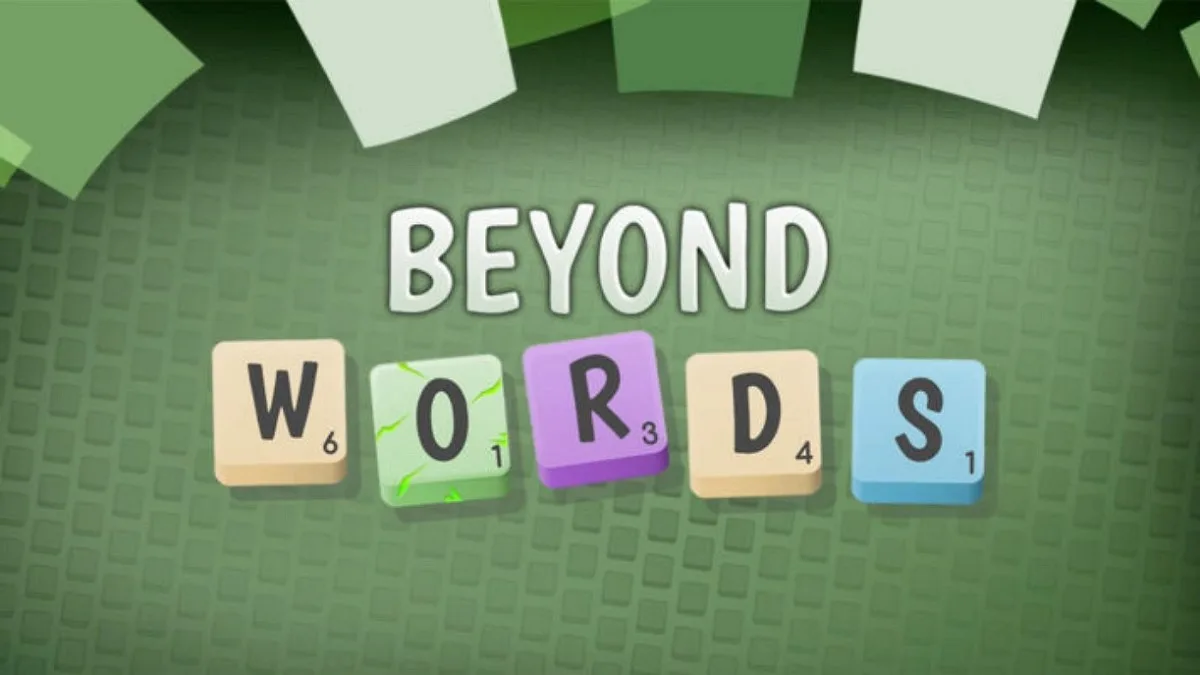

Beyond Words takes a familiar idea and gives it a tense, run-based frame. It is a single-player word game where you draw letter tiles, place them on a board, and try to reach a target score before your moves run out. The roguelike structure wrapped around that loop is the key differentiator. Each round feeds into the next through earned coins, shop purchases, and upgrades that can alter how your words score or how your rack behaves. That gives the game a rhythm closer to Balatro than to traditional Scrabble, where every turn feels like part of a larger connected build across the whole run.
The first impression is strong because the game makes its pitch fast. You are building words, chasing points, and adapting to whatever the draw gives you. Random boards, shifting rules, and a rotating shop keep each run from settling into a fixed pattern. For players who enjoy word games, score chasing, and systems that invite planning under pressure, the setup is immediately appealing.
Core Word-Building Gameplay
The heart of Beyond Words is a simple act carrying a lot of pressure: place tiles, form legal words, and squeeze every possible point out of the board. Words must connect to the star square or to existing words already in play, keeping every move tied into the board’s structure. That structure matters because word value comes from several layers at once. Letter points contribute directly, word length adds weight, and multipliers can turn a modest placement into a strong score.
The game encourages constant judgment calls. Short words are safe, fast, and often the only sensible option when your rack is awkward. Longer words bring bigger rewards, but they depend on having the right letters, the right board space, and the patience to wait for a better setup. That balance gives the game a nice tactical flow. Some turns ask for efficient, low-risk scoring. Others tempt you into stretching a rack for a huge payoff.
Discarding tiles introduces its own tension. You can shed unwanted letters, but moves and discards are limited, so every correction costs something. Unused moves and leftover discards can feed back into rewards, which makes efficiency feel valuable even when the board is going against you. The game also gives you a looser word list than Scrabble purists might expect, with room for slang, proper nouns, and oddball entries that help keep the pace brisk. The board layout can shift the best move from one turn to the next, so the player is always reading both the rack and the space in front of them.
Roguelike Systems, Shops, and Run Variety
The shop is where Beyond Words fully separates itself from a standard word game. After each round, the coins you have earned can be spent on power cards, booster cards, perks, packs, and rerolls. These items reshape the run in a way that feels very close to deckbuilding roguelikes. Some raise tile values, some improve multipliers, some favor certain word lengths, and some change the odds of what you will see later. The player is building an engine alongside spelling well.
Also Read



That engine can take several forms. One run may lean into short words and rapid triggers. Another may push hard toward long words with big multiplier spikes. A third may become dependent on particular letters, or on cards that reward specific board actions. The game asks the player to think ahead, since a good purchase early on can shape the next several stages. Some rewards are single-use while others stay active, so there is always a trade-off between quick gains and long-term value.
Board variety keeps this system from feeling static. Some stages feature tight layouts that force concise word choices. Others include blocked spaces, existing tiles, special squares, or unusual scoring rules that alter the shape of a turn. Boss stages and special challenge levels push that idea further by introducing harsh restrictions, such as reduced discards or altered scoring conditions. These variations make every run feel distinct, since the route through the game changes along with the rewards and obstacles.
That is where the tension lives. Strong planning helps a great deal, but luck still sits at the table. A useful shop can turn a run around. A poor rack can stall one even when the player makes smart choices. That push and pull gives the game its roguelike edge, and it is a big part of why repeated runs stay interesting.
Difficulty, Pacing, and Presentation
Beyond Words is at its best when it gets out of its own way just enough to let the systems sing. The difficulty curve climbs sharply, and the targets rise at a pace that demands increasingly careful play. The early game gives a friendly enough introduction, but the pressure builds fast. Before long, the player is dealing with larger score demands, stricter board layouts, and modifier combinations that can make or break a run. When everything lines up, the game delivers a satisfying rush. When it does not, the result can feel punishing.
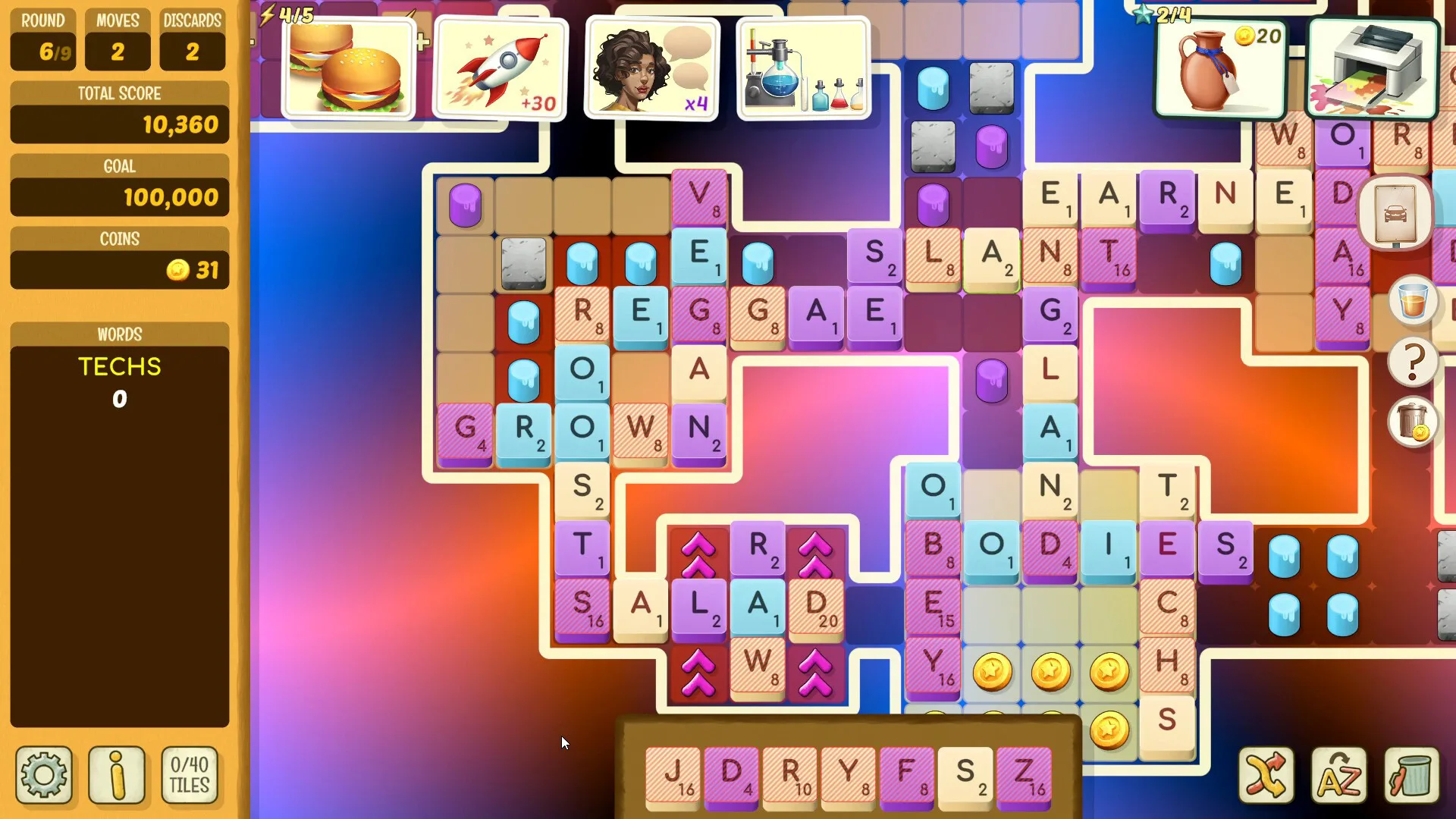
That sharp ramp creates the game’s central tension. Success can feel earned in a very direct way, since a run only clicks when your rack, your modifiers, and your board choices all work together. There are plenty of moments when the shop offers little help or the tile draw refuses to cooperate. Those swings can make the game feel exhilarating one minute and stubborn the next.
The presentation keeps things clean and readable. The board is easy to parse, the interface does its job without fuss, and the audio supports the action without demanding attention. It is a polished package, even if it leans toward function over style. The result is a game that knows exactly what it wants to be: a fast, clever, replayable word puzzle with roguelike pressure behind every decision.
Beyond Words is an innovative fusion of roguelike strategy and word-crafting, developed by a team of industry veterans known for their work on classic shooters like GoldenEye 007 and TimeSplitters. Released on April 9, 2026, the game challenges players to build powerful letter-based combos and navigate tactical puzzles using over 300 unique modifiers and power-up cards. It is available on PC (via Steam), PlayStation 5, Xbox Series X|S, and Nintendo Switch, offering a deep, systems-driven experience that caters to both casual word enthusiasts and hardcore strategy fans.
Full Credits
Director (Creative/Game Director): Steve Ellis, Dr. David Doak
Producers/Studio Leadership (Producers, Executive Producers, and Key Studio Heads): Steve Ellis (Studio Head), Dr. David Doak (Studio Head)
Key Engineering/Technical Leads: Steve Ellis
Developer, Publisher: MindFuel Games, PQube
Release Date: April 9, 2026
The Review
Beyond Words
Beyond Words turns Scrabble into a sharp roguelike loop, and the result is clever, replayable, and often hard to stop playing. Its best runs feel smart and satisfying, with strong board variety and a flexible upgrade system that keeps each attempt fresh. The downside is a steep difficulty curve and a heavy reliance on luck, which can frustrate as often as it thrills.
PROS
- Addictive word-building loop
- Clever roguelike modifiers
- Varied boards and run setups
- Flexible word rules
CONS
- Steep difficulty spike
- Luck can override skill
- Repetition can set in
- Presentation is functional, not striking