






















We all keep invisible ledgers. In our minds, we tally up the things we love against the things we resent, the things we need against the things we could discard. It is a quiet, personal accounting that defines the shape of our lives. The horror of Vicious comes from its premise of making that ledger terrifyingly real and demanding a payment in blood.
The film introduces us to Polly, played by Dakota Fanning, a woman whose own ledger seems deep in the red. We meet her through the disembodied voices of her family and employer, their voicemails painting a portrait of a life marked by disappointment. Living alone in a house that feels too big and too empty, her only clear asset is the love she holds for her niece.
This fragile quiet is shattered by the arrival of a mysterious old woman, an unnerving Kathryn Hunter, who brings the snow and a sinister proposition into Polly’s home. She leaves behind an ornate box with an hourglass. The rules are simple and brutal: before the sand runs out, Polly must place inside it an object she hates, one she needs, and one she loves. The price of failure is her life.
A Story That Breaks Its Own Rules
A horror film’s power often comes from its contract with the audience. We agree to believe in the monster, and the film agrees to make the monster’s rules consistent. Vicious scribbles out a fascinating contract and then promptly tears it to shreds.
The central flaw is that its supernatural force refuses to be mysterious. Instead of letting Polly navigate the psychological maze of its demands, the entity simply calls her on the phone to issue corrections and new instructions. This transforms a deeply personal trial of self-evaluation into a frustrating, one-sided negotiation.
The tension deflates when the ghost in the machine can just tell you what it wants. This problem escalates into outright narrative sabotage when the film reveals the entity can lie. If the rules are arbitrary and the source is unreliable, the stakes dissolve. We are no longer watching a character fight for survival within a system; we are watching a character being toyed with for no clear reason.
Also Read





The film’s structure mirrors this lack of discipline. It drifts between scare set pieces without a rising sense of danger, feeling more like a haunted house attraction than a story. Repetitive apparitions and a drawn-out final act that overstays its welcome turn what should be a tightening coil of dread into a long, monotonous hum.
Dakota Fanning’s Masterclass in Terror
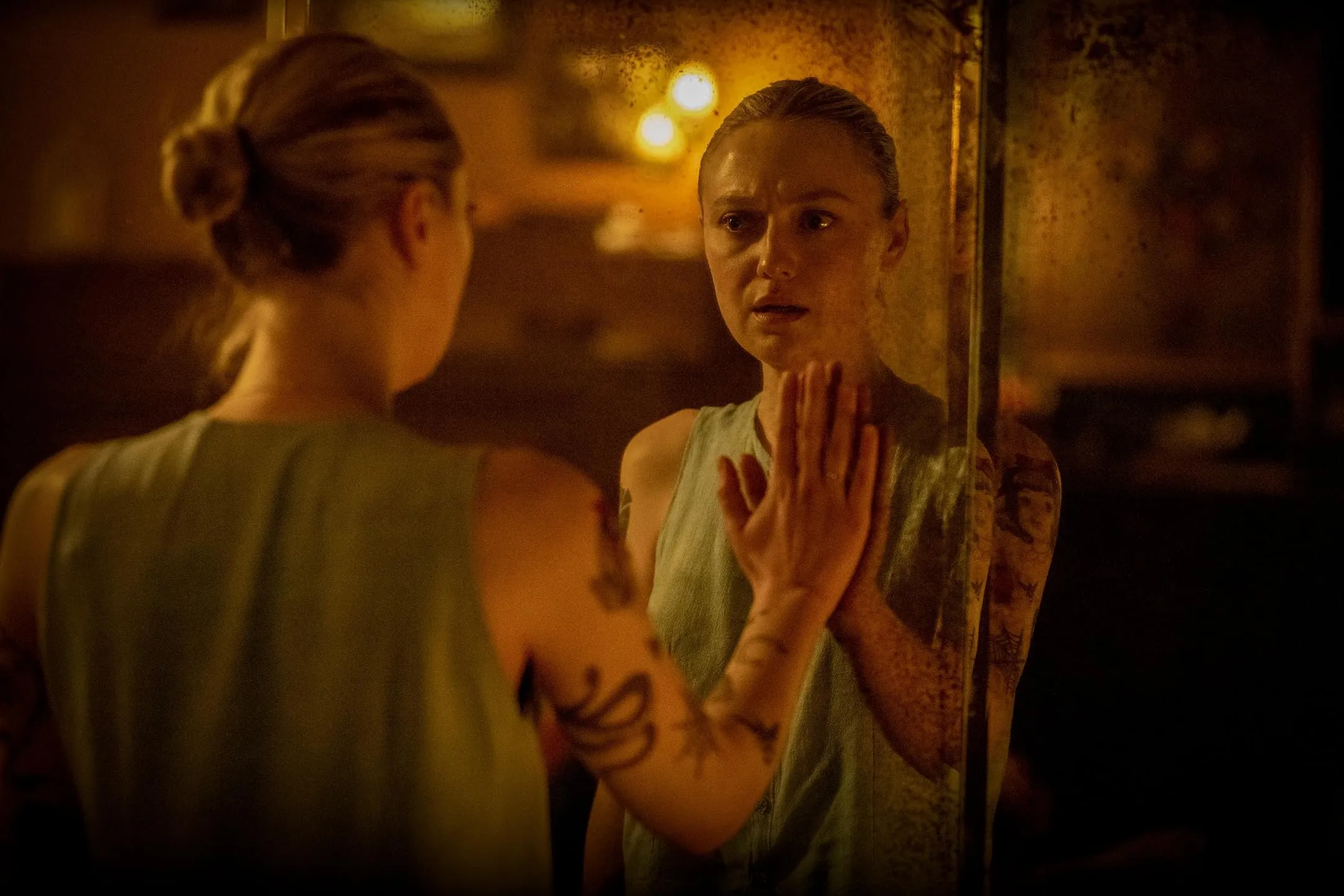
Amid the script’s inconsistencies, Dakota Fanning delivers a performance of remarkable control and raw emotional power. For long stretches, the camera stays on her, and she has to project a full spectrum of fear, grief, and resilience, often without a scene partner. It is a challenge few actors could handle, yet Fanning makes it look effortless. Her performance is physical and deeply felt.
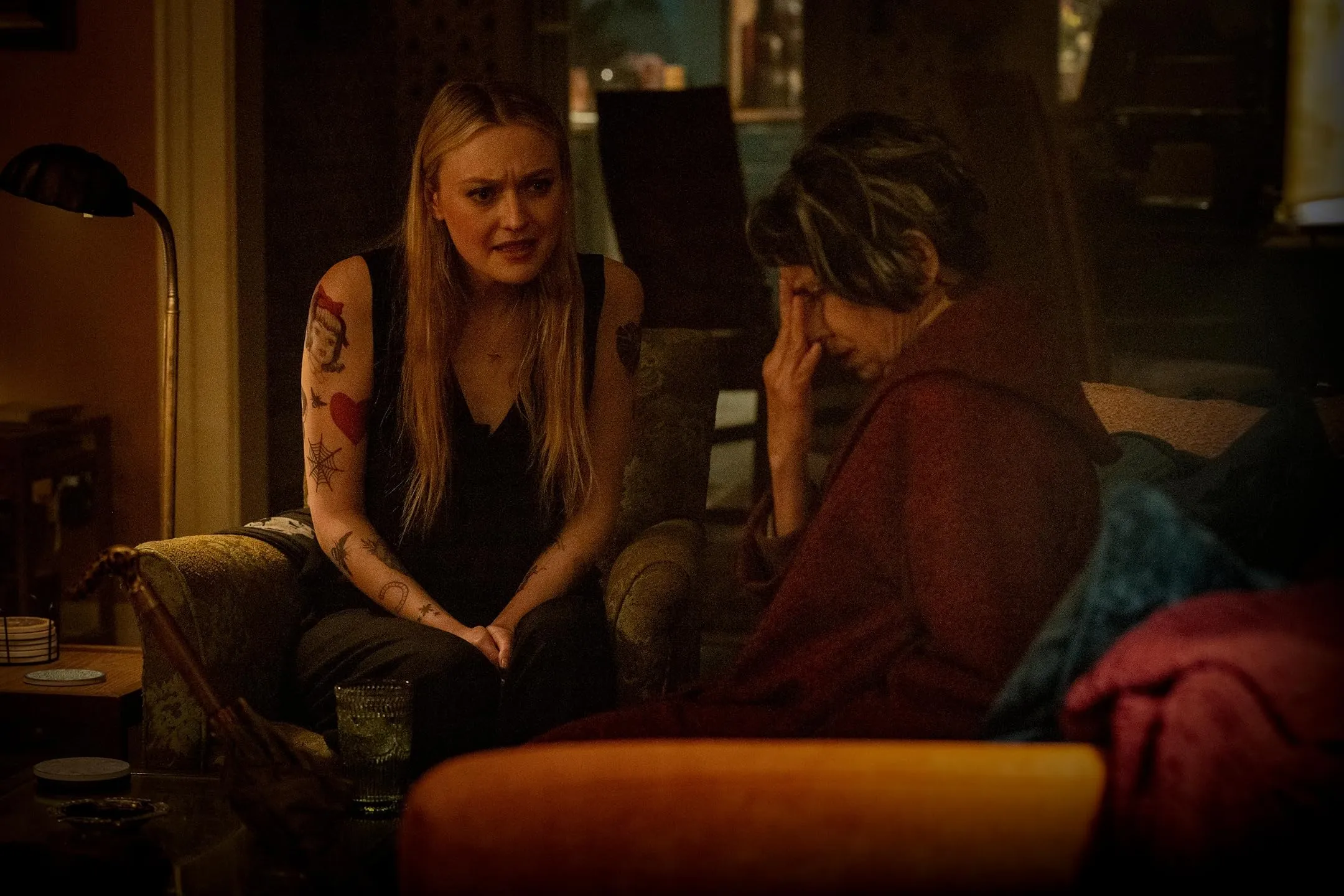
You see the exhaustion in her posture and the frantic calculations behind her eyes as she scans her home for objects to satisfy the box. She makes Polly’s ordeal tangible. When she reacts to a disembodied voice mimicking a loved one, the jolt of fear and betrayal she conveys is more unsettling than the scare itself.
This is where the film’s true horror lies: not in the supernatural curse, but in Fanning’s wholly believable portrayal of a person being systematically broken down. She provides the emotional weight and psychological depth the screenplay fails to develop. In a film that often feels emotionally distant, Fanning’s work is a vital, humanizing force that keeps you invested. She doesn’t just scream; she makes you understand the complex terror of being forced to inventory your own soul.
An Architecture of Noise
Bryan Bertino has a real talent for making domestic spaces feel menacing. His camera finds unsettling angles in Polly’s home, turning familiar hallways and doorways into vectors of dread. He understands the visual language of isolation. The film’s most potent artistic achievement, however, is its sound design. Vicious is an absolute clinic in aural horror.

The soundscape is not just background noise; it is an active antagonist. I found myself clenching my jaw as a cacophony of precisely engineered sounds filled the space: the sharp scrape of a chair, the unnatural echo of a child’s rhyme, the piercing shrill of a telephone that will not stop ringing. This is horror that gets under your skin and messes with your equilibrium. It is a shame that this sophisticated sound work is often paired with such conventional scares.
The film leans too heavily on loud, telegraphed jump scares that provide a cheap jolt instead of lasting fear. We see recycled horror tropes, from sinister reflections to figures lurking in the periphery, that feel uninspired. Bertino also misses a chance to fully weaponize his setting. The oppressive, snowy landscape outside Polly’s windows could have been a powerful symbol of her isolation, but it remains little more than a backdrop.
A Reflection Without Depth
Modern horror often strives to be about something, using its monsters as metaphors for real-world trauma and societal ills. Vicious certainly positions itself in this camp, brushing up against potent themes of mental health, familial strain, and the suffocating pressures placed upon a woman living outside of convention.
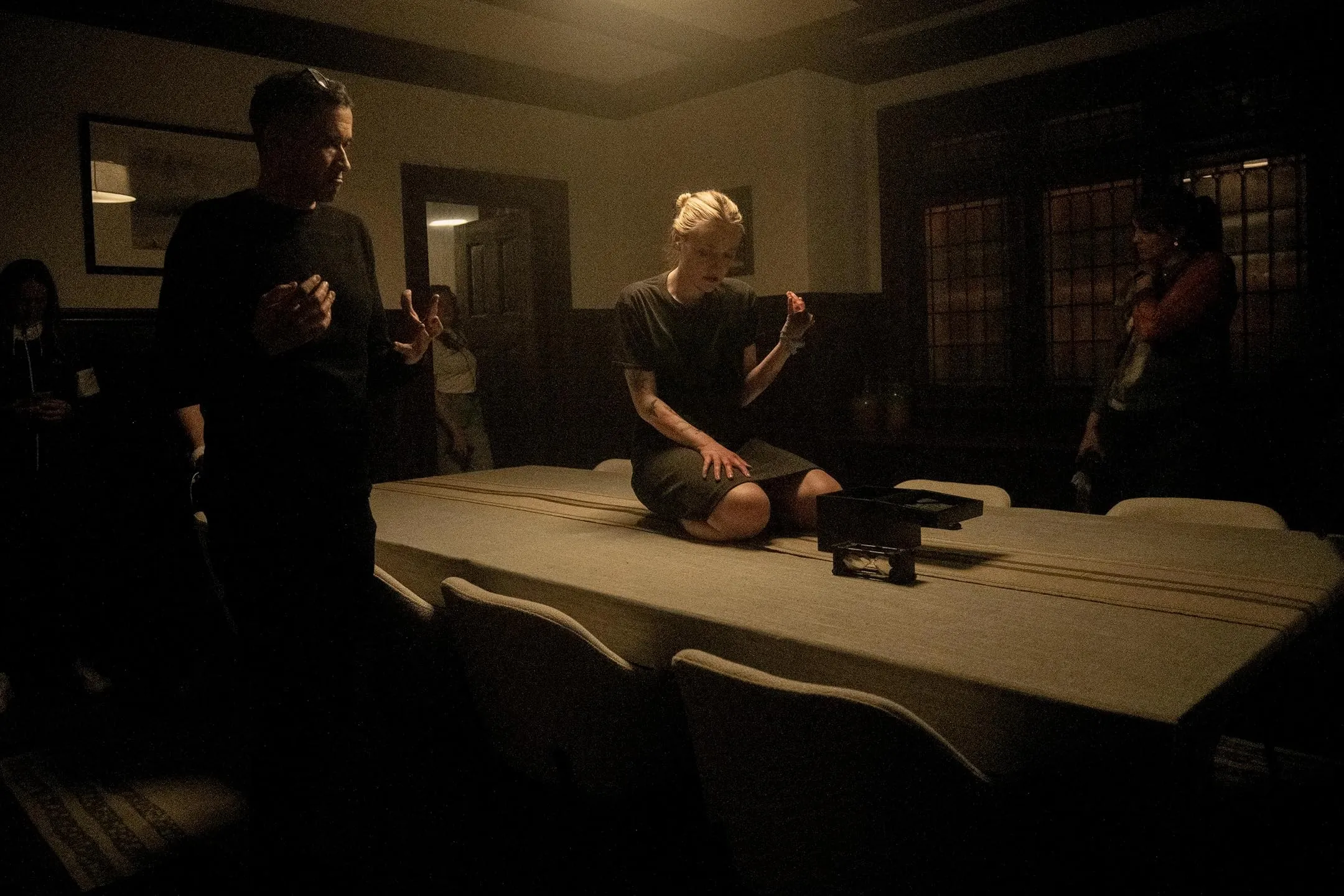
The film presents Polly’s ordeal as a possible externalization of an internal crisis, a violent manifestation of grief and depression. Yet, these ideas are never truly investigated. They are ghosts in the machine of the plot, present but never fully formed. The film uses the aesthetic of “elevated horror” without committing to the thematic work required.
This lack of follow-through is most apparent in the film’s ending, which chooses an ambiguity that feels more like indecision than a deliberate artistic statement. By refusing to answer its own central questions, the film denies the audience any sense of catharsis or meaning. It concludes not with a chilling statement, but with a frustrating shrug. Vicious possesses the components of a great horror film, yet it feels like a puzzle whose beautiful, intricate pieces belong to several different boxes.
“Vicious” is an American horror film written and directed by Bryan Bertino. The movie had its world premiere at Fantastic Fest on September 19, 2025. Its theatrical release was cancelled and it will instead be released on Paramount+ and digital platforms on October 10, 2025. The film is about a woman who receives a mysterious box that comes with an instruction, and what follows is a descent into a nightmare where reality and memory betray her.
Full Credits
Director: Bryan Bertino
Writers: Bryan Bertino
Producers and Executive Producers: Richard Suckle, Shane Boucher, Melinda Whitaker
Cast: Dakota Fanning, Kathryn Hunter, Mary McCormack, Rachel Blanchard, Devyn Nekoda, Klea Scott, Emily Mitchell, Kristen Pepper, Michael Abbott Jr.
Director of Photography (Cinematographer): Tristan Nyby
Editors: Tad Dennis
Composer: Tom Schraeder
The Review
Vicious
Vicious is a frustrating film built from exceptional parts. Dakota Fanning gives a commanding performance that single-handedly grounds the story, and the phenomenal sound design creates a genuinely unsettling atmosphere. These strengths, however, cannot overcome a screenplay that abandons its own compelling logic. The narrative becomes an incoherent and repetitive ordeal, leaving its deeper themes unexplored. What starts as a sharp, chilling concept ends as a missed opportunity, more irritating than terrifying.
PROS
- Dakota Fanning delivers a powerful and committed lead performance.
- The sound design is technically brilliant and genuinely unsettling.
- The initial premise is a fantastic hook for a horror film.
- Bryan Bertino’s direction features strong cinematography and framing.
CONS
- Inconsistent narrative rules undermine the film's tension.
- The story meanders and suffers from poor pacing.
- An over-reliance on conventional jump scares and horror tropes.
- Potentially rich themes are introduced but left unexplored.