



























The great literary detective is an anachronism by design, a figure of steadfast principle in a world of shifting morals. Transplanting such a character into the 21st century is a perilous act of adaptation. The risk is that their defining traits—patience, quiet observation, a reliance on human instinct—will appear quaint or ineffective when set against the relentless immediacy of modern life. This is the central challenge faced by the new series Maigret.
It places Georges Simenon’s famous creation in a contemporary Paris of fleeting digital evidence and viral notoriety, a landscape seemingly alien to his methods. The show, therefore, becomes less a standard crime procedural and more a thoughtful inquiry into whether a detective who solves crimes by understanding souls can still operate in a world that communicates in data packets and status updates. It is an examination of empathy as a tool in an age of alienation.
A Maigret for a New Millennium: Performance and Characterization
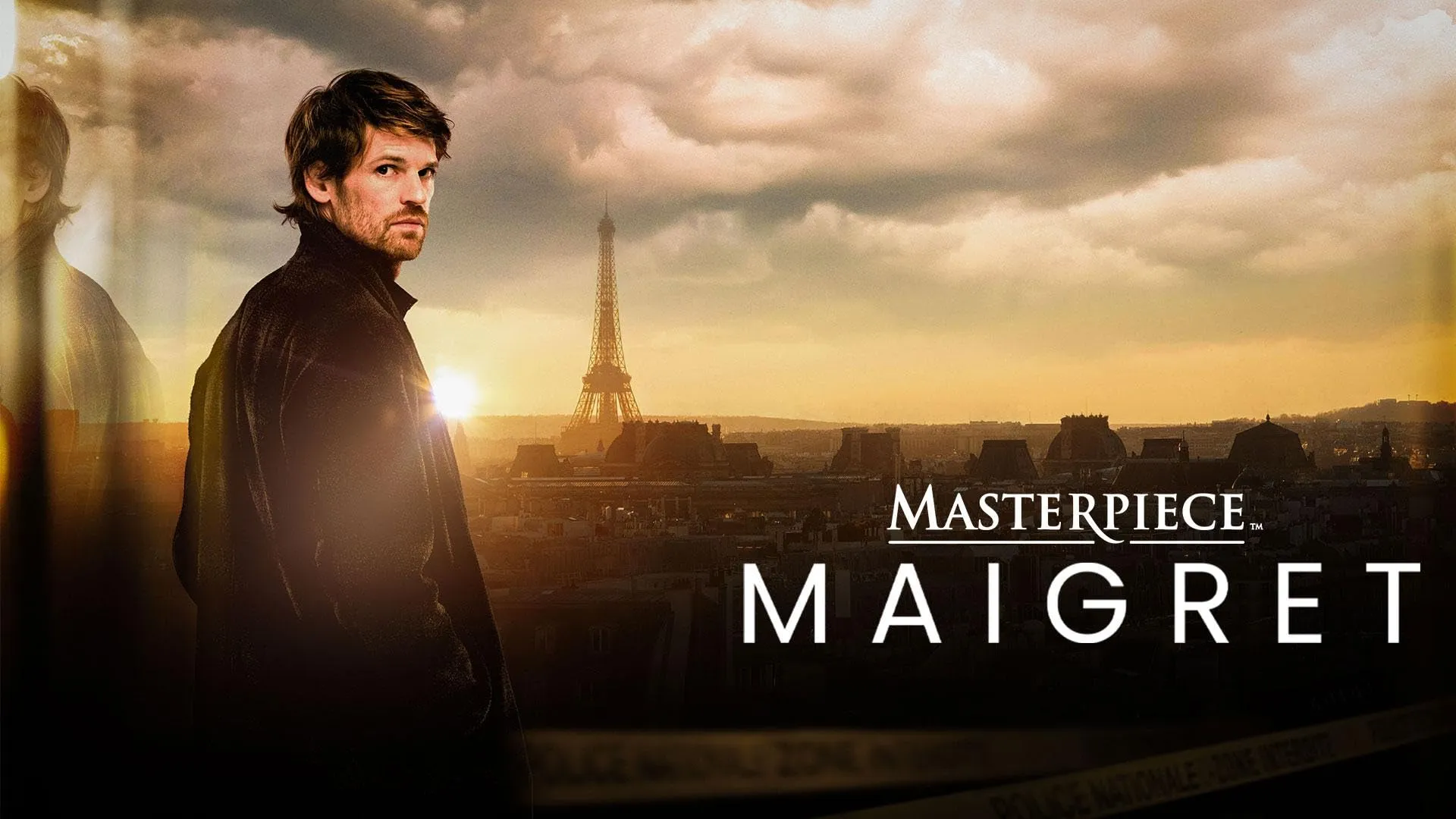
Benjamin Wainwright’s performance as Jules Maigret is a study in calculated subversion. The physical signifiers are immediately apparent; this is a younger, more disheveled inspector, whose messy hair and oversized coat suggest a man less concerned with appearances than with the internal architecture of a case. The most telling detail is his father’s pipe, which he carries but never lights.
It functions not as a prop but as a symbol of a past he honors but does not inhabit, a connection to a different era of manhood and police work that he carries as both a burden and a guide. This external reinvention is crucial, as it allows Wainwright to build the character from the inside out. He masterfully captures the detective’s foundational qualities. His patience is not passive; it is an active, almost aggressive force in an interrogation room, a weaponized silence that forces suspects to confront their own deceptions.
His intelligence is quiet, revealed in a lingering glance or a softly posed question that dismantles a carefully constructed alibi. Above all, Wainwright conveys a profound, weary compassion for the messy lives he investigates, recognizing the flawed humanity in both the victim and the killer. The contrast is striking: a man who appears almost lost in his own clothes is the most observant person in any room, his cool, introspective focus at a crime scene giving way to a much softer presence in the quiet moments away from the job.
This softer side is explored most fully through Maigret’s relationship with his wife, Louise, portrayed with warmth and intelligence by Stefanie Martini. Their marriage is the series’ emotional and thematic anchor. In a significant departure from the global crime genre’s reliance on the “troubled detective” trope, where a chaotic home life is a standard character beat, the Maigrets’ partnership is stable, open, and mutually supportive. Their apartment is not a place of conflict but a sanctuary for processing the darkness of his work. He does not shield her from the grim realities of his profession; instead, their conversations become an essential part of his method.
Also Read






He shares details, tests theories, and relies on her sharp emotional insight to see a case from a different angle. These domestic scenes function as more than simple interludes. They are narrative counterweights to the procedural elements, constantly reminding the audience of the human cost of crime and reinforcing the idea that Maigret’s strength comes from his connection to others, not from a stoic isolation. This depiction of a healthy, functioning partnership provides a crucial source of stability and humanity, making the character feel whole and his motivations deeply resonant.
The Squad Room: Ensemble and Dynamics
While the series succeeds in its portrayal of its central character, the world around him feels thinly populated. The supporting cast of Maigret’s detective team is filled with potential that remains largely untapped. Figures like Berthe Janvier and Karim Lapointe, a dynamic and modern young duo, could have represented the next generation of policing, their ease with technology and social nuance acting as a perfect foil to Maigret’s old-school methods.

Similarly, the more experienced officers Joseph Torrence and Andrea Lucas suggest a history and perspective that is never fully explored. Instead of a rich ensemble that challenges and complements the lead, the series offers only brief sketches of their personalities. Their interactions are too infrequent to build a believable sense of camaraderie or professional friction, leaving them as satellites in Maigret’s orbit rather than a cohesive unit.
This lack of development is made more frustrating by the considerable narrative space given to the one-sided feud between Maigret and Inspector Justin Cavre. Driven by a simplistic and poorly motivated jealousy over Maigret’s recent promotion, Cavre’s animosity becomes a repetitive and unconvincing subplot. It functions as a narrative crutch, providing a stock source of internal conflict that feels jarringly out of place in a show that otherwise values psychological depth. The writing for Cavre is surprisingly one-dimensional; his antagonism persists even after Maigret acts to save his career, a move that strains credulity and makes the character feel more like a plot device than a person.
The energy spent on this tedious rivalry is a clear misstep, consuming valuable screen time that could have been used to build a more complex and engaging team dynamic. Other relationships, such as the tense but professional rapport between Maigret and Prosecutor Mathilde Kernave, hint at a shared history and a deeper connection, but these threads are introduced only to be left frustratingly unexplored, making the professional world of the series feel smaller and less lived-in than it should.
The Procedural Pulse: Cases and Storytelling
The series structures itself around a case-of-the-week format, but its rhythm is far from the frantic pace of a typical modern procedural. The storytelling is methodical and deliberately paced, mirroring the investigative style of its protagonist. Each case unfolds with the patience of a slow-cooked meal, allowing details to emerge and motives to ripen over time.

The focus remains squarely on the “why” of a crime, not just the “who” or “how.” This approach requires a degree of patience from the viewer, rewarding it with a deeper psychological understanding of the crime and its participants. It is a narrative style that prioritizes character and motive over shock value, reflecting Maigret’s belief that every crime is ultimately a human story.
The quality of these stories, however, is inconsistent. The series premiere, “The Lazy Burglar,” feels somewhat generic, a necessary but uninspired entry that serves mainly to establish the show’s world and characters. The narrative finds a much stronger and more compelling voice in later episodes like “Maigret’s Failure” and “Maigret Comes Home.” In these installments, the investigations are inextricably linked to Maigret’s own personal history, forcing him to turn his formidable observational skills inward.
The crimes become catalysts for self-reflection, making the procedural plot a journey of self-discovery as much as a hunt for a killer. The series is less successful when it attempts to juggle multiple, disconnected plotlines within a single episode.
The introduction of a missing social media influencer, for example, feels like a forced concession to modernity, a contemporary crime trope that clashes with the more timeless, character-driven nature of the main plot and serves as a distraction. Even with these occasional stumbles, the writing successfully channels the spirit of Simenon’s source material. The resolutions rarely offer clean catharsis, instead leaving a lingering sense of melancholy and moral ambiguity, suggesting that true justice is far more complicated than simply closing a case file.
A Parisian Veneer: Setting and Style
For a series centered on one of France’s most famous literary figures, Maigret struggles profoundly to evoke a genuine sense of its Parisian setting. The city feels less like a vibrant, breathing character and more like a generic backdrop. This lack of atmospheric specificity is a significant weakness, creating a feeling of cultural neutrality often seen in international co-productions. The issue is compounded by the predominantly British cast, whose accents constantly remind the audience that they are watching a performance of Frenchness rather than inhabiting it.
The knowledge that the series was primarily filmed in Budapest explains the visual disconnect; the architecture and streets lack the unique texture of Paris. A few scattered French phrases and obligatory scenes in a quaint café are not enough to create an authentic sense of place. In a genre where the city itself is often a key character—from Ian Rankin’s Edinburgh to Henning Mankell’s Ystad—this failure to capture a distinct Parisian identity is a major missed opportunity.
Where the series does succeed is in its clean and considered visual language. The cinematography is crisp and uncluttered, with a cool color palette that complements the show’s methodical tone. The direction favors clear blocking and sustained shots, particularly on faces during interrogations, allowing the subtle shifts in an actor’s performance to carry the narrative weight. This visual minimalism is a deliberate and effective choice, mirroring Maigret’s own direct, unadorned approach to his work.
The modern setting is integrated into the plots in practical ways, moving beyond simple aesthetics. Technology, from cellphone tracking to social media analysis, becomes a necessary tool of investigation. Maigret himself appears slightly awkward with these new devices, often relying on his younger, more tech-savvy detectives to navigate the digital landscape. This creates a gentle but persistent friction between old and new methods, ensuring the contemporary update feels relevant to the storytelling itself.
The Review
Maigret
Maigret succeeds on the strength of Benjamin Wainwright’s quietly compelling lead performance and its refreshingly mature depiction of a detective’s marriage. While the series thoughtfully explores its hero’s famous empathy, it is hampered by an underdeveloped supporting cast and a generic setting that fails to capture a distinct Parisian identity. The show is at its best when it leans into character-driven drama, offering a measured and intelligent procedural that honors the spirit of its source material, even if the execution is sometimes flawed.
PROS
- A nuanced and captivating central performance from Benjamin Wainwright.
- The supportive and mature relationship between Jules and Louise Maigret is a highlight.
- A deliberate, character-focused pace that values psychological depth over action.
- Cases that connect to Maigret's personal history are particularly effective.
CONS
- The supporting detective team is significantly underdeveloped and underutilized.
- The generic setting lacks an authentic Parisian atmosphere.
- The rivalry with Inspector Cavre is a repetitive and unconvincing subplot.
- The quality of the weekly mysteries can be inconsistent.