































We have reached a point in sports simulation where the systems that drive play need to sit comfortably with the promise of an official license. Cricket~26, Big Ant Studios’ latest entry, stands on the fractured base of Cricket~24 and tries to close the gap between design intent and what actually happens on screen.
This version is built around refinement. It aims to steady the core interaction loop that defines digital cricket. From the first boot, the changes are immediately clear: sharper visuals, far quicker response to player inputs, and field awareness that feels like a major rewrite of AI behaviour.
Early matches deliver a cleaner, more coherent simulation than the series has offered in years. That strong first impression soon runs into the game’s split personality. Substantial mechanical improvement, especially in batting, sits inside a framework that suffers from technical instability. The experience swings between stretches of intense, convincing cricket and sudden technical collapse, so play sessions often move in a loop of progress interrupted by persistent bugs.
Core Gameplay: The Battle for Precision
Batting in Cricket~26 stands as the series’ most convincing mechanical success so far. It delivers a direct sense of control and consequence that any sports simulation needs. Player input maps to shot execution with impressive precision, with both the simpler button layout and the more demanding dual-stick scheme feeling responsive. Hitters feel they can genuinely guide the ball, so the sense of watching canned outcomes drops away and the way every risk at the crease is judged changes.
The game is careful in how it tracks and displays mistakes. Errors feel fair and deserved. Playing along the wrong line leads to a clean beat, while mistimed drives turn into edges that resemble real cricket. This fidelity in how failure is represented allows the default difficulty to present a demanding but readable challenge. The balance sits in a zone where players have to read line and length properly, so reliance on slider tweaks fades.
Earlier Big Ant cricket titles pushed players straight into menus to fine-tune timing and physics before the game felt convincing. In Cricket~26, that urge is mostly gone, which signals a far more reliable physics model. Scoring runs stays challenging, yet the logic behind success or dismissal is clear and satisfying.
Also Read





The system rewards skill and timing, and every boundary feels like the result of an intentional decision, with the presence of hidden dice rolls fading into the background. Responsive, skill-focused batting lifts the minute-to-minute play to a standard the series has chased for a long time. The core act of striking the ball feels structurally sound.
Bowling feels solid, yet it does not match the leap ahead seen in batting. The familiar rhythm of choosing line, length, and variation remains, giving bowlers the expected strategic control over the ball’s path. The layer of depth grows through one major tactical feature: the wind system. This element appears quietly through an arrow on the pitch map that shows direction and strength.
Wind becomes a real factor in how deliveries and shots behave. Bowlers can shape swing or drift by working with the conditions, and batters can plan lofted strokes that travel with the breeze for extra carry. This mechanic adds an extra decision point to every ball and over. Even with that gain, the depiction of modern bowling still feels limited by key gaps. The wobble seam, now a staple option for many pace bowlers, does not appear here. The same applies to the knuckleball that several elite quicks treat as a vital change of pace. The absence of these tools holds back the representation of current professional attacks.
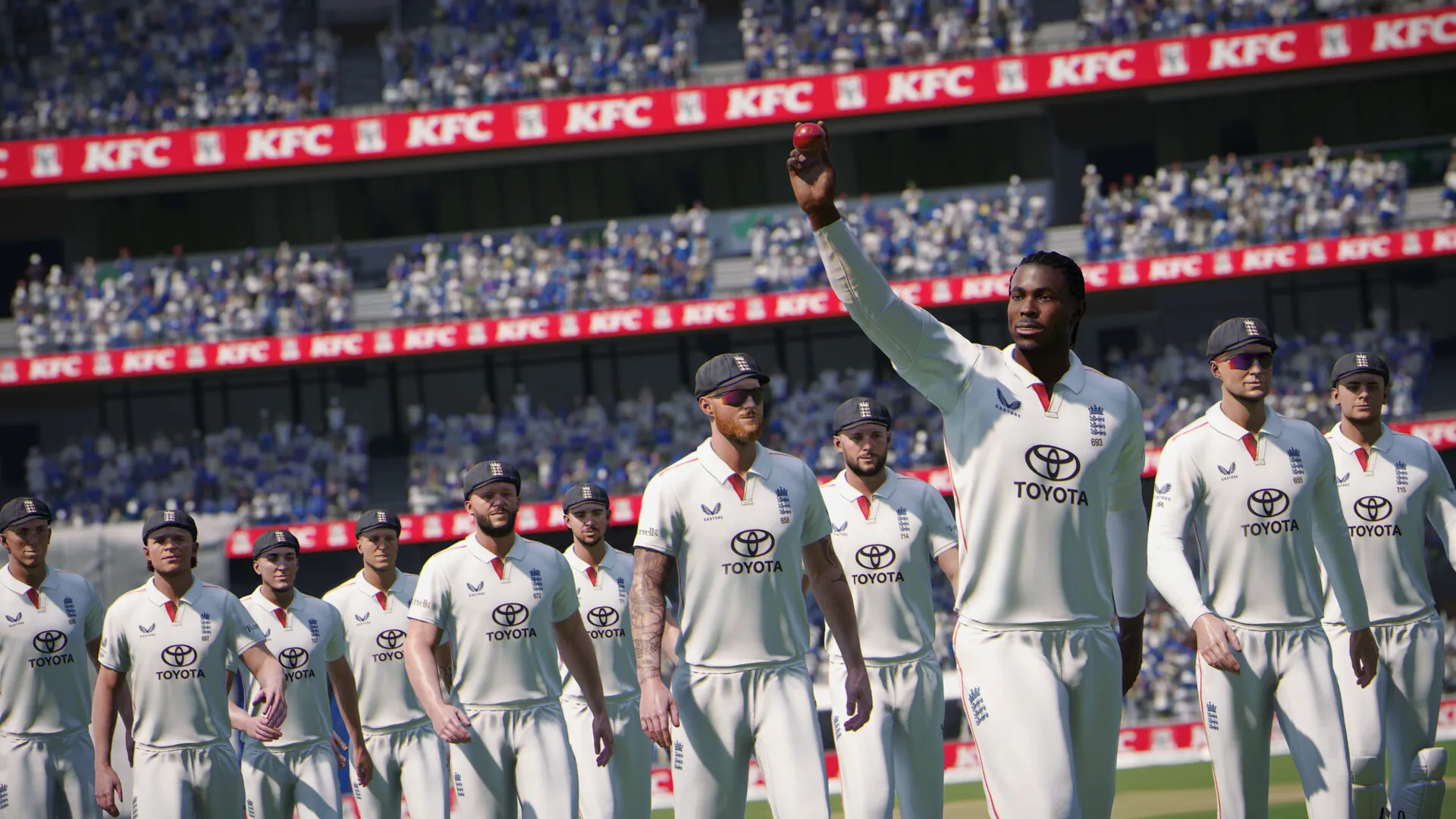
What gives the bowling system life is the expression of individual bowler identity, largely delivered through tailored animations. Movements for high-profile players such as Mitchell Santner and Jofra Archer carry a strong sense of recognition. Facing Archer feels especially uncomfortable, as the simulated pace combines with a run-up and release that carry a lull followed by a snap that reads as deceptive.
That level of detail asks batters to adjust their timing by opponent and encourages them to see bowlers as distinct figures, not simple cosmetic swaps. The tactical layer exists through field settings and pace variation, yet the missing contemporary deliveries stop bowling from reaching the same depth created by the revamped batting engine.
On-Field Presentation and System Overhauls
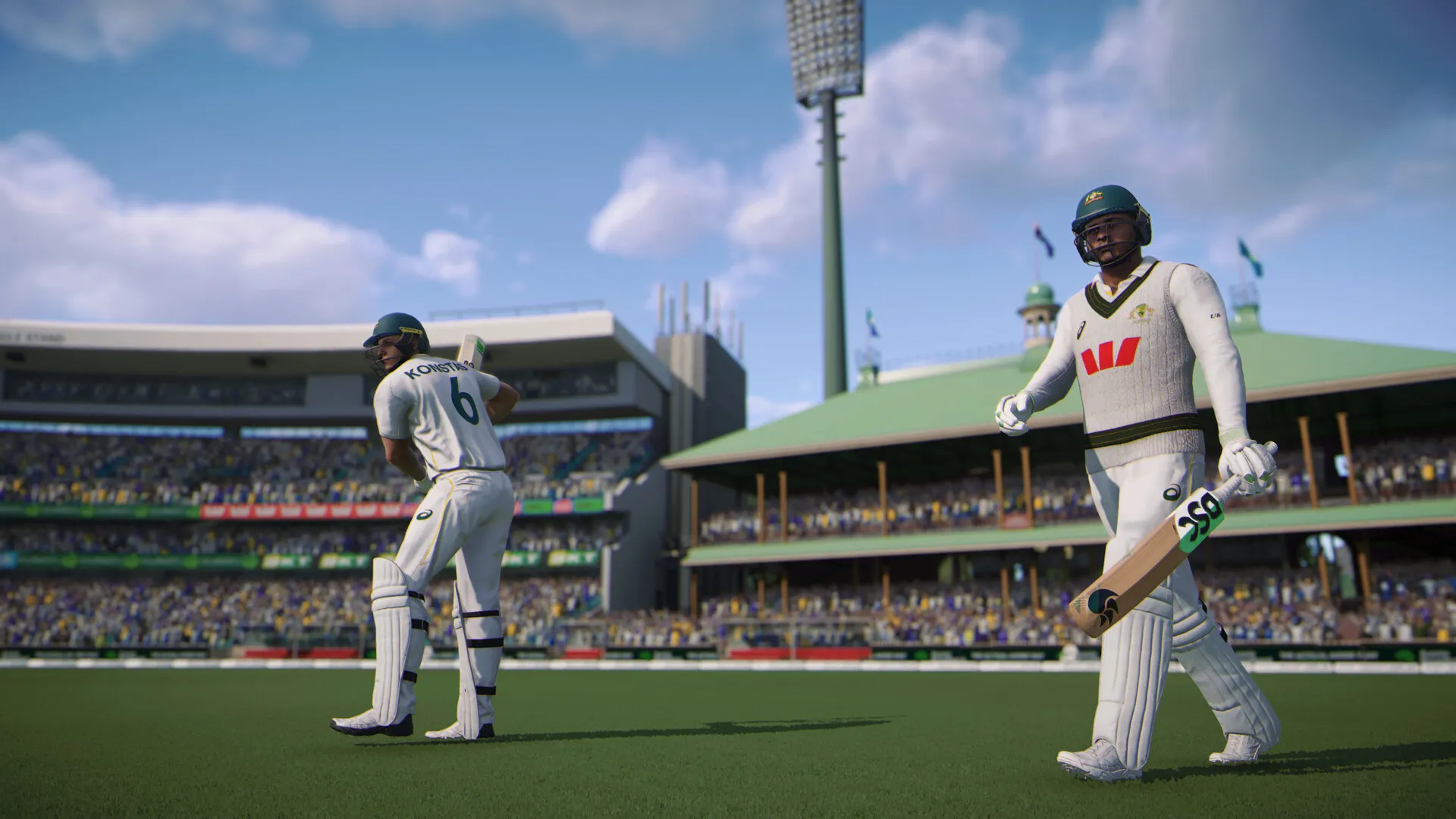
Cricket~26 makes clear visual progress toward a more modern presentation. Player models are sharper, lighting looks cleaner, and stadiums gain atmosphere from those changes. Environmental detail, especially grass and the edge of the field, takes a visible step beyond earlier entries. The pursuit of authenticity comes through most strongly in the animation work. The familiar right-arm flick at the top of Nathan Lyon’s run-up or the distinctive action of Mitchell Santner goes beyond surface detail. These small visual anchors make the simulation feel grounded and responsive.
Sound design leans heavily on the commentary team, with well-known voices such as David Gower and Adam Gilchrist giving matches a sense of authority and broadcast polish. The technical side of the commentary system misfires frequently. Lines often trigger in situations that do not match the action, which creates an odd disconnection between performances on the field and what the commentary describes. A conversation about a draw can follow directly after a clear win. That mismatch between audio and play regularly punctures immersion and undercuts the sense of professional presentation.
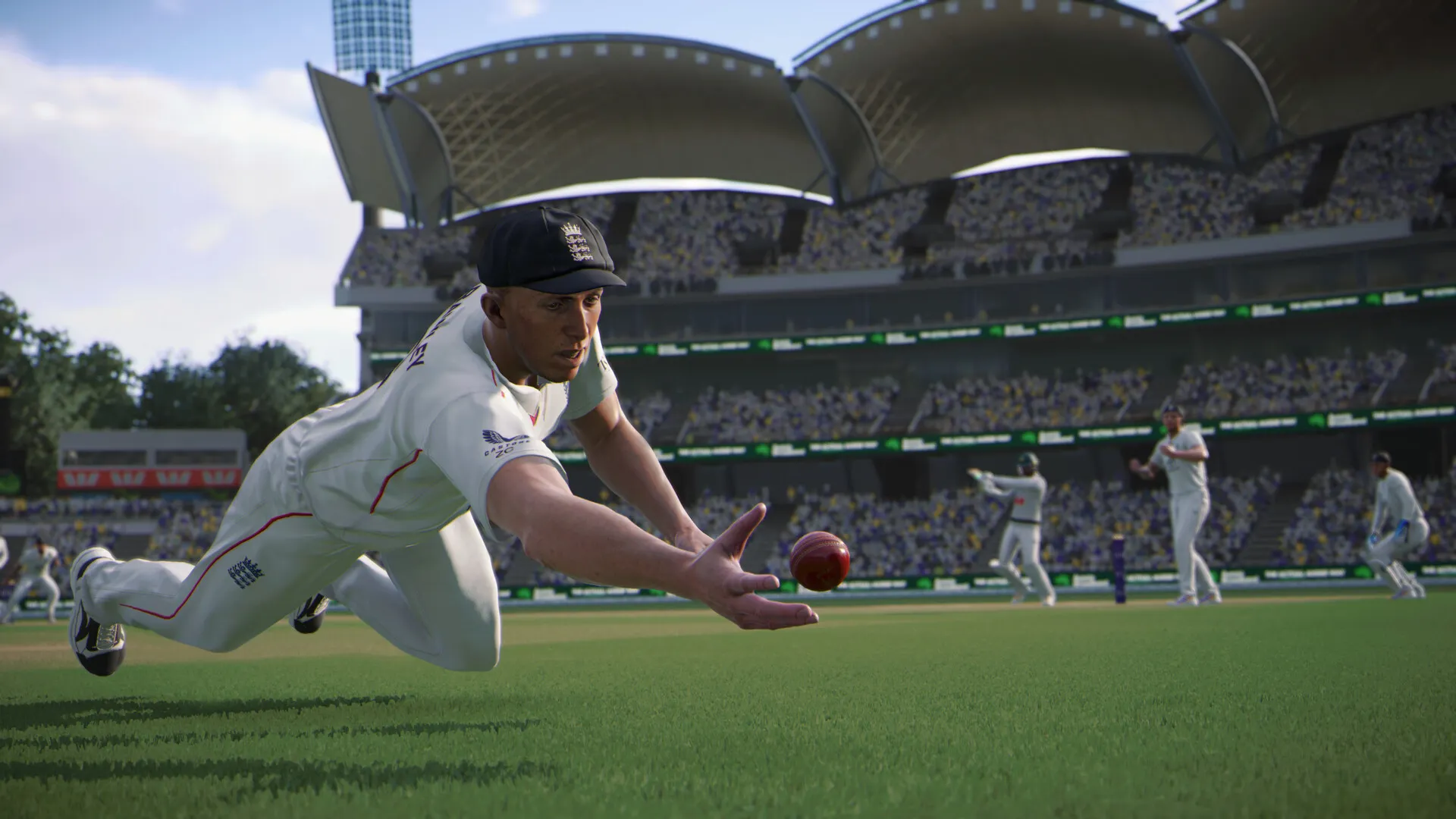
Fielding benefits from a major mechanical refresh. Fielders finally show the urgency modern cricket demands. Transitions from gather to throw are significantly faster, removing the lag that haunted Cricket~24. New catching, diving, and sliding animations give fielders a more athletic and responsive presence. Moments such as two players combining for a relay throw or a diving stop that flicks the ball away from the rope create small set pieces that reflect shared awareness across the field.
These gains sit beside sharp inconsistencies that still frustrate. Wicketkeeper behaviour swings between near-total inaction on real stumping chances and bursts of impossible athleticism. The slow-motion runout feature aims to create drama yet is undermined when the ball travels to the wrong end compared with the player’s input. Fielding as a whole feels stronger and points toward more realistic reactions. Remaining quirks, including sudden teleport-like movements and that unreliable runout camera moment, keep the system from reaching full stability.
Modes, Scope, and Structural Flaws
For a title presented as the official game of the Ashes, its dedicated rivalry mode feels surprisingly slight. At a structural level, it offers a five-Test series played at the correct Australian grounds, with the expected day-night pink ball Test included. The build-up wrapped around those matches feels like a placeholder and lacks the substance of a full campaign. Pre-match routine boils down to selecting a travel prompt, playing through a modest training mini-game that cannot be tailored, and choosing the final XI. Tour matches and connective narrative sequences between Tests are absent.
Systems that should give the mode a sense of ongoing consequence sit on the surface. Press conferences and a team confidence meter are present yet lack convincing impact. Confidence shifts with wins, losses, and training results, but there is little sign that ratings or performances change meaningfully as a result. Press conferences often present questions that feel inaccurate or generic, turning an interactive feature into busywork.
Immersion takes another hit from match objectives that sometimes use credible targets but regularly move into absurd requests, such as a Test run rate of eight an over. Roster inaccuracies also stand out, with some newer international players missing. The structure feels functional and not cinematic, so a campaign built around one of cricket’s great rivalries lands with limited dramatic weight.
The arrival of a Management Career mode signals big intentions for long-term play, yet the design falls short of a rich simulation. In practice, this mode acts as a squad management layer where players pick teams and adjust training calendars. Many elements that define management titles elsewhere are absent. There is no hiring of staff, no handling of budgets, and no development of facilities. Player rotation and workload control form almost the entire strategic space.
Match simulation offers little for those who want to watch their tactical plans unfold. There is no option to view generated highlights. Reading team performance relies on static scorecards and short text reports, which makes extended seasons feel dry for players who prefer an overhead role. Direct involvement in matches also lacks a distinctive management angle. Once the player jumps from menus onto the ground, the experience mirrors standard gameplay and loses the feeling of a tailored oversight mode.
Logic issues erode immersion further. Star international cricketers remain available for domestic selection across full seasons, so league play loses credibility. Technical problems sit beside those design issues, from training screens that refuse to load to frequent crashes when confirming lineups. A mode built to simulate smart long-term planning ends up feeling poorly managed in its own structure, which restricts its ability to stand as a satisfying alternative to playing every ball.
Persistent Features and Licensing
Cricket~26 continues to lean on the long-standing pillars of Big Ant’s cricket series. Player~Career returns to track a player’s rise through the ranks without major structural change. Pro~Team, the card-based squad mode that runs on a microtransaction economy, also comes back.
A new Pro~Team option labelled Centurian sits on the menu but stays locked at launch behind a simple “Coming Soon” message. This pattern of carrying systems forward with minimal revision makes it clear that most development effort went into tuning the feel of on-field cricket, while the narrative and systemic ambition of surrounding modes stayed narrow.
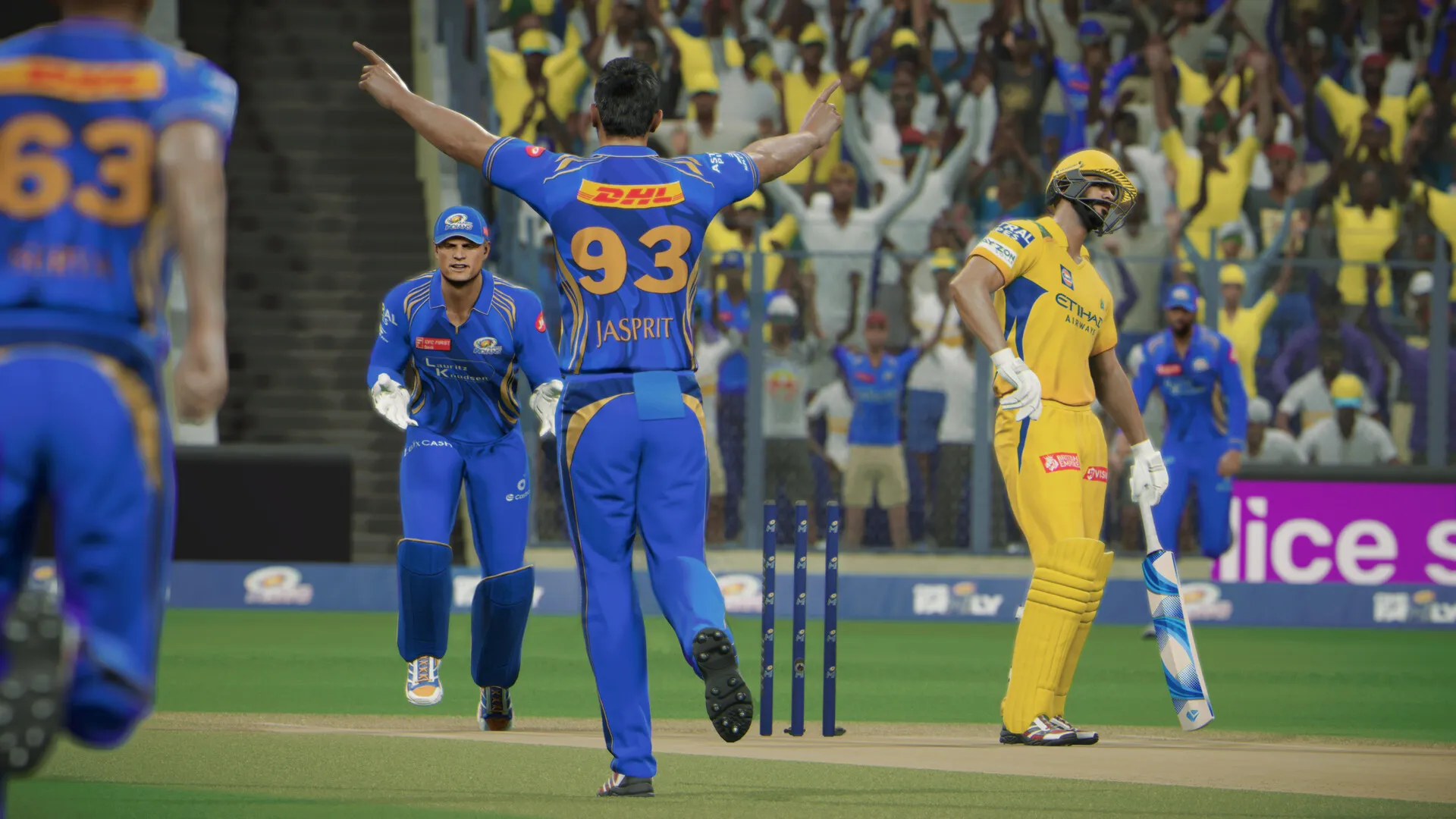
The game still offers a deep, flexible creation suite that covers customized players, equipment, and elaborate stadium builds. This toolset continues to act as a crucial support for areas where licenses are thin. Official rights present a mixed picture. The presence of most Indian Premier League teams stands out as a major positive. Heavy reliance on community-made squads remains, especially for major nations such as India and South Africa, where fan-made databases are needed for full authenticity.
The disappearance of certain licensed domestic tournaments, including New Zealand’s Dream11 Super Smash, adds to the sense of an incomplete official roster of competitions. Players who want an entirely accurate setup still need to invest time in creating content or importing community work, so friction around licensing continues.
The Cost of Instability
Technical instability defines Cricket~26 and has a direct impact on how all these systems and modes feel in practice. Severe, repeated crashes occur across multiple modes, cutting off momentum and wiping recent progress. Problems go further than hard stops. Menus and scoreboards regularly display broken elements, and some screens fail to appear correctly. The collection of issues feels substantial.
Big Ant has already pushed out several stability updates during the game’s first week, following a familiar pattern of heavy support after release. Rapid patching helps but raises fresh doubts about how stable the game will feel months down the line. Earlier releases from the studio showed that some deep-rooted problems can persist across long periods even with continued updates. In its current condition, Cricket~26 feels like a promising engine built inside a fragile and unpredictable frame. Regular disruption from crashes and UI failures makes it hard to build a lasting rhythm with any mode.
The quality of the batting model often collides with logical and rule-based inconsistencies that appear during play. Umpiring calls swing wildly. Clear edges through to the keeper can be ruled not out without any chance to send the decision upstairs. Appeals sometimes draw no response, while boundary catches are occasionally allowed even when replays show a foot on the rope. That uncertainty in how the laws are applied eats away at the sense of fair competition in close contests.
AI behaviour contributes its own issues. New-ball spells in Test matches can feature a stream of short deliveries that ignore pitch, conditions, and context. The system sometimes assigns specialist batters to open the bowling. The implementation of rain rules such as the Duckworth-Lewis method introduces another layer of friction, because the game can call results after only a handful of overs in one innings.
These logic problems sit beside the erratic fielding animations and inconsistent umpiring, and together they hold the simulation back from the standard its mechanical core suggests. Cricket~26 arrives with a stronger underlying model of play, yet persistent technical flaws and rule quirks stop that design from delivering consistent, reliable consequences for player decisions.
The Review
Cricket 26
Cricket 26 delivers the best moment-to-moment action the series has seen. The batting system is refined and responsive, finally allowing players satisfying, skill-based control. Fielding is quicker and more dynamic. This mechanical progress is constantly undercut by technical instability. The game suffers from frequent crashes, erratic AI, and a suite of new modes that feel fundamentally incomplete or structurally mismanaged. It is a brilliant cricket simulation hampered by severe technical debt. If patched extensively, it could reach its potential; in its current form, it is highly inconsistent.
PROS
- Highly responsive and satisfying batting mechanics.
- Overhauled fielding system with faster transitions and greater urgency.
- Improved visual fidelity, lighting, and authentic player animations.
- Addition of the wind mechanic introduces a subtle but effective layer of tactical depth.
CONS
- Pervasive technical instability and frequent, disruptive crashes.
- New modes (Ashes, Management Career) are shallow and structurally incomplete.
- Inconsistent on-field logic, including umpire errors and erratic AI behavior.
- Core mechanics lack modern bowling variations (wobble seam, knuckleball).
- Commentary is generic and triggers out of context.