


























Dakota has reached a breaking point in her music career. Working under the name Neon Songbird, she is stuck after a project failed to reach listeners and left her without creative momentum. Her manager, Rob, proposes a retreat to an isolated cabin in Appalachia, deep in West Virginia.
The setting immediately establishes distance and unease. A stretch of water separates the cabin from the noise and movement of Pittsburgh, and the lack of mobile reception seals Dakota off even further. The game presents this space through a first person view, following Dakota as she tries to record a new album. Story beats unfold through her spoken reflections and journal entries, keeping attention on a personal attempt at recovery.
The central conflict stays internal. Dakota is dealing with grief and anxiety that begin to manifest as hostile forces, while Rob remains her single line to stability through radio conversations during her month in the woods. The game captures rural stillness with care, and that stillness carries the exhausted, private panic of an artist who feels stuck. The setup first suggests slasher territory, then shifts toward a more psychological form of horror.
Cinematic Lighting and Acoustic Design
The presentation leans hard into film language, using an aspect ratio and film grain that give the game the texture of a movie. Lighting does much of the dramatic work. Daytime scenes in the Appalachian forest are washed in saturated gold, creating a sense of warmth that makes the later shifts hit harder.
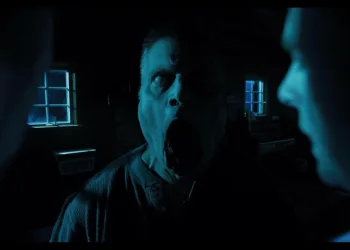
During nightmare sequences, those warm tones vanish and the palette turns cold, with blue light and severe shadows taking over. The cabin itself feels personal and occupied, packed with recording equipment and small belongings that make Dakota’s life feel tangible.
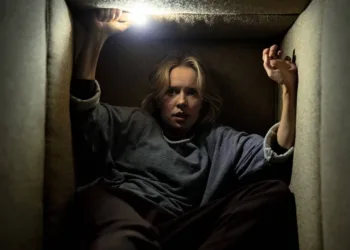
Valerie Rose Lohman gives Dakota a strong emotional presence, grounding the character in a performance that carries fatigue, grief, and determination. The field recorder mechanic ties directly into that performance and into the game’s creative premise.
Also Read





Dakota can capture sounds such as dripping water or birds, and those recordings feed her music. Back at the cabin, players can also play licensed tracks on a record player, which helps shape the emotional texture of the space. A recurring musical leitmotif haunts the experience, though some background loops cut off too suddenly and draw attention to the seams.
There are technical issues that interrupt the atmosphere. Movement can bring noticeable frame rate drops, and the small font used for notes makes journal reading harder than it should be. Even with those problems, the visual design remains strong. Dense forest growth and fog covered valleys create striking scenery, and the art direction chooses stylization over strict photoreal detail.
That choice works well because mood matters most here. The use of light and color brings to mind Firewatch in the way scenery becomes part of the emotional design. Sound is just as important. Echoing footsteps and distant noises carry much of the tension, and supporting performances from Aleks Le and Jonah Scott help maintain the game’s cinematic register.
Mechanical Shifts and the Logic of Nightmares
The structure moves between walking simulator and survival horror, and the contrast between those modes gives the game its shape. In waking life, Dakota deals with ordinary tasks such as gathering firewood and repairing a radio tower. These sections are quiet, grounded, and largely concerned with mood.
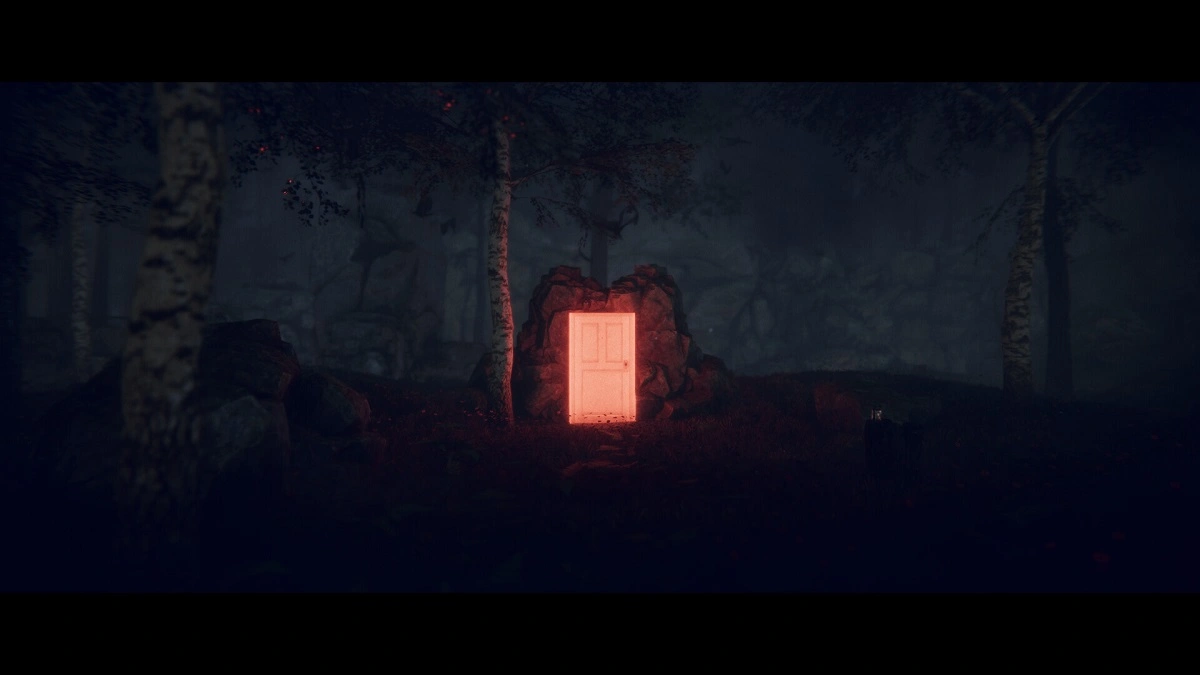
The dream world changes the rules. Tools from daily life take on survival functions, with the axe becoming a weapon and a revolver appearing as protection against hostile creatures. An upgrade system based on scrap metal gives players a simple way to improve their equipment without burying the game in systems.
Puzzles follow a clear logic. Players search for codes, reposition clock hands, and play specific keys on a piano. One of the stronger sequences asks the player to interact with a piano while under threat, which gives a routine puzzle a layer of panic. The enemy roster is small but memorable.
One creature is a slow moving tree like monster, while another behaves like a demonic watcher that only advances once the player looks away. That second enemy recalls the Weeping Angels from Doctor Who, and the comparison fits because the fear comes from managing sightlines and panic at the same time. It is a smart mechanic that creates vulnerability with very little explanation.
Stealth usually works, though the enemy AI can be awkward and sometimes catches on the environment. Combat is stripped down to its basics. Players aim, fire, and retreat to maintain space. That simplicity keeps attention on mood and narrative momentum instead of turning encounters into complex action sequences.
The environmental storytelling also deserves credit. Objects in the cabin feel placed with intention, which helps the setting read as a real working and living space. New Game Plus adds replay value through upgraded gear, visual filters, and an infinite health cheat that gives players room to revisit the game from a different angle.
The Meta Narrative of Creative Struggle
The story is built around grief and artistic strain, and it approaches both through a self aware frame. Conner Rush appears directly through messages that open the game and return at key points to thank the player. Those moments make the project feel openly personal.

The game also reflects on its own construction. In one scene, it openly discusses the inclusion of combat as a way to hold player attention, which makes the horror design feel intentional and openly argued for. That kind of commentary gives the game a distinct voice, though it also risks pulling the player out of the fiction.
That tension defines much of the narrative. At times, the game feels like direct access to someone’s private journal, with all the intimacy and discomfort that implies. The focus stays fixed on an artist’s internal state, and the short running time of about five hours helps the experience maintain that sense of closeness.
The horror is tied to creative anxiety, which gives the threatening imagery a personal charge and keeps the story away from familiar genre patterns. The meta storytelling recalls Layers of Fear, particularly in the way artistic obsession and horror are folded together. The intent reads clearly, even if the execution can become heavy handed.
The middle stretch loses momentum, and that slowdown makes sustained investment harder. Still, the themes of trauma and creativity are likely to connect with a lot of players. The game leaves a mark through its setting and through the care it shows for horror as a form. It also shares tonal ground with Among Ashes, since both games use mechanics to reflect on what it means to play games and to make them. That perspective gives this project an intimate, handmade quality that stays with it from start to finish.
The Review
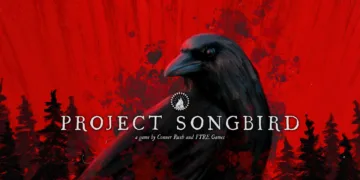
Project Songbird
Project Songbird is a contemplative horror experience that succeeds through its atmosphere and strong lead performance. It trades complex mechanics for a personal story about the cost of creation. Technical hiccups and simple combat hold it back. The Appalachian setting and clever audio mechanics make it a memorable title for fans of narrative driven games. It remains a sincere exploration of artistic grief.
PROS
- Stellar lead performance by Valerie Rose Lohman
- Rich Appalachian setting and evocative lighting
- Inventive audio field recording mechanic
- Sensitive handling of personal grief and loss
CONS
- Technical hitches and frame rate drops
- Simplistic combat and awkward enemy AI
- Font sizes are small and difficult to read
- Meta-narrative elements occasionally break immersion