























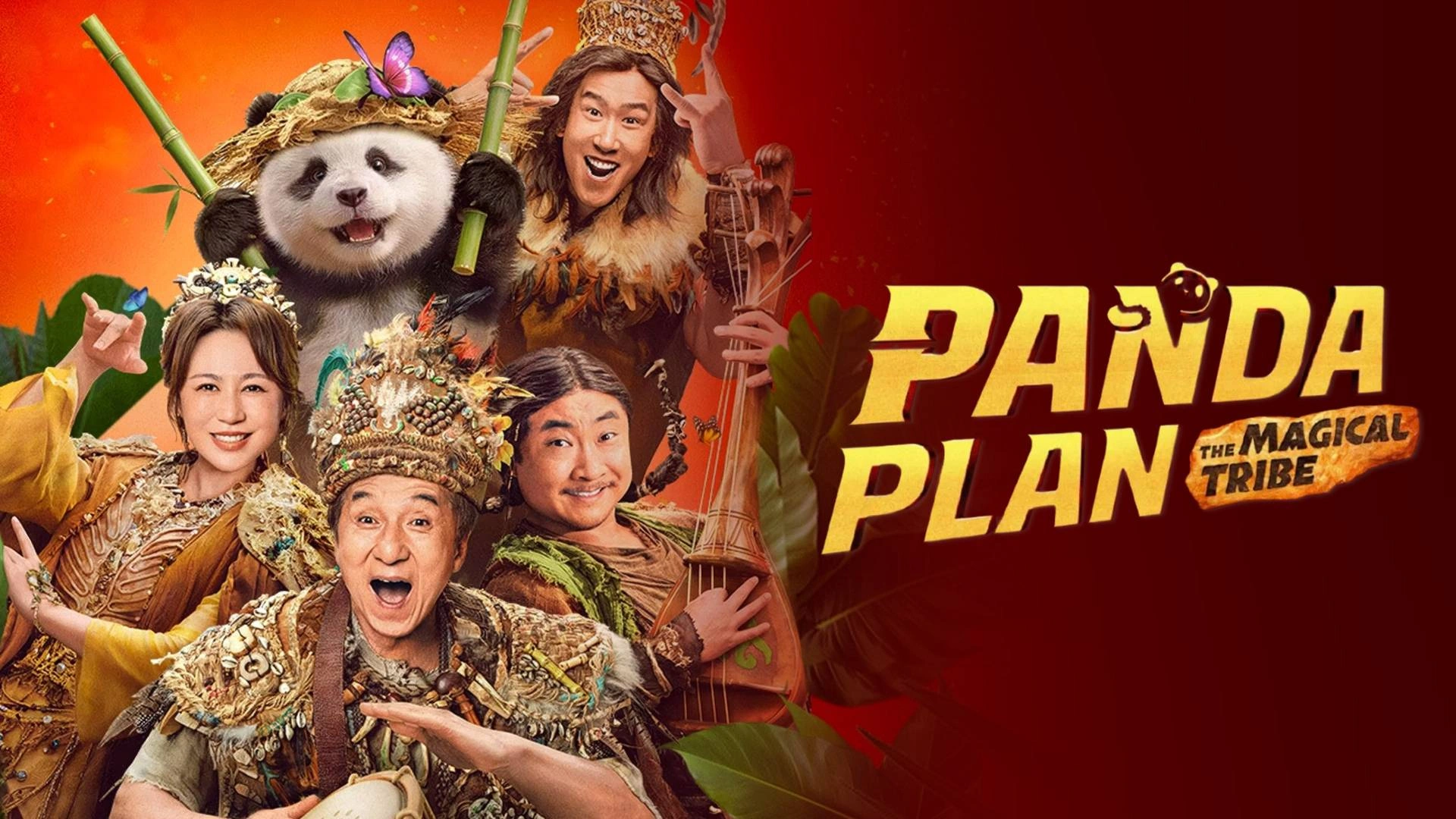

Panda Plan 2: The Magical Tribe transports Jackie Chan and his CGI companion Hu Hu into a jungle realm where legend dictates action. Jackie inhabits a fictionalized version of himself, tasked with escorting Hu Hu to a panda sanctuary.
Their journey veers sharply off course when they encounter an isolated tribe that reveres pandas as divine agents. The villagers quickly identify Hu Hu as a prophesied “divine beast” and Jackie as the necessary messenger. Together, they are expected to ascend Awe Summit to prevent a looming catastrophe intertwined with thunder, mystical energy, and ancestral rites.
The film’s tone leans heavily toward exuberant, broad comedy, combining slapstick, exaggerated gestures, and martial arts-infused antics. Camera work often favors wide, clean framing to accommodate physical gags and animal choreography, while lighting remains even and bright, emphasizing clarity over mood.
Jackie’s interactions with Hu Hu and the villagers establish both the narrative and emotional rhythm, reinforcing themes of cooperation, family, and courage. The storytelling favors spectacle and immediacy over subtlety, crafting a universe that is playful, energetic, and designed for younger audiences who respond to rapid comedic beats and visual whimsy.
Story, Themes, and Character Dynamics
The narrative revolves around prophecy and mistaken identity. Outsiders arrive in a secluded community and are quickly designated as legendary figures, tasked with saving the tribe from impending disaster. Plot complexity is minimal; comedic interludes punctuate the story, often diverting attention from the central quest.
The tribe’s social structure emphasizes independence from an early age and views emotional expression as a liability. The Chieftain enforces these values, while her son Tu Lu grapples with resentment and suppressed desire for recognition. His attempts to outmaneuver Jackie and Hu Hu form the primary internal tension. Shan, the enforcer dispatched to challenge the heroes, gradually softens into an ally, providing comic counterpoint.
Also Read






Jackie Chan’s role is that of a catalyst. He disrupts tribal rigidity not through force, but through warmth, humor, and relational intelligence. His bond with Hu Hu demonstrates an alternate model of strength grounded in empathy and playfulness.
Scenes often linger on physical comedy or slapstick, which can dilute narrative momentum but reinforce character relationships. The screenplay juxtaposes genuine emotional beats with pratfalls, creating a rhythm that oscillates between sincerity and absurdity.
Comedy, Action, and Pacing
Comedy manifests in exaggerated physicality, pratfalls, and cartoonish exaggeration. The film relies on slapstick, facial contortions, animal chaos, dance interludes, and occasional lowbrow humor. Such devices cater to young viewers, while repeated gags may test adult tolerance.
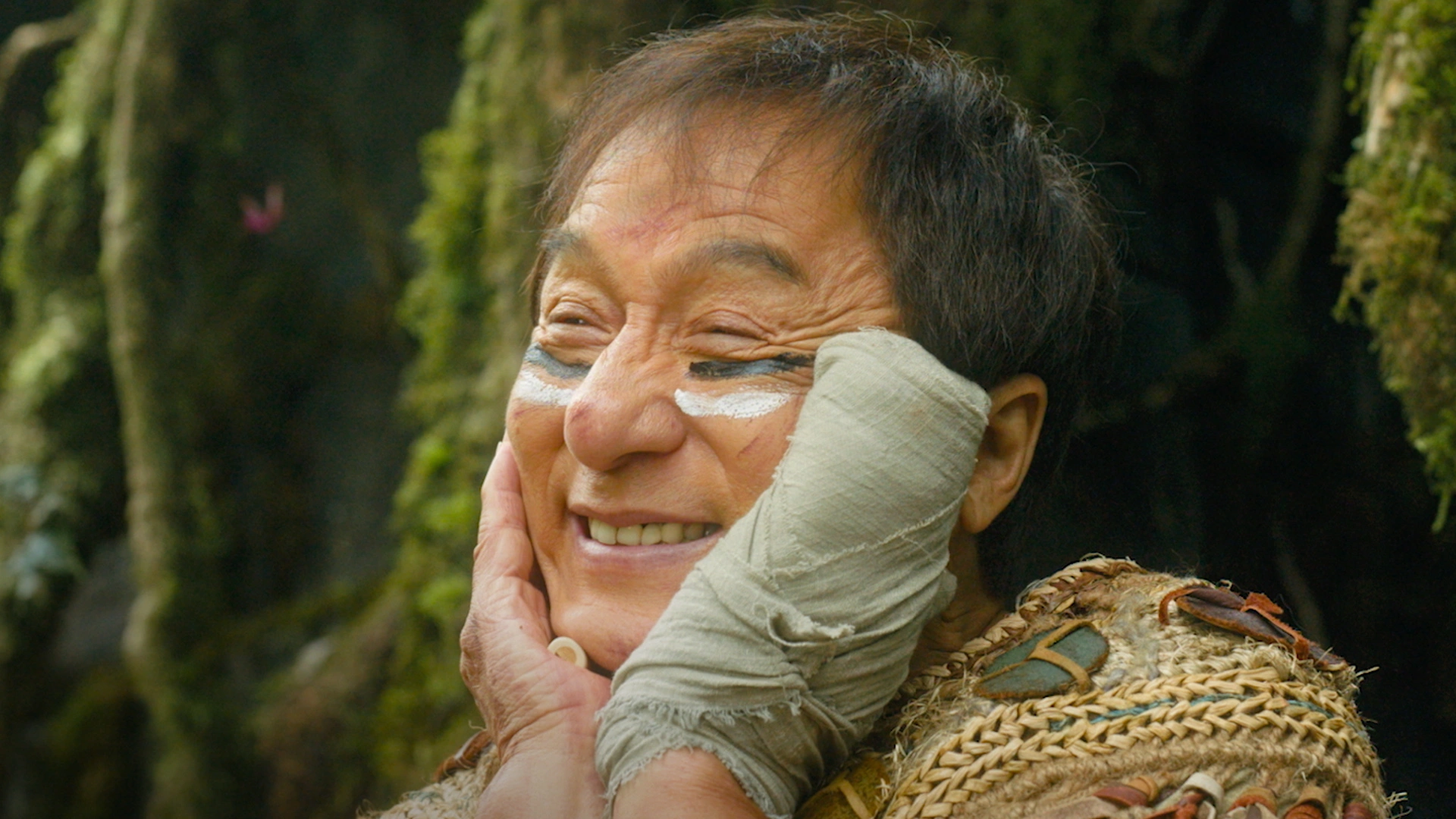
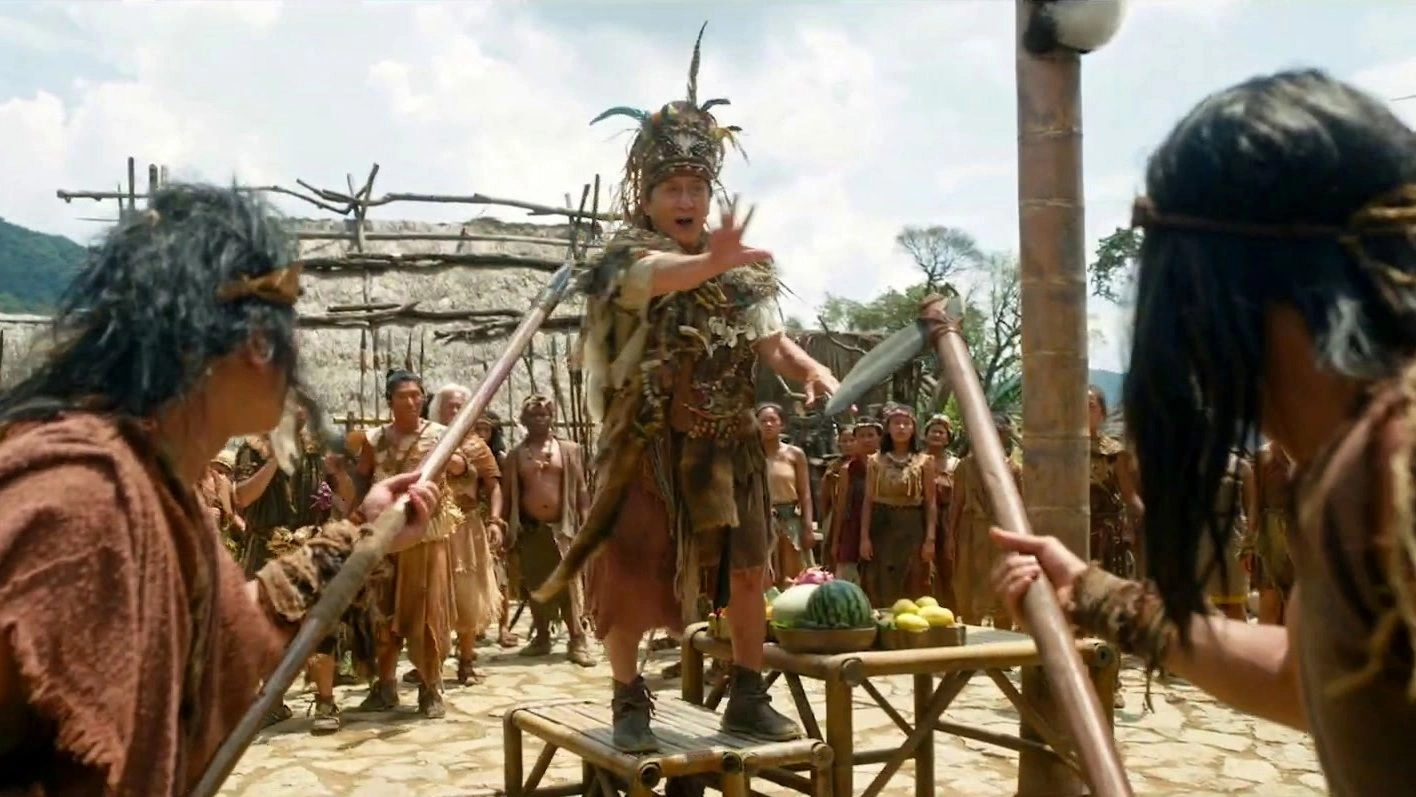
Jackie Chan retains his kinetic charm, applying improvisational skill to environmental objects, choreographed conflicts, and multi-layered sequences that blend humor with physical danger. Notable sequences include Hu Hu’s climbing trials, encounters with scheming tribesmen, and a river raft pursuit. Each action set-piece leverages spatial awareness, props, and camera coverage to maximize comedic and kinetic effect.
Limitations appear in the brevity and simplicity of fight sequences. Staging often lacks the visual punch of Chan’s earlier works, leaving sequences reliant on reaction rather than inventive choreography. Pacing compounds the effect.
The tribe’s encampment dominates the narrative for much of the runtime, delaying the climactic journey to Awe Summit. The ascent, anticipated through extended setup, concludes quickly, leaving the payoff compressed relative to buildup. Tension and humor are unevenly distributed, oscillating between extended gags and abrupt narrative thrusts.
Visual Design, CGI, Tone, and Family Appeal
The visual palette establishes a storybook aesthetic. Tribal architecture, ceremonial spaces, and jungle vistas emphasize vibrant, immersive environments. Stone tablets, costumes, and ritualistic props reinforce cultural texture and provide framing for comedic beats. Cinematography privileges medium and wide shots that highlight both performance and setting.
Hu Hu functions as the emotional and visual anchor. The CGI attempts to evoke innocence, clumsiness, and charm, yet occasional inconsistencies in motion or integration with live-action figures create an uncanny impression. Emotional resonance depends on suspension of disbelief, with younger viewers more receptive to anthropomorphized antics.
Tone oscillates between childlike exuberance and occasional peril. Wounded characters, disaster imagery, and exaggerated tribal logic introduce tonal friction. The depiction of the hidden tribe, while playful, relies on simplified cultural tropes and cartoonish exaggeration.
Audience targeting is clear: children, families, and dedicated Jackie Chan fans will find entertainment in broad humor, martial arts gags, and the dynamic between human and panda. Viewers seeking narrative sophistication or visual refinement may find the plot thin, CGI uneven, and comedic repetition excessive. The film prioritizes spectacle and immediate laughter over sustained tension or layered storytelling.
Panda Plan 2: The Magical Tribe is a Chinese martial arts action-comedy film that debuted theatrically in mainland China on February 17, 2026, followed by a digital international streaming rollout on Lionsgate Play on May 22, 2026. This sequel features international action star Jackie Chan alongside the beloved giant panda Hu Hu as they inadvertently stumble into a secluded, primitive jungle tribe that worships the animal as a sacred totem. Audiences looking for a lighthearted, family-friendly adventure can stream the film on the Lionsgate Play platform or rent it across major premium video-on-demand networks.
Where to Watvh Panda Plan 2: The Magical Tribe (2026) Online







Full Credits
Title: Panda Plan 2: The Magical Tribe
Distributor: Huaxia Film Distribution, Beijing Enlight Media, Lionsgate Play
Release date: February 17, 2026 (China theatrical release), May 22, 2026 (Digital OTT release)
Rating: PG / 12+
Running time: 100 minutes
Director: Derek Hui
Writers: Keyang Pan
Producers and Executive Producers: Derek Hui, Mei Han, Wei Wang
Cast: Jackie Chan, Ma Li, Qiao Shan, Yu Yang, Wang Yinglu, Zhang Zidong, Wang Chengsi, Ke Da, Song Muzi, Feng Man, Wang Xing
The Review
Panda Plan 2: The Magical Tribe
Panda Plan 2: The Magical Tribe has flashes of charm in Jackie Chan’s physical comedy and Hu Hu’s kid-friendly antics, yet its thin story, uneven CGI, repetitive gags, and delayed mountain quest keep the adventure from landing with much force. It works best as broad family escapism for young viewers and Chan loyalists, while adults may find the pacing slack and the comedy too frantic.
PROS
- Jackie Chan remains warm, agile, and likable
- Hu Hu offers cute moments for younger viewers
- Some action beats use props and space playfully
- The family message is sincere
- The jungle prophecy setup has light fantasy appeal
CONS
- Story feels thin and predictable
- Comedy becomes repetitive
- CGI panda can look artificial
- Awe Summit payoff arrives too late
- Tone shifts awkwardly between silliness and peril