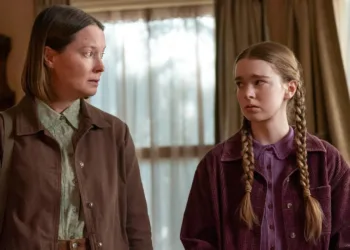































Youngblood refits the 1986 hockey drama into a Canadian sports film about Dean Youngblood, a gifted Black player from Detroit who travels to Hamilton, Ontario for one last opening toward professional hockey. The setup has an immediate pull: a player with speed, skill, and a short fuse enters a system that claims to reward discipline while quietly tolerating the forces that keep provoking him.
Dean is shaped by clashing lessons. His father, Blane, believes toughness is survival. His late mother, Ruby, leaves behind a gentler code, one rooted in restraint and self-possession. Hockey, meanwhile, seems happy to punish Dean’s retaliation while treating the hostility around him as part of the atmosphere. That tension gives director Hubert Davis a potent way to rework the underdog sports template through race, grief, masculinity, and exclusion.
The problem is that Youngblood often understands its themes better than it dramatizes them. Its intentions are strong, its cast is committed, and the rink sequences have genuine texture. Away from the ice, the film keeps circling emotional conflict without landing enough body checks.
The Rookie Arc Runs on Familiar Ice
Dean’s path is simple in theory. After a suspension damages his future, he earns a chance to join a Hamilton junior team and prove he can still be an NHL prospect. It is the kind of clean objective that sports dramas thrive on. A goal, a deadline, a team, a coach who doubts him, and a young athlete who must learn that talent alone is never enough. The film has all the pieces of a satisfying progression system, almost like a narrative-driven game where each match should test a new emotional skill.
That structure never gains the sharpness it needs. Dean’s growth is explained through conversations rather than shaped through escalating choices. He begins as a player who reacts to disrespect with violence, then learns to absorb pressure without exploding, but the middle stages feel thin. We hear lessons. We see consequences. The inner shift remains underdeveloped.
The father-son dynamic carries the most dramatic promise. Blane teaches Dean to fight, then seems wounded by the damage that lesson causes. Blair Underwood gives the character weight, suggesting a man whose idea of protection has curdled into control.
The script, though, keeps softening the conflict before it can become truly painful. Ruby’s early wisdom gives the film some of its strongest emotional notes, yet her memory sometimes functions like a symbolic checkpoint rather than a living wound.
Jessie, the coach’s daughter and Dean’s romantic interest, has the outline of a better role. She is a goalie, ambitious, frustrated by limited opportunity, and sharp enough to call out the self-pity of the hockey men around her. Still, the film rarely lets her story breathe apart from Dean’s arc. She has her own rink, but the movie keeps handing him the puck.
Race, Discipline, and the Cost of Staying Calm
The film’s richest material comes from Dean’s position as a Black athlete inside a predominantly white hockey culture. Racism appears through taunts, assumptions, coded warnings, and the constant demand that Dean manage himself with perfect composure. His anger is visible. The injury that causes it is easier for others to ignore.

This is where Youngblood becomes most interesting and most frustrating. Words like “undisciplined,” “special treatment,” “attitude,” and “selfish” carry a different charge when aimed at Dean. The film understands that. It grasps how institutions can turn restraint into another test for the person already being targeted. Dean is asked to prove he belongs by swallowing humiliation, playing clean, staying humble, and accepting that fairness may never arrive on schedule.
That idea is strong. The execution is cautious. Too often, Dean’s survival is framed as a matter of personal control, while the team, the coach, the league, and the culture around him remain lightly examined. The film notices the double standard, then hesitates to push it into sharper conflict. For a story about a player forced to read every hit, every stare, and every comment, Youngblood sometimes feels oddly reluctant to read the room with the same intensity.
Its treatment of masculinity is cleaner. Blane, Kelly, Coach Chadwick, and Dean all carry versions of hockey’s old myth that pain builds character and violence proves readiness. A late team-bonding scene, where players admit their fathers did damage in the name of ambition, briefly opens a deeper vein. That moment suggests a full film about generational pressure, emotional training, and the strange ways families confuse fear with love. Then the movie skates away from it.
Strong Skates, Soft Impact
Ashton James gives Dean a physically credible presence. He looks at home on the ice and carries the guarded posture of someone used to being judged before he speaks. His performance has flashes of vulnerability, but the writing traps him in a narrow loop of brooding, reacting, and absorbing lectures. Dean needs ordinary moments, private humor, friendships, bad habits, small joys. Without those, he becomes a theme wearing a jersey.
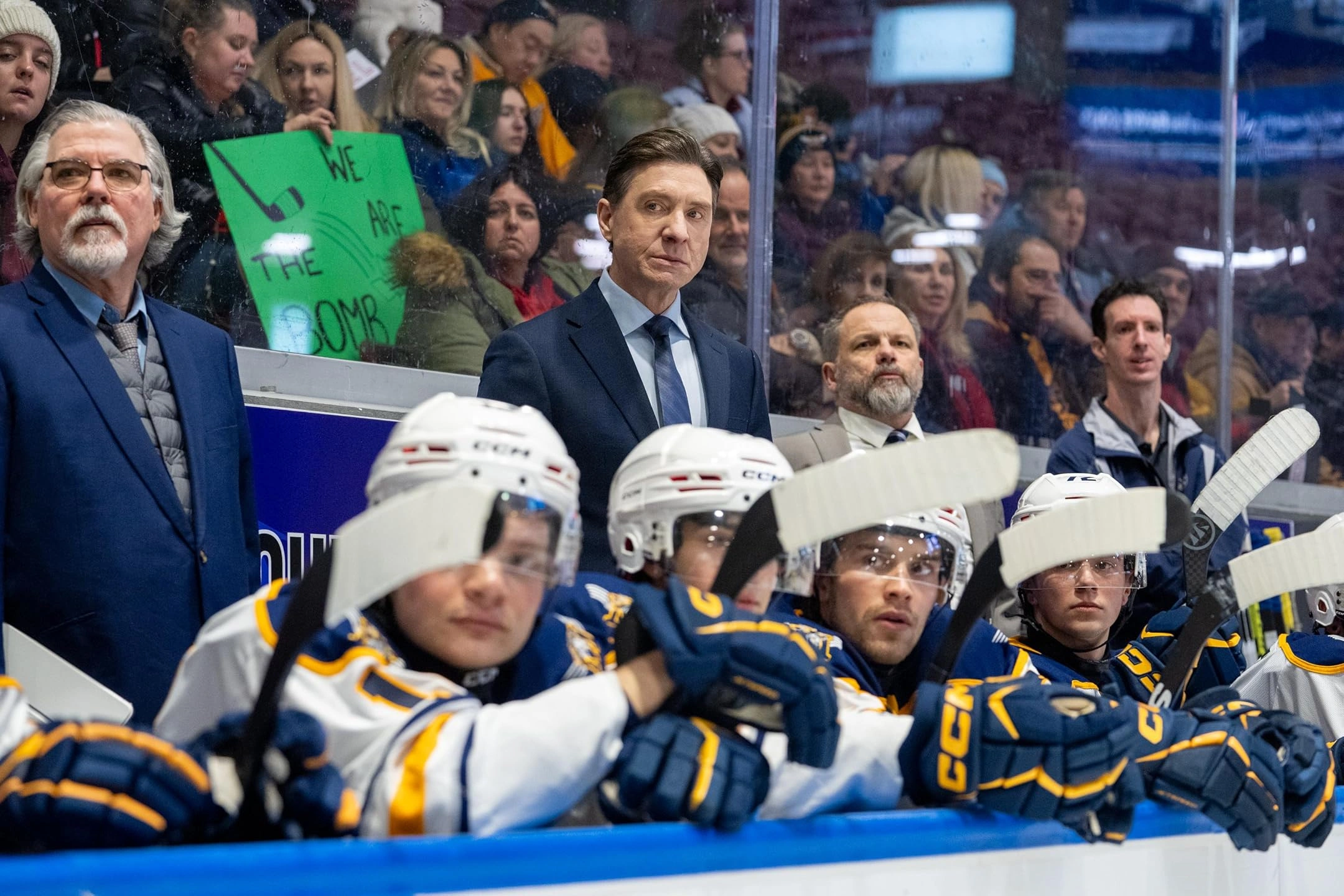
Underwood brings authority and quiet menace to Blane, making even thin scenes feel charged. Alexandra McDonald gives Jessie a welcome edge, especially when she pushes back against the entitlement around her. Henri Richer-Picard’s Sutton is likable as the team captain who helps Dean settle in, though the rest of the locker room rarely gets enough definition to make the team feel like an ensemble.
The hockey sequences are the film’s clearest strength. Bright arena lighting, close physical movement, and the sound of skates cutting across the ice give the games a pulse that the off-rink drama often lacks. The playoff material has momentum, and Davis frames the rink as a place where identity, pressure, and instinct collide in real time.
Still, Youngblood is too restrained for a sports film built around rage, talent, and release. It has the right subjects and several strong performers, but its dramatic systems never fully sync. Like a game with promising mechanics and underwritten quests, it works best in bursts, then leaves you wishing the design had trusted its own stakes.
Directed by Hubert Davis, the modern sports drama Youngblood premiered at the Toronto International Film Festival on September 6, 2025, before expanding to a wide theatrical release on March 6, 2026. The film reimagines the classic 1986 hockey story by centering on Dean Youngblood, a talented Black junior hockey prodigy from Detroit who faces intense rivalries, systemic prejudice, and complex family dynamics upon joining a Canadian team. Audiences looking to watch the feature can find it available on Blu-ray and major digital video-on-demand platforms.
Where to Watch Youngblood (2026) Online






Full Credits
Title: Youngblood
Distributor: Well Go USA Entertainment, Photon Films and Media
Release date: September 6, 2025
Rating: PG-13
Running time: 104 minutes
Director: Hubert Davis
Writers: Seneca Aaron, Josh Epstein, Charles Officer, Kyle Rideout
Producers and Executive Producers: Anthony Leo, Andrew Rosen, Bill O’Dowd, Emerson Davis, Mark Slone, Zanne Devine, Allan Fung
Cast: Ashton James, Blair Underwood, Henri Picard, Shawn Doyle, Tamara Podemski, Donald MacLean Jr., Alexandra McDonald, Allan Hawco
Director of Photography (Cinematographer): Stuart James Cameron
Editors: Matt Lyon
Composer: Todor Kobakov
The Review
Youngblood
Youngblood has a strong premise, committed performances, and hockey sequences with real physical texture, but its drama is too cautious to hit with full force. The film’s ideas about race, grief, masculinity, and discipline are often sharper than its storytelling, leaving Dean’s emotional arc more explained than felt.
PROS
- Strong thematic foundation
- Immersive hockey scenes
- Solid performances, especially Ashton James and Blair Underwood
- Meaningful racial subtext
- Jessie has flashes of real agency
CONS
- Predictable sports-movie structure
- Underdeveloped supporting characters
- Sluggish off-rink pacing
- Dean’s growth feels too verbalized
- Romantic subplot lacks urgency