
























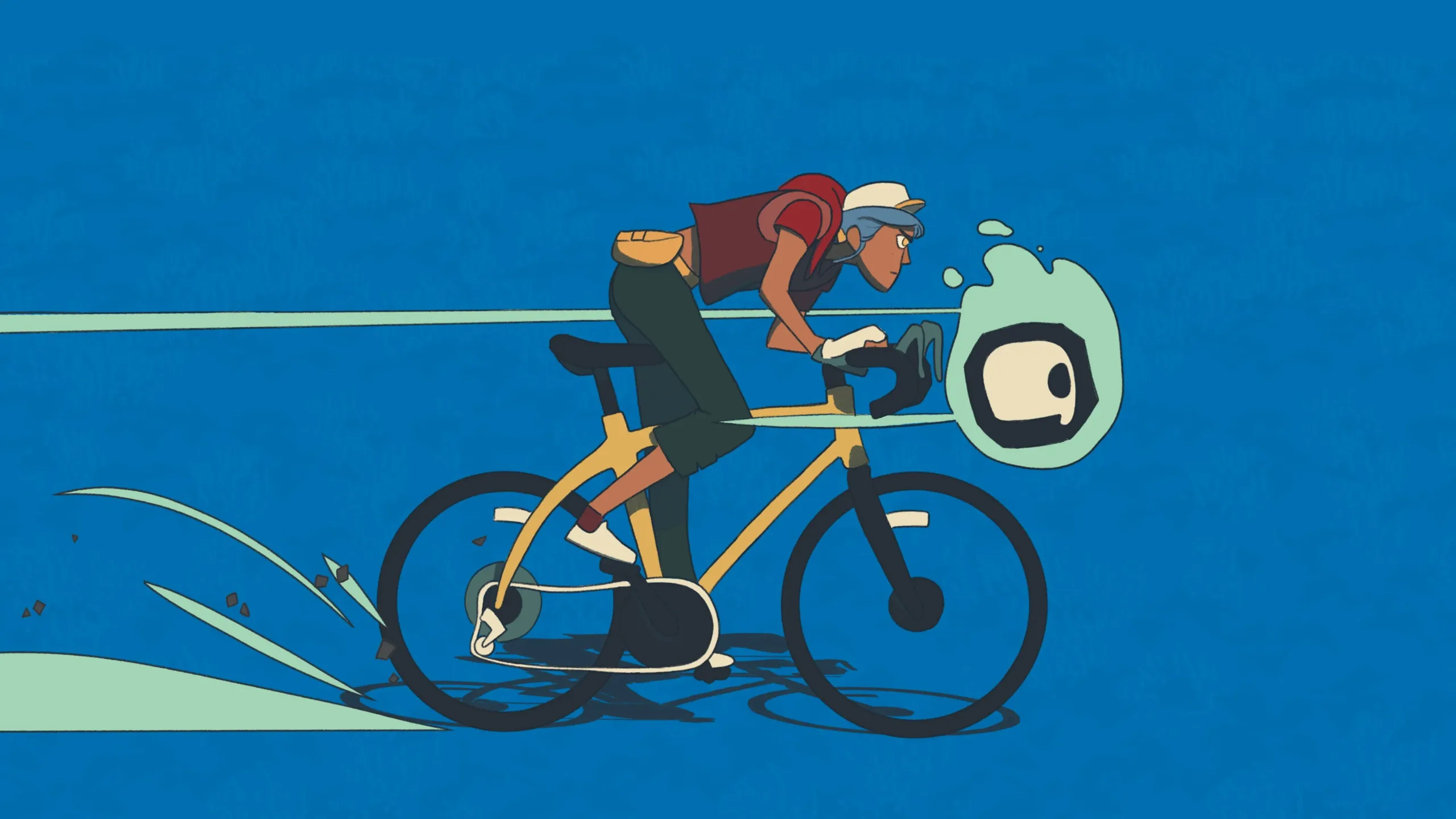

There is a simple, potent magic in just getting on a bike and riding. Wheel World understands this feeling deep in its bones. You play as Kat, a quiet cyclist who stumbles upon Skully, a floating, skull-shaped spirit of a legendary bicycle. His parts are scattered, and he needs your help to reassemble his ride for the Great Shift—a cosmic ritual meant to guide souls to the great beyond.
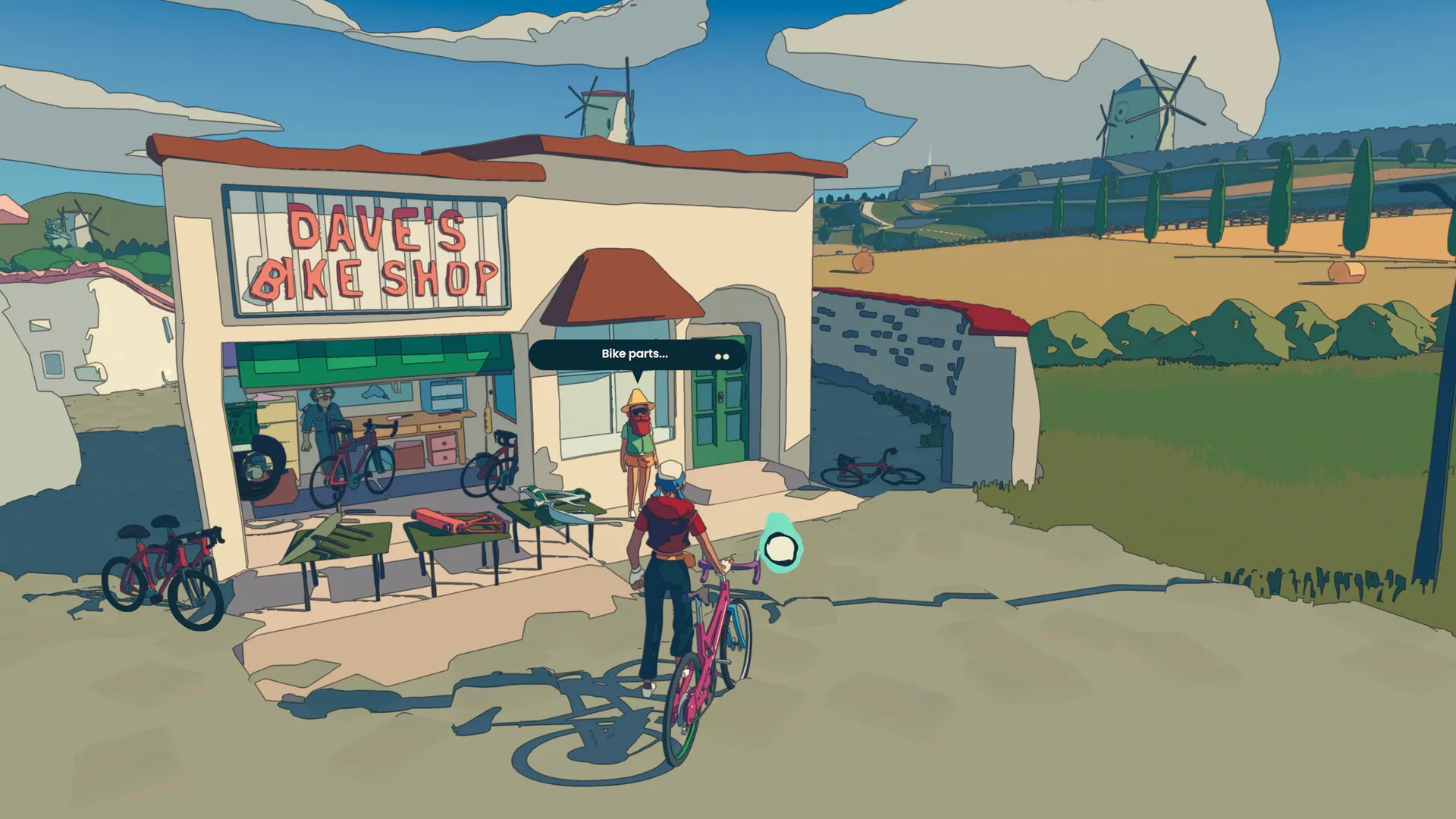
This wonderfully strange premise sets the stage for a journey through Tramonto, a world where the locals are completely, unironically obsessed with cycling. They will happily discuss the merits of carbon saddles or the precise wattage generated by toeclips. The game’s quest is less an epic saga and more a charming excuse to explore a world that celebrates the simple, joyful act of pedaling.
Mastering the Drivetrain
The enduring quality of any racing game rests on the fine details of its physics and the feedback it provides the player. Wheel World succeeds admirably here, delivering a system that feels immediately intuitive yet contains layers of nuance for dedicated players to master.
The physics model eschews hardcore simulation for a more forgiving, arcade-style approach, reminiscent of the Forza Horizon series, but with a unique focus on lightweight momentum. Your bike feels grounded, yet nimble. There is a tangible sense of weight transfer as you lean into a sharp corner and a satisfying feeling of traction when you pedal hard out of a turn.
On the PlayStation 5, this physical connection is amplified significantly by the DualSense controller. The haptic feedback is not a mere gimmick; it is a core part of the experience, translating every surface into a distinct language.
You feel the smooth, low hum of fresh asphalt, the rhythmic, bumpy cadence of cobblestone streets, and the loose, gritty vibration of a dirt path. This constant stream of information makes the world feel solid and your interaction with it more meaningful.
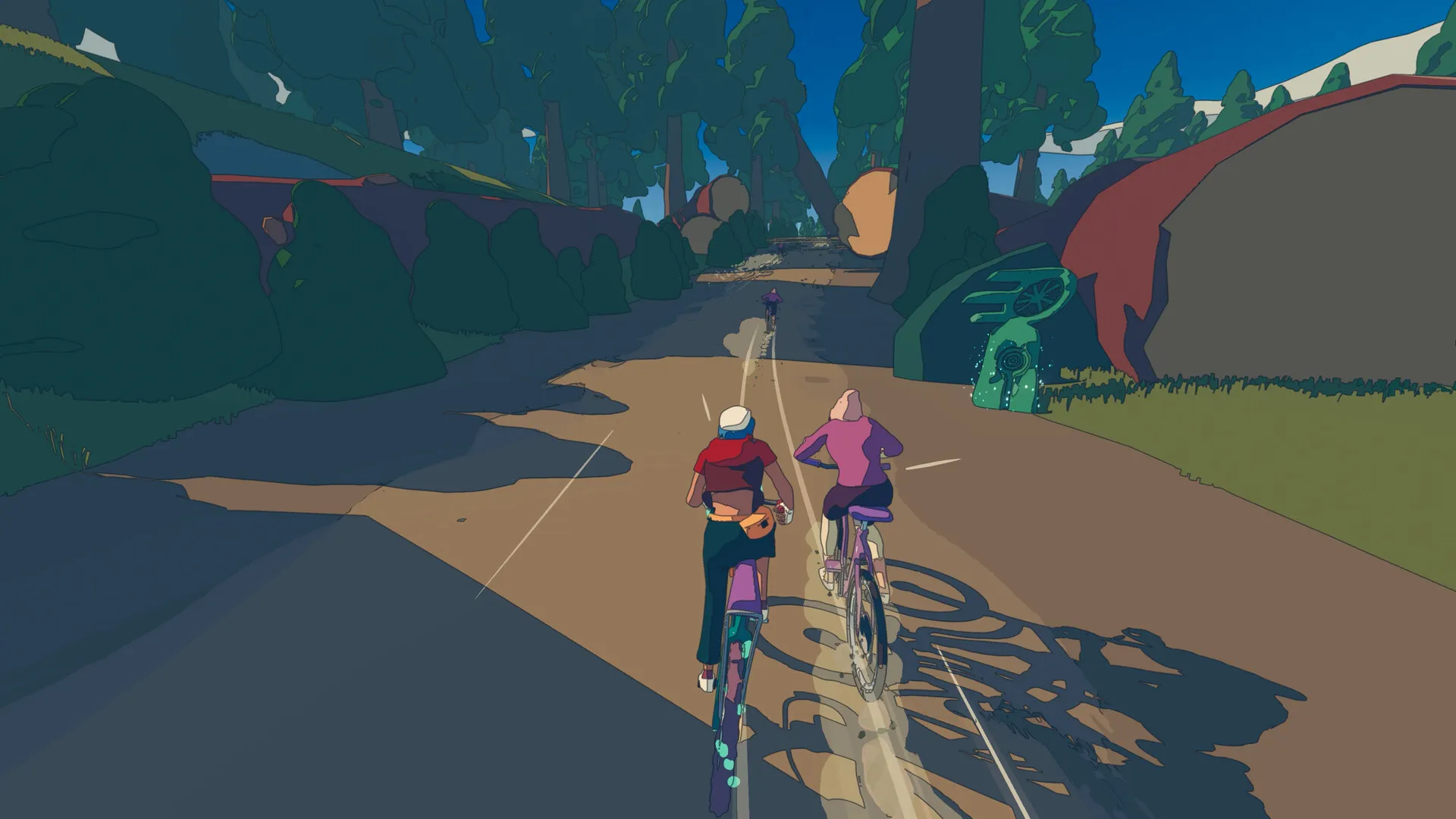
Races build upon this strong foundation with a clever boost mechanic that encourages skillful, risky play. Drawing clear inspiration from the high-octane design of the Burnout series, boost is a resource earned through daring maneuvers. Slipstreaming directly behind an opponent creates a pocket of low air resistance you can feel, and a meter begins to fill. Weaving through oncoming traffic at high speed or launching off a ramp to catch significant airtime also contributes.
This transforms every race into a dynamic puzzle. Do you play it safe, or do you risk a head-on collision for a precious bit of boost that could be the difference between first and second place? The system demands constant situational awareness and rewards players who can thread the needle.
The boost itself provides a powerful surge of speed that is essential for overtaking, especially since the lead AI racer in any given pack often becomes aggressive, actively trying to nudge you off the track. A well-timed boost is not just for speed; it is your primary tool for breaking away from the pack and securing a clean line.
Beyond boosting, the game provides a small but crucial tool for expression and strategy: the bunnyhop. Activated with a manual flick of the analog stick, this move allows you to lift your bike off the ground for a moment. Its applications are surprisingly varied. It can be used to clear low hedges, opening up shortcuts that are invisible to less observant players. It can be used to leap over small track hazards.
Most importantly, it can be combined with ramps and hills to gain extra height and airtime, feeding directly back into the boost mechanic. Mastering the timing of the bunnyhop is a key step in moving from a casual rider to a serious competitor. The game’s structure channels these mechanics into a satisfying progression loop.
You are not just racing for the sake of it; you are competing against themed gangs like the “Handlebaristas” or the medically-inclined “Practice” crew to earn Reputation. This “Rep” acts as a form of experience, gating your access to the boss bikers who hold the legendary parts you need for your quest. The structure is reminiscent of a light RPG, akin to challenging gym leaders in Pokémon, giving the world a clear sense of progression and purpose that fuels your desire to keep riding.
A Tale of Two Tramontos
Player expression in Wheel World is not found in dialogue trees or moral dilemmas, but in the workshop. The bike customization system is the game’s primary vector for choice and consequence, allowing you to build a machine that reflects your personal playstyle. You find parts scattered across the world—hidden in bushes, at the end of scenic overlooks, or awarded for winning races.
Each part, from frames to wheels to handlebars, comes with stats that affect your bike’s performance in categories like ‘aero,’ ‘grip,’ and ‘boost’. This creates a compelling loot-driven progression where you are constantly tweaking your ride. The choices you make here have a tangible impact on the track. A high-grip build might excel on winding dirt paths, while a lightweight, aerodynamic bike will dominate on long, straight stretches of road.
The system truly shines when it allows for creative, unconventional solutions. It moves beyond simple stat optimization and into the realm of strategic lateral thinking. When faced with a particularly difficult time trial on a paved course, I found myself repeatedly failing. The intended solution was likely a bike built for pure speed.
Instead, I went back to my collection and assembled a monstrous creation with a heavy log for a frame and what looked like lawnmower blades for a fork. Its on-road performance was terrible, but its stats were heavily weighted toward crashing through vegetation. This absurd, “vibe-based” build allowed me to ignore the road entirely, plowing through vineyards and bramble patches to create a direct path to the finish line. It was a moment where the game’s systems allowed for genuine player ingenuity.
However, like many loot-based systems, this one eventually hits a point of diminishing returns. Once you begin acquiring the powerful legendary parts from boss battles, the thrill of finding a common or uncommon part with a minor stat increase fades. The hunt for upgrades loses its motivational pull, and the system becomes less central to the experience.
This shift in motivation mirrors a larger shift in the game’s world design. The first half of the game, set in Tramonto, is a masterclass in compact open-world design. In an era where many games equate size with quality, leading to bloated maps filled with repetitive content, Tramonto feels curated and respectful of the player’s time. Its sun-drenched hills, charming towns, and winding roads are a joy to explore.
It evokes the feeling of discovery found in indie titles like A Short Hike or Sable, where the world is a cozy, inviting space rather than an endless checklist. This makes the game’s second half a jarring and unfortunate departure. The story eventually moves you to a new map: a bleak, industrial corporate wasteland. The contrast is stark and immediate. The vibrant colors of Tramonto are replaced with a drab, grey palette. The open, flowing roads give way to narrow, restrictive corridors choked with obstructive traffic.
The design philosophy shifts from freedom to frustration. Exploration is no longer a joy but a chore, and the creative track layouts of the first half are replaced with aggravating, linear paths. It feels like a completely different, and far inferior, game was grafted onto the stellar foundation of the first.
Hitting a Pothole
The game’s trajectory takes a sharp downturn in its final hours, as several underlying issues compound into significant frustrations. The primary culprit is the collision system, which clashes violently with the late-game’s focus on narrow tracks and aggressive AI. While a bit of bumping is expected in an arcade racer, the physics here are punishingly inconsistent.
A minor nudge from an opponent can send you into an unrecoverable spin or launch you into a wall, instantly ending any hope of winning the race. This problem is magnified by the erratic behavior of the AI racers, who seem to follow their racing lines with a blind devotion that disregards the player’s presence.
The experience shifts from a skillful dance of positioning and overtaking to a chaotic lottery where your success often feels out of your control. This breaks the crucial “flow state” that is the hallmark of a great racing game, replacing exhilarating speed with cautious anxiety.
This lack of polish is also evident in some of the game’s core mechanics, most notably the gear-shifting system. This feature is introduced very late in the experience, and it feels like an afterthought. From a user interface and design perspective, it is a complete failure. In a fast-paced racing game, critical information must be communicated clearly and instantly.
The gear system, however, relies almost exclusively on a subtle vibration in the controller to signal the optimal time to shift. With your eyes locked on the road, trying to anticipate corners and dodge opponents, this faint tactile cue is hopelessly inadequate. It is a distraction at best and completely unnoticeable at worst.
Consequently, engaging with the system is more cumbersome than it is helpful. It is far more efficient to simply ignore its existence and rely on the much better-implemented boost mechanic to power through difficult sections, leaving the gear system to feel like a poorly conceived and abandoned idea.
These design flaws are compounded by technical performance issues that mar the experience on the PlayStation 5. A game built around speed and responsiveness requires a stable frame rate to feel its best. Unfortunately, Wheel World falters here.
Densely populated areas, particularly the city section of the final world, are prone to significant and jarring frame rate drops that disrupt the smooth flow of gameplay. In the more open environments of Tramonto, noticeable screen tearing can occur during fast movements, visually fracturing the otherwise beautiful world.
While the tight controls prevent these issues from making the game unplayable, they represent a significant crack in its otherwise polished presentation. These bumps in the road—the frustrating collisions, the half-baked mechanics, and the technical stumbles—are not enough to derail the entire journey, but they prevent a wonderful ride from achieving a truly spectacular finish.
The Review
Wheel World
Wheel World begins as a joyous and stylish cycling adventure, built on a foundation of superb handling, a charming world, and rewarding customization. For its first five hours, it is one of the most pleasant indie experiences available. This brilliant ride is unfortunately soured by a frustrating and poorly designed final act, where questionable design choices, a punishing collision system, and technical hitches bring the momentum to a screeching halt. It is a journey worth starting, but be prepared for a very bumpy finish.
PROS
- Incredibly satisfying and tactile cycling mechanics.
- A beautiful and well-designed initial open world.
- Creative bike customization encourages player expression.
- Charming premise and a wonderfully quirky tone.
CONS
- A significant and jarring dip in quality in the game's second half.
- Frustrating late-game difficulty due to poor collision physics.
- Some mechanics, like gear-shifting, feel underdeveloped.
- Technical performance issues, including frame drops.