

















The ice groans. A ship, a black tooth in a white mouth, is frozen fast. From the tundra emerges a shape, a storm of rags and fury, demanding the dying man within. So begins Guillermo del Toro’s Frankenstein, not with a spark in a laboratory but with the final, frigid act of a tragedy already told.
This is a lavish, operatic adaptation of Mary Shelley’s text, framed as a Gothic melodrama fixated on the tormented bond between a maker and his made. The film’s atmosphere is one of profound melancholy, a passionate and sorrowful exploration of humanity’s capacity for cruelty, filtered through a compassionate gaze upon its most misunderstood creation. It is horror steeped in heartbreak.
Portrait of the Artist as a Mad God
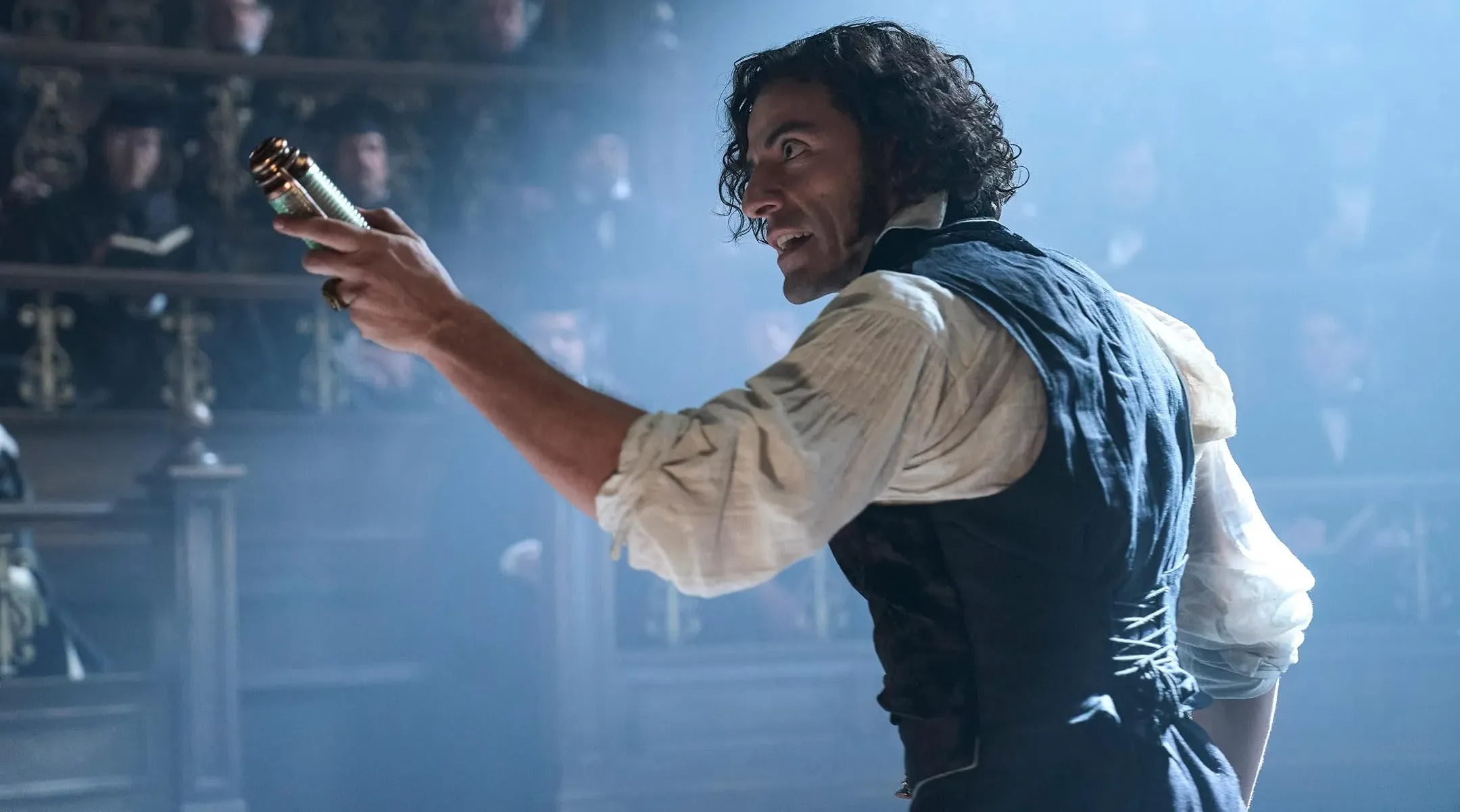
Oscar Isaac’s Victor Frankenstein is a being of flamboyant intensity, his posture a study in theatrical self-regard. He is less a man of science than a tortured artist, a conductor of lightning whose plummy British accent rings with the conviction of the self-appointed prophet.
This performance is a masterclass in boundless arrogance, driven by an ego that papers over a deep, rotting wound. The psychological source of this mania is a textbook case of trauma: his mother’s death in childbirth, an event he pins with surgical cruelty on his distant, disciplinarian father, Leopold (Charles Dance). Victor’s entire project becomes a primal rebellion against his own creator, a desperate bid to usurp the powers of life and death that failed him.
His work is conveniently funded by a sinister arms merchant, Harlander (Christoph Waltz), a Mephistophelean figure whose vaguely nefarious motives grease the plot’s wheels. Victor’s genius, it seems, does not extend to human connection.
His treatment of his creation is cold and impatient, recoiling from the life he so desperately willed into being. An underdeveloped romantic fixation on his brother’s fiancée, Elizabeth (Mia Goth), feels scripted instead of felt, a plot point without a pulse. The decision to have Goth also portray Victor’s dead mother is a Freudian flourish so unsubtle it borders on dry parody, a visual metaphor the film refuses to let breathe.
The Marionette’s Soul
The film’s emotional core, its very soul, is found in Jacob Elordi’s Creature. His performance is a revelation of physical expression; he moves with the searching, hesitant grace of a marionette discovering its own strings, an awkwardness that slowly transforms into the deliberate gait of a being burdened by thought.
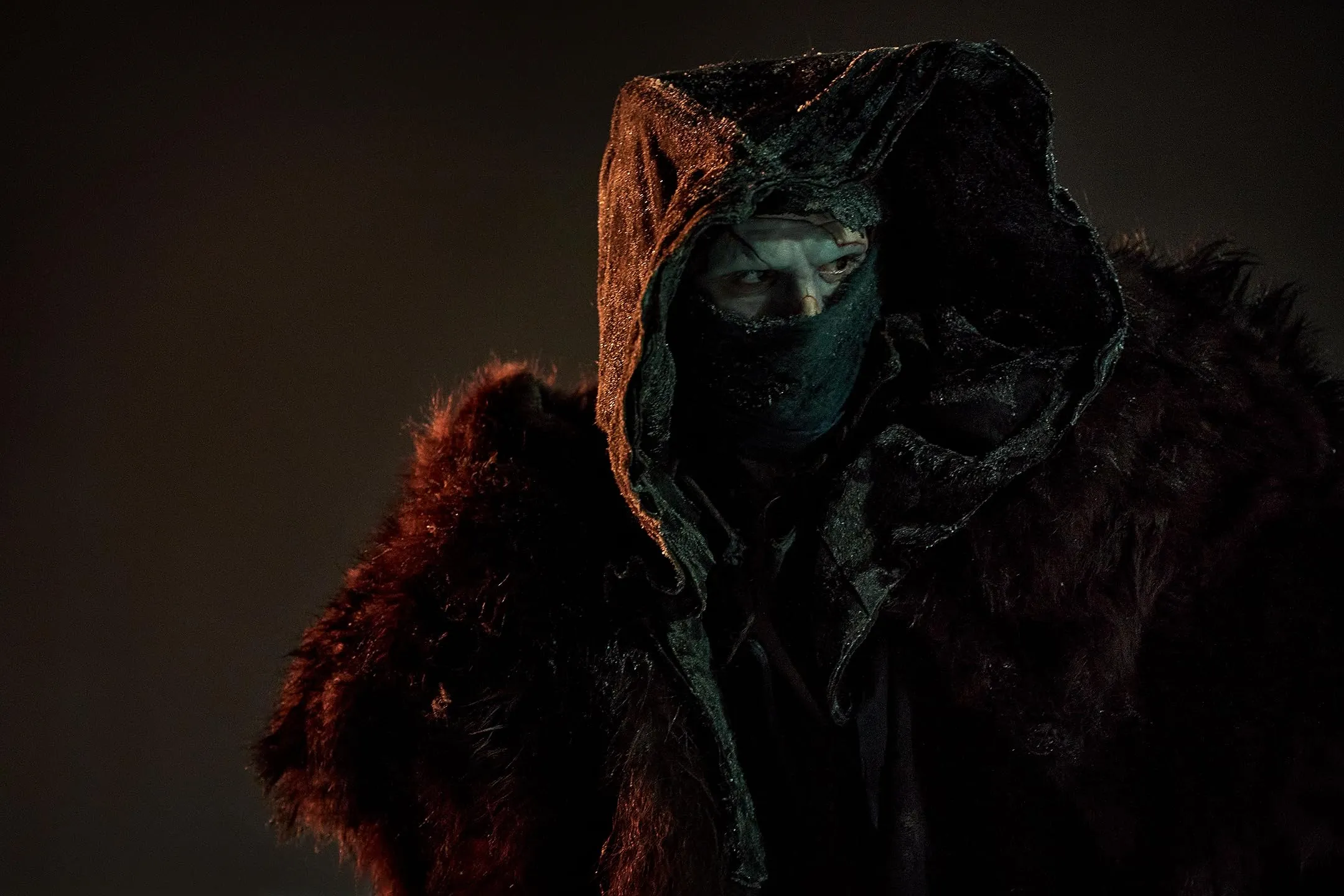
This is a far cry from the monosyllabic brute of earlier adaptations. Elordi’s monster is psychologically complex, fully articulate, and possessed of a scarred, sorrowful beauty. His journey is a painful education in what it means to be human. He awakens with an infant’s wonder, only to be met with the scorn of his maker and the savagery of a world that judges him on sight.
His eventual turn to rage is not an innate evil but a learned response, a philosophical conclusion reached after profound loss. One sequence, where he shows a brief tenderness to a deer before it is shot by a hunter, perfectly captures the cycle of hope and brutal disappointment that defines his existence.
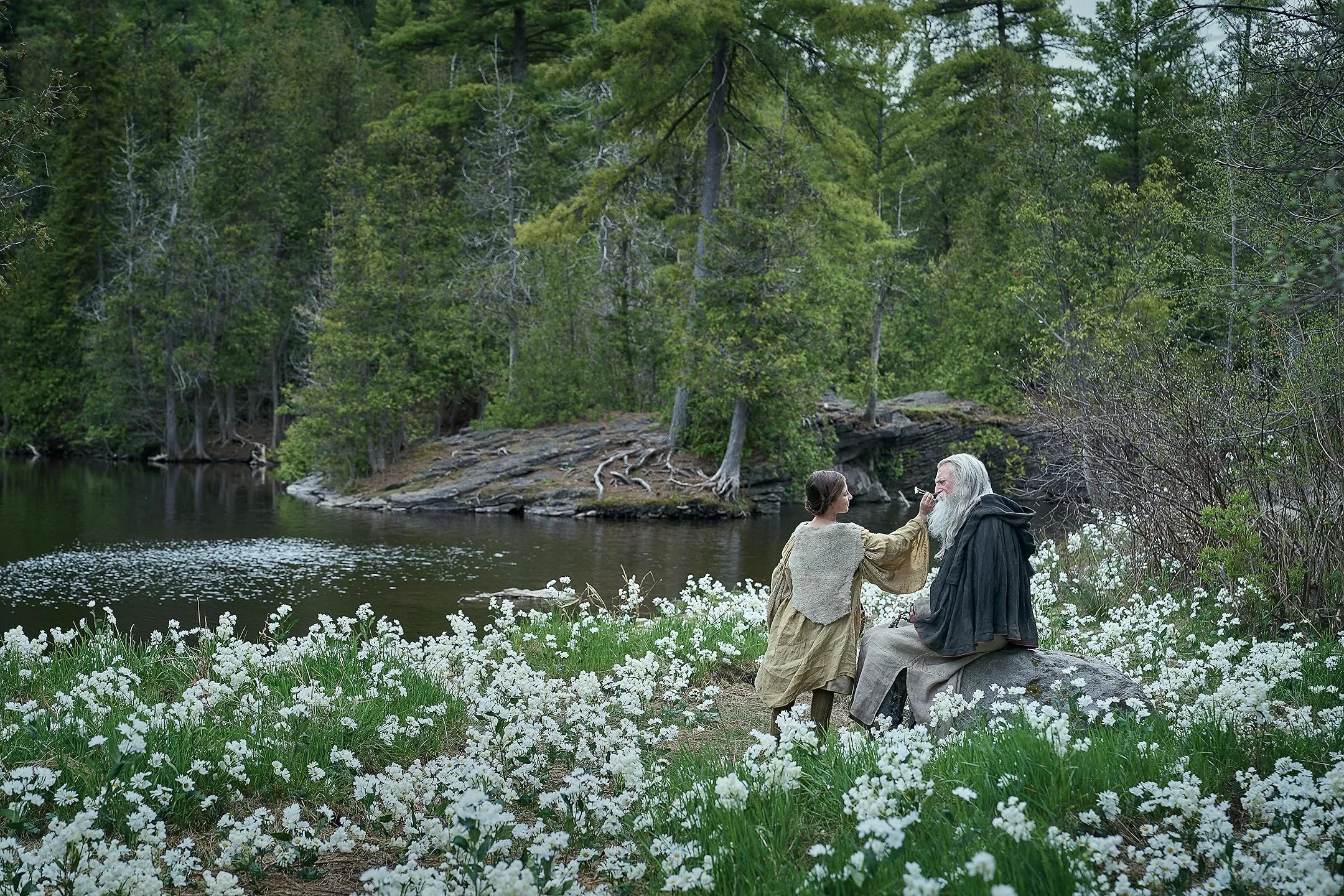
His tutelage under a blind man (David Bradley) is his turning point; he consumes literature, grappling with existential questions of creation, damnation, and solitude. The narrative’s structural pivot to his perspective, “The Creature’s Tale,” is the film’s smartest move. It reframes all we have seen, manipulating audience allegiance and forcing a profound re-evaluation of Victor’s testimony. A curious invulnerability to bullets makes his life the ultimate curse: an eternity of pain without the mercy of an end.
A Sumptuous and Tactile Spectacle
Visually, the film is a feast of tactile craftsmanship, a world built rather than rendered. Tamara Deverell’s production design favors the physical, from the crumbling stone of remote castles to the ornate, cluttered interiors of Victor’s laboratory, a space humming with strange machinery and the faint smell of ozone. Yet Dan Laustsen’s cinematography makes a peculiar choice.
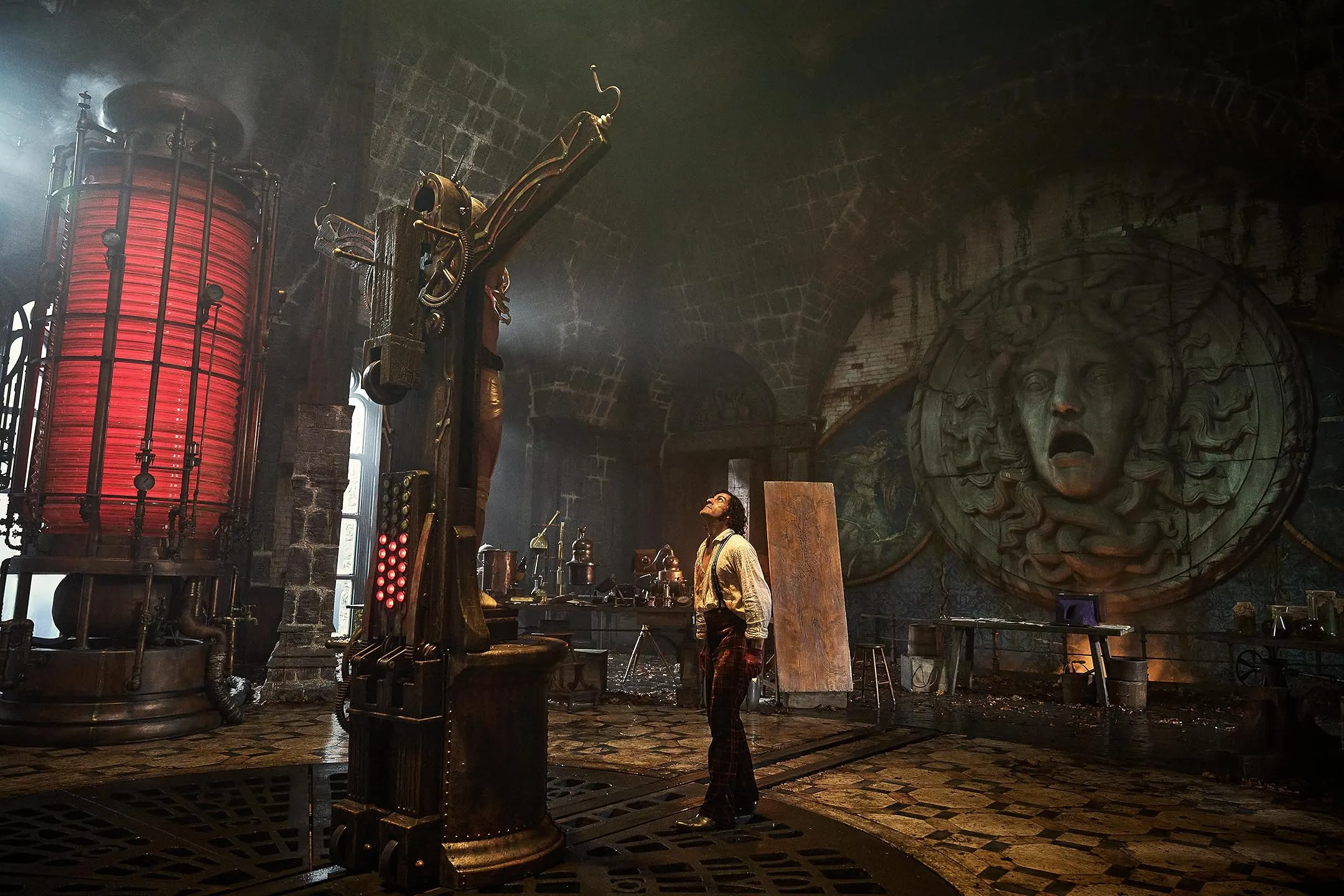
The lighting often achieves a beautiful chiaroscuro, bathing the Gothic sets in deep shadows and stark highlights. The camera, however, relies heavily on wide-angle lenses, creating a persistent fish-eye effect. This aesthetic, while technically impressive, has the strange consequence of distorting the frame and making the epic sets feel smaller, as if we are viewing this grand world through a peephole.
It creates a claustrophobia that seems at odds with the story’s operatic scale. Alexandre Desplat’s orchestral score is anything but small, a soaring, muscular work that amplifies the horror and tragedy. The sound design is equally potent, focusing on the squelch of flesh and the crackle of electricity.
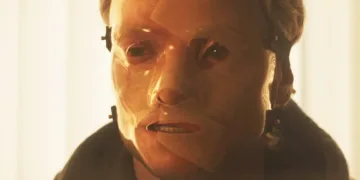
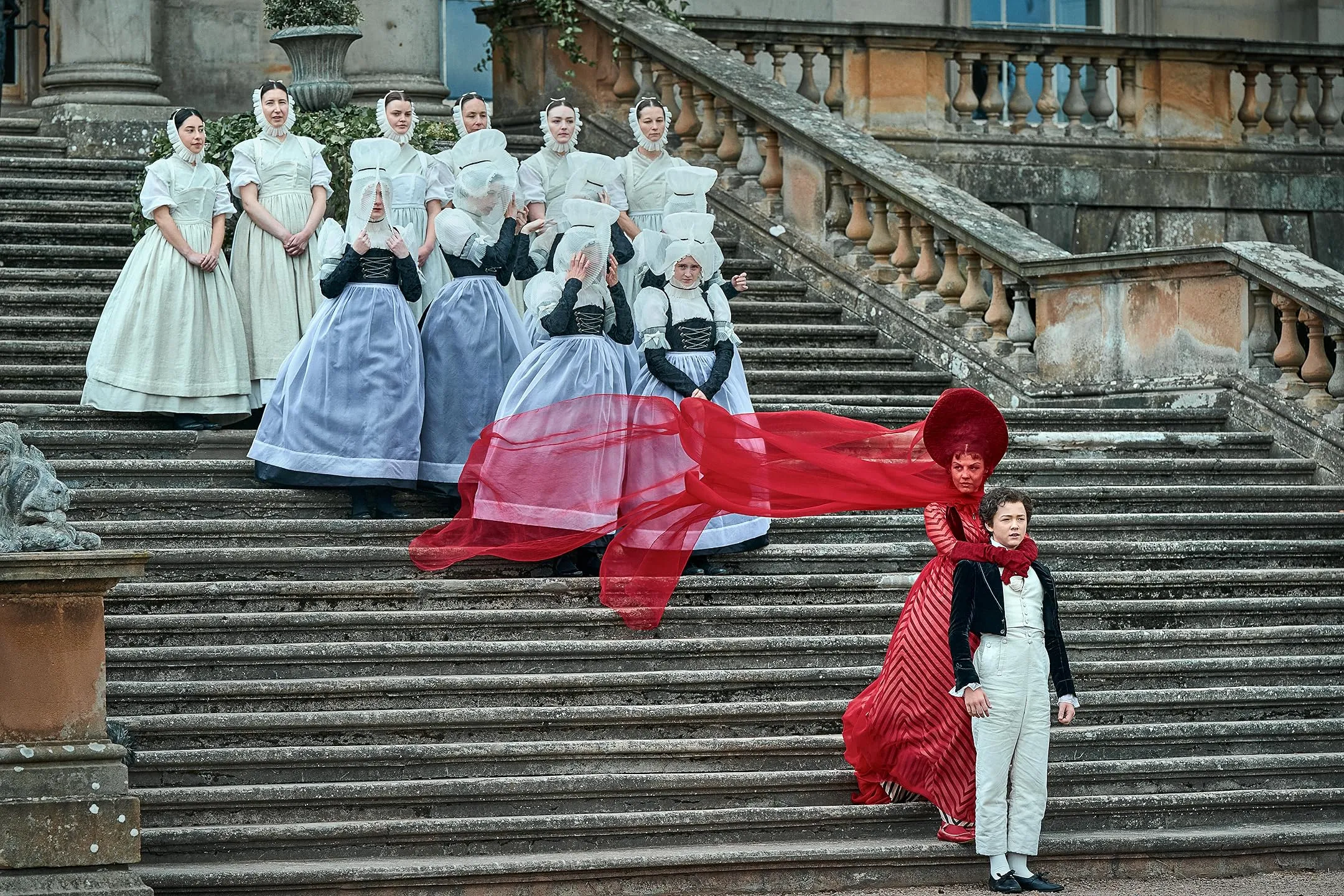
Kate Hawley’s costumes are similarly grand, particularly Elizabeth’s fairy-tale gowns. The look of the Creature himself, a work of prosthetic art by Mike Hill, is magnificent. He appears like a patchwork sculpture, the seams and sutures a constant, visible reminder of his violent birth.
The Geometry of Scars
At its center, this is a story about the agonized theme of imperfect fathers. The film draws a clean, brutal line of inherited trauma from the cold Leopold to the arrogant Victor, and from Victor to his abandoned “son,” the Creature. It examines the wounds passed from one generation to the next, a closed loop of pain that calls into question the characters’ capacity for free will.
Del Toro’s camera leaves little room for ambiguity; it tells us repeatedly that Victor, in his hubris and cruelty, is the story’s authentic monster. While effective, this heavy-handed approach can feel prescriptive, denying the audience the work of full discovery. The film’s most significant weakness lies in its romantic subplots.
The supposed attraction between Victor and Elizabeth is unconvincing, and her later affection for the Creature appears so suddenly it feels like a narrative necessity instead of an organic development. These relationships feel like obligations to the source material, threads from Shelley’s novel that are dutifully included but never fully integrated into the emotional fabric of this specific, darker vision.
A Brokenly Living Thing
The film’s primary triumphs are its breathtaking visual artistry and Jacob Elordi’s powerful, affecting performance. Its emotional weight rests on the tragic father-son dynamic, a work of immense craft and passion.
The story is hobbled by underdeveloped romantic threads and an approach that feels reverential, perhaps even safe, when compared to del Toro’s darker, sharper pictures. It stands as an epic and sorrowful retelling that honors the tragic heart of its source material, a grand spectacle of emotion that lacks the fine-grained precision of a deep character study.
Frankenstein had its world premiere at the Venice Film Festival on August 30, 2025. The film is scheduled for a limited theatrical release in the United States starting on October 17, 2025, and will be released globally on Netflix on November 7, 2025. The gothic science fiction horror film is an adaptation of Mary Shelley’s 1818 novel.
Full Credits
Director: Guillermo del Toro
Writers: Guillermo del Toro, Mary Shelley
Producers and Executive Producers: Guillermo del Toro, J. Miles Dale, Scott Stuber (Producers)
Cast: Oscar Isaac, Jacob Elordi, Mia Goth, Felix Kammerer, Lars Mikkelsen, David Bradley, Charles Dance, Christoph Waltz, Ralph Ineson, Christian Convery, Lauren Collins
Director of Photography (Cinematographer): Dan Laustsen
Editors: Evan Schiff
Composer: Alexandre Desplat
The Review
Frankenstein
Guillermo del Toro’s Frankenstein is a work of staggering beauty and profound melancholy, anchored by a soul-baring performance from Jacob Elordi. It achieves a grand, operatic tragedy. Its visual splendor and tactile craft cannot fully mask a script that favors reverential spectacle over sharp psychological depth, leaving its secondary characters as beautifully decorated but hollow figures. It is a film to be admired for its artistry, even when its heart remains just out of reach.
PROS
- Jacob Elordi's powerful and physically expressive performance as the Creature.
- Stunning, tactile production design and masterful visual craftsmanship.
- A deeply felt, tragic tone that honors the source material's sorrowful heart.
- Alexandre Desplat's soaring and effective orchestral score.
CONS
- Underdeveloped romantic subplots that lack emotional resonance.
- A narrative that feels safe and overly reverential, lacking sharper edges.
- The wide-angle cinematography can, at times, diminish the film's epic scale.
- An unsubtle approach to some of its psychological themes.