



























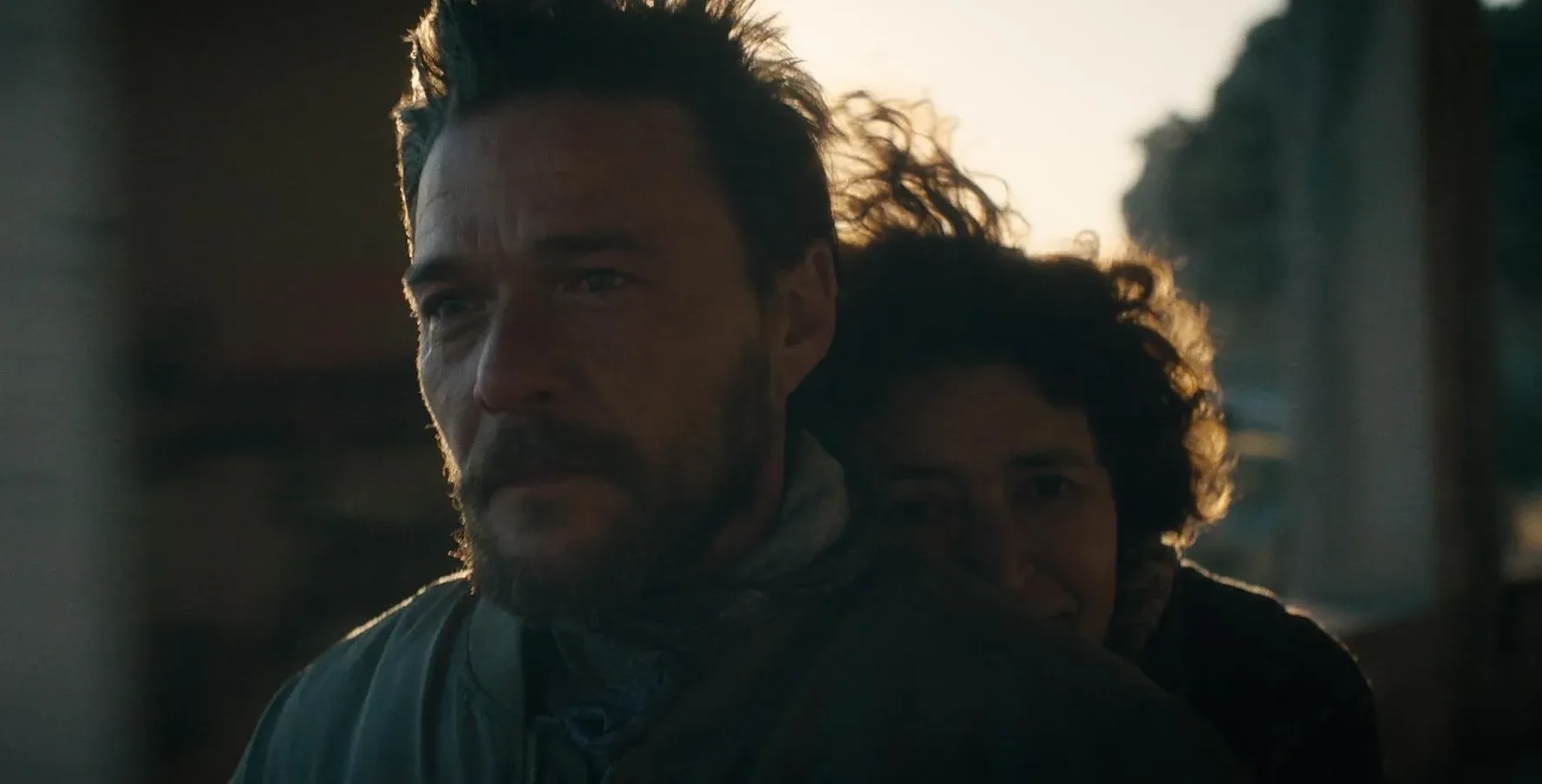

Aristotelis Maragkos’s Beachcomber sets the gaze on a scorched littoral where desire hardens into ritual and breath slows under the weight of unfinished lives. Elias (Christos Passalis) inhabits this margin. He is in his forties, a body mapped by scars, a face trained to guard what it carries; the marks imply years that pressed back, perhaps years contained by walls.
The mainland fixes his days in a still frame. From that stillness he chooses a task that feels like a wager with fate: he will restore a hulking, half-buried vessel of scrap metal. The Russian wreck rises from sand like a stranded thought. It holds a promise of departure, a route to regain agency, a chance at a sale that could reset his story.
The film studies identity sought among ruins, and it attends to the shadow that falls from a sailor who left long ago and never returned. Ambition wears the solemn mask of tragedy and still advances, carried by devotion that refuses to loosen. The air fills with a quiet grief for years that do not move, and the images speak in low tones that ask whether a new life can be made from what the tide forgot.
The Canvas of the Son
Christos Passalis carries the film with an authority that never needs to shout. His presence concentrates the frame. As Elias, he gathers attention through silence, through the slow economy of a man who has learned to spend little and mean everything. The tattoos sheath him in maritime signs; skin becomes script. He borrows the sea to write himself.

He repeats a father’s sailor tales until they ring like memory, and the echo turns into a proposal for a self that might exist. The goal is not conquest of obstacles so much as evasion of the life assigned at birth. A self assembled from salt, ink, and borrowed language might cross the threshold that everyday habit defends. Near him gather faces worn by weather and time, a small crew of dreamers whose histories sit behind the eyes without exposition.
Tasia (Aliki Andriomenou) persists with a gaze set on the horizon, and her presence steadies the project’s human core. The sea calls to all of them through history’s pressure, through the blunt force of the elements, through a home that teaches endurance more than motion, through the twin pull of an absent father and a mother who falters. Their pact forms in labor and in watchfulness, and the film keeps faith with that pact by refusing easy speech about motive.
The Allegory of the Shipwreck
The boat stands as a figure carved from weight and distance. It is heavy, it sits far from the water, and the measured work of repair turns into a philosophy lesson in wood, metal, and sand. The hull proposes freedom. The hull also contains the near-certainty of collapse. Dream and failure share a line of rivets. Every bolt tightened measures both directions.
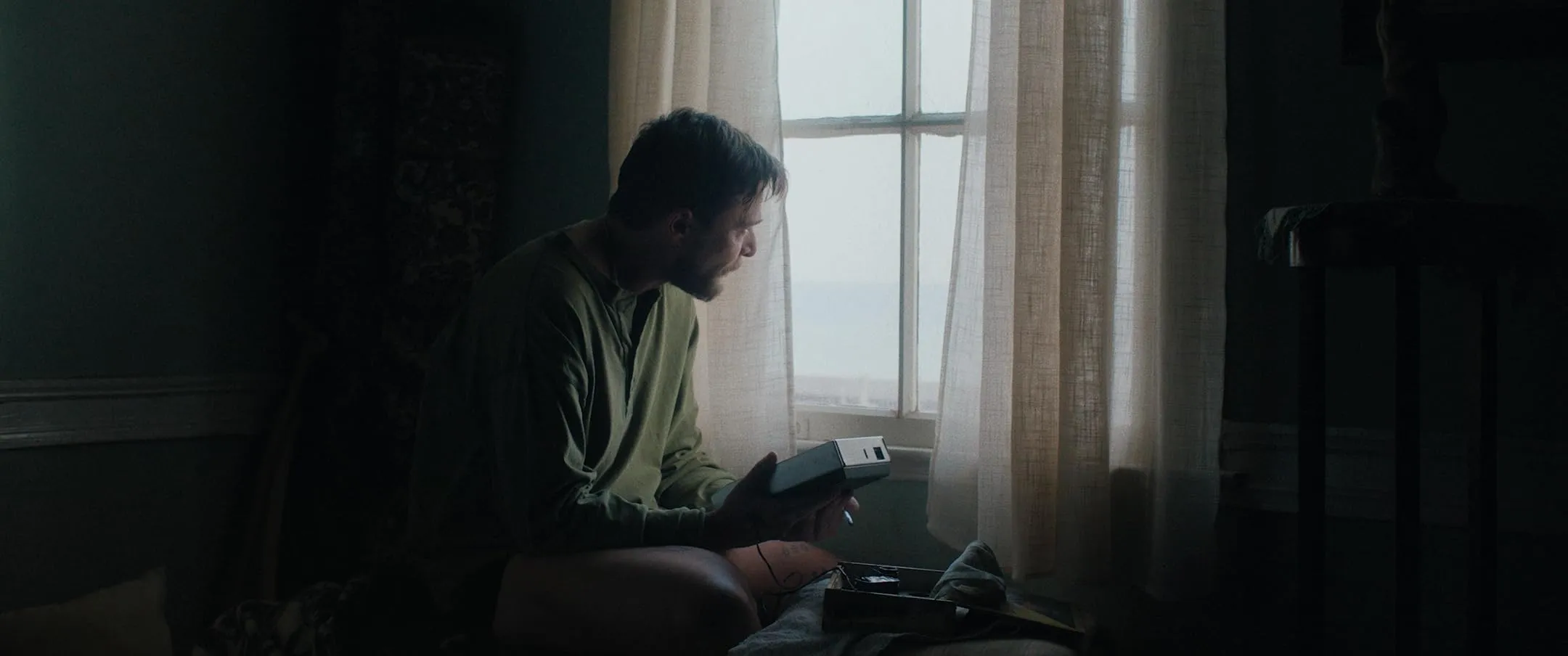
The crew belong to the mainland in habit and in fact, and the vessel tests that belonging. The poem of the sea enters through the words of Nikos Kavvadias, the sailor-poet whose lines made departure a way to speak about hunger for an elsewhere. The narrative accepts that spirit. It fragments, it alludes, it allows gaps to act as meaning. Maragkos shapes a chiaroscuro of story; light breaks and dark gathers, hope lifts like surf-glitter at noon and then the image cools when the real returns.
The film reads like a Hellenic meditation on the difficulty of genuine change. It asks whether progress can occur under the same sun that burns everything into sameness. Elias answers with feeling rather than lecture. He shows care for the crew, he gives his energy to the shared design, and his devotion grows more visible as the scope of the task reveals its scale. The dream survives inside that care, which arrives without rhetoric and rests in gestures, in the shared strain of hands.
Aesthetics of Stagnation
Beachcomber operates with a technical clarity that nourishes mood. Thodoris Armaos edits with attention to sensation and thought, allowing material from different sources to meet in a current shaped by theme rather than by strict chronology. The image keeps returning to an argument between brightness and obscurity, a conversation staged at sunset where light and shadow consider the next hour.
The sea receives this conversation and answers with surface and depth. The ship’s vast metal shell acquires presence equal to a character and holds the frame like a monumental sentence. Production design by Stavros Liokalos bears the dents and rust that the story requires. The spaces reject postcard comfort. They speak of labor, scarcity, and the lull of repetition.
Stagnant courtyards, pitted walls, and yards littered with parts create a field where yearning becomes a daily practice rather than a single cry. The look of these places makes the wish to leave feel immediate in the body; the eye becomes an instrument that records pressure.
Philosophy lives in the cut from face to hull, from hand to tool, from sun to shadow. The film sustains that line of thought with patience, and the patience becomes its ethics. Dreams take shape through work. Work becomes a kind of prayer. Whether prayer receives an answer remains unsettled, and the unsettled space is where Beachcomber finds truth.
Beachcomber, directed by Aristotelis Maragkos, is a Greek drama that had its world premiere on April 8, 2025, during BAFICI. The story centers on Elias, a man in a squalid seaside town who attempts the seemingly impossible task of building a functional ship out of scrap metal, driven by the desire to live up to the legacy of his sailor father and find an escape. This quest blurs the line between his crew’s dream and his own grasp on reality. As of the current search information, the film’s distribution is still being finalized, meaning widespread streaming platform or theater availability may vary, but it was produced by Plankton Films.
Credits
Title: Beachcomber
Distributor: PLANKTON Films
Release date: April 8, 2025
Rating: NR
Running time: 1 hr 32 min
Director: Aristotelis Maragkos
Writers: Aristotelis Maragkos, Chrysoula Korovesi
Producers and Executive Producers: Konstantinos Koukoulis (Producer), Myrto Stathi (Co-producer)
Cast: Christos Passalis, Aliki Andriomenou, Sotiris Belsis, Lefteris Polychronis, Stathis Kokkoris, Youla Boudali, Eleni Karagiorgi, Ieronymos Kaletsanos
Director of Photography (Cinematographer): Giorgos Karvelas
Editors: Thodoris Armaos
The Review
Beachcomber
Beachcomber is an ambitious, stark examination of lives tethered to failed dreams. Maragkos uses the impossible boat restoration as a powerful metaphor for the desire to transcend inherited limitations and static circumstances. Christos Passalis delivers a magnetic, internal performance that beautifully channels the weight of ancestral expectation and personal yearning. Though deliberately fragmented and heavy with allegory, the film’s atmospheric intensity and commitment to its poetic source material make it a compelling, if pessimistic, exploration of freedom's elusive promise.
PROS
- Christos Passalis's magnetic, committed central performance.
- Powerful and resonant allegory centered on the scrap boat and the desire for freedom.
- Technically beautiful and atmospheric visual design (cinematography and production design).
- Thoughtful exploration of existential themes: inherited identity, failure, and escape.
CONS
- Narrative structure is highly fragmented and allusive, potentially challenging for some viewers.
- Deliberately pessimistic and melancholic tone throughout.
- Character motivations and psychological depths are often inferred, requiring careful attention.
- Pacing can feel uneven due to the emotional-first editing style.