







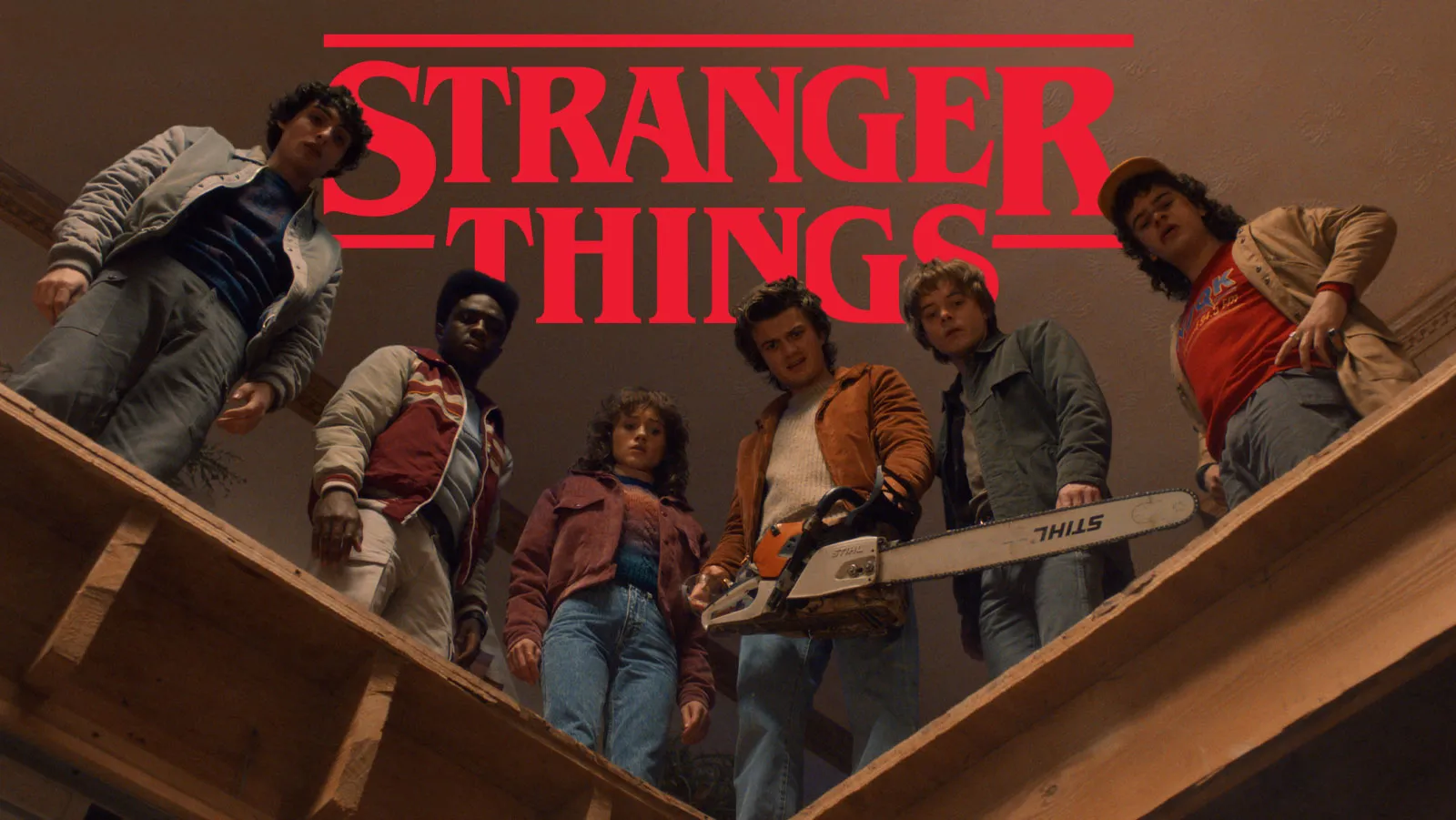

The final curtain for Stranger Things arrives heavy with expectation. After a long hiatus, Volume 1 of season five returns us to Hawkins, which reads less like a placid Midwestern town and more like a district under military siege. The delay has become part of the show’s own mythology, an external chronicle that shadows this endgame.
The action is set roughly eighteen months after Vecna tore open the dimensional membrane. Hawkins functions as an occupied terrain, its ruptures crudely sealed by the US Army, which enforces a suffocating quarantine framed as earthquake relief. The central conflict has been transformed into a publicly visible calamity that most observers misattribute. The young protagonists, now veterans of interdimensional combat, share a single, urgent assignment: locate and destroy Vecna. These first four feature-length installments refuse a gentle re-entry; they declare total war at once.
The Chronosclerosis of Narrative Velocity
The Duffer Brothers elect to begin at speed, a choice that answers both audience impatience and the characters’ pressing need for action. There is no slow burn here. Momentum drives the cast into proactive searches and scheming, avoiding the kind of narrative lag that often afflicts late-stage seasons. For a show carrying years of external anticipation, inertia would be a cardinal sin. The core team — the familiar band of nerds and outsiders — arrives battle-ready. Their preparations, which extend from the Season 4 cliffhanger, demonstrate authorial commitment from the first frame. This briskness squashes the fear of a meandering finale. The rapid tempo is not ornament; it is a structural requirement. The plot stands at an inflection point where indecision would feel like betrayal.
That tempo pairs with a deliberate narrowing of scope. The story’s geography compresses, focusing almost entirely on Hawkins and its inverted counterpart, the Upside Down. This tightened locality offers a claustrophobic relief after Season 4’s global detours (the Russian prison, the California thread). By removing the obligation to follow dispersed plotlines, the narrative sharpens. The writers secure a unity of purpose even as characters scatter across the town. Place gains agency here; Hawkins functions like a besieged stronghold.
The military quarantine reshapes stakes. The situation slides toward a Red Dawn-style resistance narrative, with the US Army supplying not rescue but an additional obstacle, sometimes blundering, sometimes menacing. Missions move underground, performed as covert operations leveraging secret tunnels and technical ingenuity (Dustin’s inventions, Robin and Steve’s radio work with “The Squawk”). Tactical constraint converts monster-hunters into insurgents. The presence of Dr. Kay adds institutional menace and forces the story to interrogate how adult authority worsens crises. The result is a tauter tale that jettisons the extraneous baggage of far-flung locales.
The large ensemble continues to pose a structural dilemma that might be labeled a “narrative biomass problem.” The cast adds up to a unified resistance, yet storytelling logistics demand repeated subdivision into specialized squads. Principal players operate like components of a machine, each assigned to surveillance, comms, or assault. That division can fracture viewing rhythm, producing abrupt cuts between concurrent mini-operations. The long runtimes of these episodes accommodate the choreography, granting each splinter group room to act without losing momentum. The connective tissue remains the imperative to act now, which prevents the siloing that previously loosened the narrative. Concentrating effort on a single objective, Vecna’s destruction, restores forward thrust.
Plotting here aims high. Volume 1 swings for major reveals that fandom has long conjectured. These developments carry tangible consequences, reshaping what the Upside Down means and recasting character histories. Revisiting Will’s Season 1 trauma is a deliberate structural move that returns the finale to the conflict’s point of origin. This circular logic aspires to thematic closure. The writers place a big bet in these episodes: they manipulate expectation while pursuing jolting resolution. Some viewers will consider these turns earned; others will call them sensationalist. That division becomes a test of tonal integrity. How the show handles these revelations will determine whether the emotional payoff feels earned or slides toward fan-service.
The Maturation Paradox and the ‘Forever Teen’
A persistent, philosophically interesting tension concerns maturation. The actors are clearly young adults embodying teenagers frozen at about sixteen. This temporal mismatch generates a dissonance between aged bodies and the characters’ static psychological profiles. The series often preserves core personalities in a state of arrested development, clinging to “forever teen” archetypes and risking the dilution of emotional stakes. The show sometimes seems nostalgic for an earlier simplicity, favoring established traits over disruptive growth. Characters who once flirted with new identities, such as Lucas exploring a jock persona, drift back toward familiar comportments.
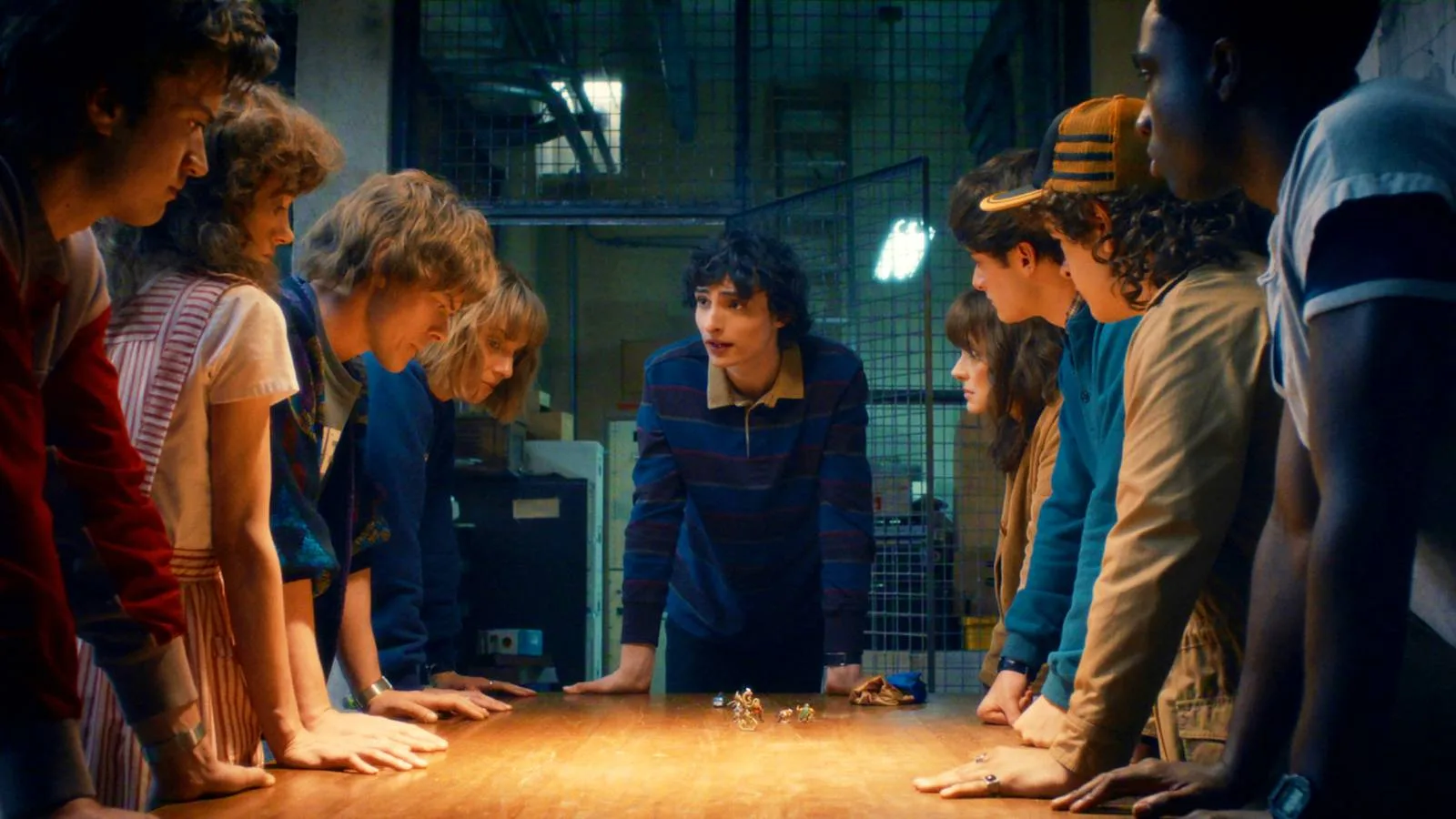
The Nancy-Jonathan-Steve triangle exemplifies this arrested thread. It persists as an adolescent subplot that feels worn and residue-like, surviving as inherited set dressing. The recurrence of that dynamic, nine years on from its introduction, signals a reluctance to retire certain character lines. It diverts attention from the apocalypse, prompting the question of why relational tangle occupies energy when reality itself unravels.
Conversely, the adult pairing of Eleven and Hopper shows measurable development. Eleven moves through training with sharper focus and a more assertive posture, shifting from a reactive instrument to an active hunter. Her workouts, styled with Jane Fonda-era aerobics wear, root her preparations in period aesthetics. Her bond with Hopper and Joyce supplies a dependable, if slightly saccharine, parental axis amid the chaos. Together they make an effective, pragmatic family unit preparing for cosmic combat.
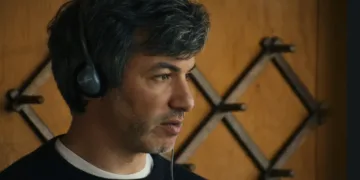
Will Byers supplies the volume’s most intimate emotional gravity. His tether to the Upside Down operates as metaphor for internalized trauma and identity conflict. Elevating his role transforms him from a passive victim into a central, engaged participant. His persistent psychic anguish, sometimes rendered in physical form, links him to Vecna in a symbiotic, troubling way. The season treats Will’s coming-of-age — including his struggles with implied sexuality and selfhood — with care, giving the show its most fragile human texture. His anxieties operate alongside supernatural peril, making his self-discovery the narrative’s most affecting personal arc. Noah Schnapp invests the part with steady weight. He discovers an ally in Robin, whose mentorship proves crucial; Robin’s counsel, though occasionally platitudinal, acquires resonance in the scene’s vulnerability.
Allocating screen time to a vast cast necessitates shifting emphasis. Dustin and Steve’s bromance endures strain under the stakes and supplies some of the volume’s funniest and most revealing beats. Robin remains the quick-tongued spirit who cuts through tension. By contrast, other central figures — Mike, Lucas, Jonathan — often fall back into support roles, providing emotional ballast or logistical help rather than driving core action. Their current function largely completes the ensemble and keeps the mission moving.
The writers insert younger figures as a kind of sentimental counterpoint: Holly Wheeler (Mike and Nancy’s younger sister) and a brief Derek Turnbow cameo (the schoolmate nicknamed “Dipshit Derek”). This casting choice reintroduces a cute, youthful energy and stands in for the innocence the main group has lost. Holly, who interprets the unknown through A Wrinkle in Time, mirrors the original group’s use of Dungeons & Dragons. The move functions as a reflexive wink, a way for the series to nostalgically recall the early charm of children confronting adult horrors.
Retro-Pastiche and the Cinematic Allusion
The season’s eighties framework remains central, operating as a cultural anchor. The show deploys a synth-heavy score and a profusion of period references (Back to the Future, A Wrinkle in Time, The Clash, the use of “Mr. Sandman”) not as mere ornament, but as a working framework for how characters codify the paranormal. The references act as the group’s preferred analogy, a pop-cultural lens for processing the uncanny. Subtle Easter eggs — Murray adopting the alias “Austin Millbarge,” a nod to the 1985 caper Spies Like Us — reward long-term viewers with intellectual in-jokes. The pastiche can read as enriching texture; at other times it registers as an itemized checklist. That ambivalence returns us to a recurring philosophical question about homage and dramatic focus.

Visually, the Upside Down attains unprecedented scale and polish. The show’s larger resources manifest in immersive vistas and a clarity that fulfills the promise left after Season 4’s chaos. Yet the expanded visual field reveals a conceptual stasis: despite grand vistas, the world-building contributes little fresh allegorical depth beyond reaffirming Vecna’s dominion. The Upside Down becomes a vast, finely rendered battlefield, a shadow-reality or “echo-sphere” whose metaphysical origins remain hazily defined. The narrative attends to the practical mechanics of traversing and fighting inside the realm rather than excavating its deeper ontology.
Action scenes aim for blockbuster proportions, borrowing liberally from a James Cameron sensibility. They are loud, forward-driving, and sometimes excessive, and that scale can erode the intimacy that characterized the show’s beginnings. The series foregrounds spectacle. A booby-trap sequence against a Demogorgon lands as a Home Alone-flavored bit of ingenuity and dry comedy amid horror, and those tonal juxtapositions register as the show’s strength. The horror itself grows more graphic (Vecna delivers the gnarliest kill to date), but repetition blunts impact. Demogorgons, once genuinely terrifying, risk becoming serviceable henchmen.
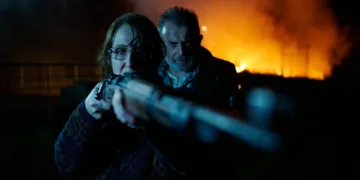
Dr. Kay’s arrival (Linda Hamilton in the role, an unmistakable nod to The Terminator) and the omnipresent military add a human antagonist. The focus on state control — Hawkins rendered into a surveillance environment — lets the series skim broader societal anxieties: institutional overreach after the Cold War and the perils of military-industrial actors meddling with forces beyond comprehension.
The teenagers’ struggle operates simultaneously as a fight against supernatural menace and a contest with bungling authority. The political allegory wobbles at times, since the show prefers the safety of high-concept fantasy over sustained socio-political interrogation. Still, the quarantine and the military’s intrusive presence contribute a meaningful layer of complication to the town’s predicament.
Stranger Things 5, Volume 1 premiered its first four episodes on November 26, 2025, exclusively on the streaming service Netflix. The final season is being released in three parts, with Volume 2 following on December 25, 2025, and the series finale dropping on December 31, 2025. This volume continues the story of the core group in Hawkins as they confront the final threat of Vecna after the dimensional gate was ripped open.
Full Credits
Title: Stranger Things 5
Distributor: Netflix
Release Date (Volume 1): November 26, 2025 (Initial four episodes)
Rating: TV-14 (Based on previous seasons’ ratings for similar content)
Running Time (Volume 1): Four episodes, ranging from 54 minutes to 1 hour and 23 minutes
Director (Volume 1): The Duffer Brothers, Frank Darabont
Writers (Volume 1): The Duffer Brothers, Caitlin Schneiderhan, Paul Dichter
Producers and Executive Producers: The Duffer Brothers, Shawn Levy, Dan Cohen
Cast: Winona Ryder, David Harbour, Millie Bobby Brown, Finn Wolfhard, Gaten Matarazzo, Caleb McLaughlin, Noah Schnapp, Sadie Sink, Natalia Dyer, Charlie Heaton, Joe Keery, Maya Hawke, Brett Gelman, Priah Ferguson, Linda Hamilton, Jamie Campbell Bower, Cara Buono, Joe Chrest, Jake Connelly, Nell Fisher
Director of Photography (Cinematographer): Caleb Heymann (Based on Season 4)
Editors: Dean Zimmerman, Michael T. Boyd, Katheryn N. Lau, Julio C. Perez IV (Based on Season 4)
Composer: Kyle Dixon, Michael Stein
The Review
Stranger Things Season 5 Vol. 1
Volume 1 initiates the endgame with remarkable speed, favoring unified action over disparate subplots. It is a visually ambitious, high-stakes opening that smartly recenters Will Byers as the story’s emotional and thematic lynchpin. While the spectacle is massive and the pace relentless, the show grapples with character stagnation and an over-reliance on familiar aesthetic tropes. The result is a thrilling, albeit safe, return that promises a colossal final battle while sacrificing depth for scale.
PROS
- Immediate, high-stakes start; no narrative lag.
- Will Byers is returned to narrative centrality, deepening his emotional arc.
- Tightened scope focuses action on Hawkins/Upside Down, creating intensity.
- Strong sense of urgency and dread maintained throughout.
- Massive spectacle and highly polished visual effects in the Upside Down.
CONS
- The Nancy-Jonathan-Steve love triangle feels dramatically exhausted.
- Character stasis for many leads (Mike, Lucas) due to the "forever teen" paradox.
- Demogorgons and general horror elements have lost their initial terror through repetition.
- Over-reliance on '80s pastiche sometimes feels forced or distracting.