






























Digimon Story: Time Stranger arrives ten years after Cyber Sleuth established a compelling formula for the franchise, and that extended development cycle shows in both impressive upgrades and curious missteps. This turn-based RPG splits its attention between Shinjuku’s streets and Iliad, the digital realm where over 450 creatures await collection.
Players step into the role of a secret agent wielding a Digivice that doubles as both monster storage and combat weapon, investigating anomalies while attempting to prevent an apocalyptic event called the Shinjuku Inferno. The time travel hook propels the narrative between present day and eight years prior, creating opportunities for character development while simultaneously becoming the justification for the game’s most frustrating structural flaw.
Time Stranger represents meaningful evolution for the series with significantly enhanced visuals and streamlined systems, yet struggles to balance accessibility with depth, leaving veteran players wanting and newcomers occasionally overwhelmed by unexplained mechanics.
Combat: Strategic Depth Hidden Behind Comfortable Automation
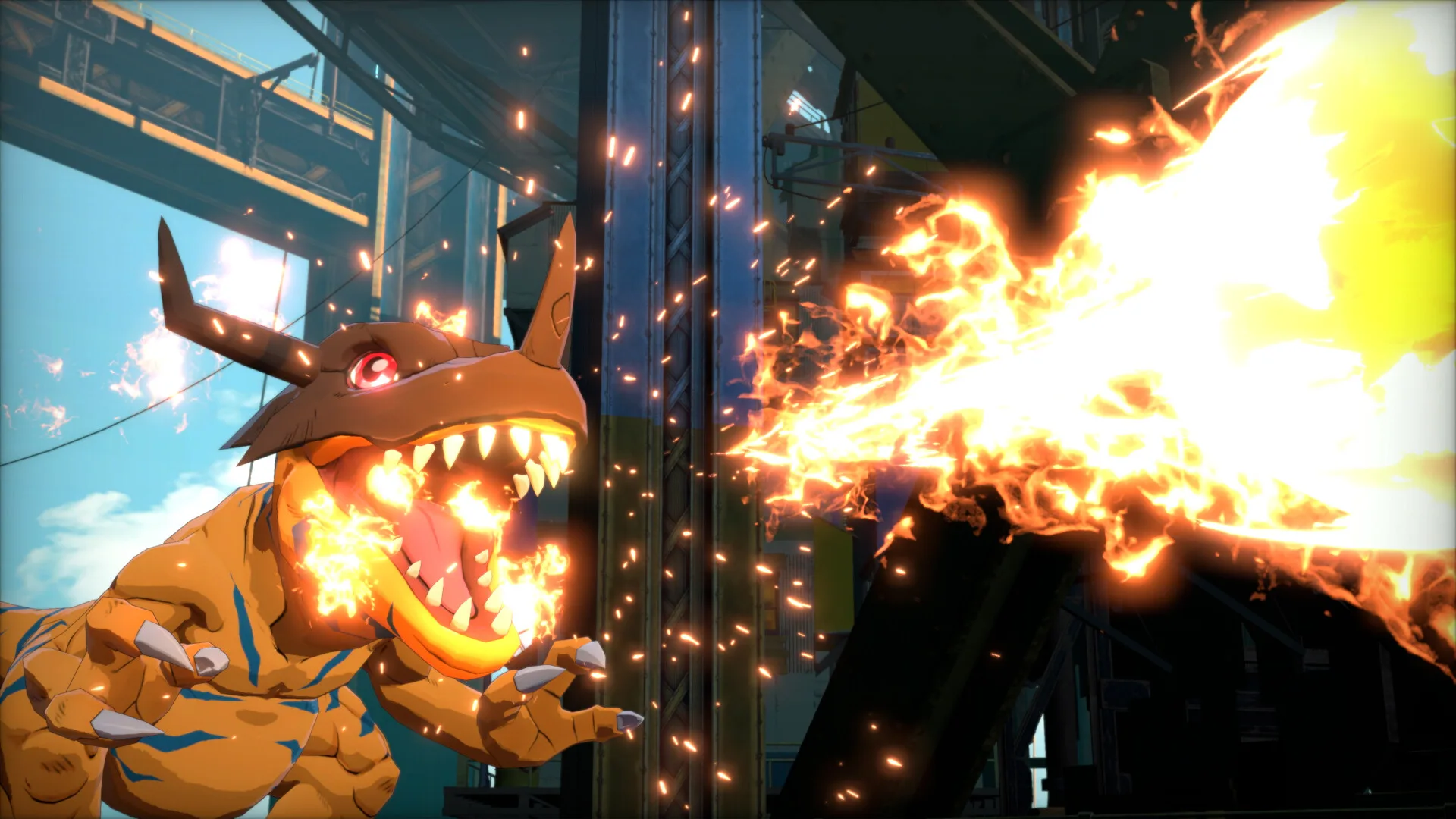
Time Stranger builds its battles around a traditional turn-based framework that rewards preparation and type knowledge. Three active Digimon fight alongside temporary guest characters, with three reserve slots allowing mid-battle swaps. The combat distinguishes itself through layered weakness systems: a primary attribute triangle (Data beats Vaccine, Vaccine beats Virus, Virus beats Data) intersects with elemental properties like Fire, Water, Plant, and Dark. Exploit both layers simultaneously and damage multipliers can reach 400%, turning standard encounters into satisfying puzzles of team composition and attack selection.
The weakness discovery system strikes a smart balance between mystery and fairness. Each new Digimon species starts with hidden resistances and vulnerabilities, revealed only through experimentation. Once discovered, this information persists across all future encounters, eliminating tedious guesswork while maintaining initial excitement. This approach mirrors the anime’s “what will this Digimon do?” tension without punishing players for incomplete knowledge.
Speed settings ranging from 2x to 5x, paired with auto-battle functionality, acknowledge the genre’s inherent repetition. These options transform dungeon traversal from tedious to tolerable, letting players accelerate through routine encounters while maintaining manual control for challenging fights. The ability to use items without consuming a Digimon’s turn action each round provides constant healing access, smoothing difficulty spikes that might otherwise demand excessive grinding.
Also Read






Boss encounters elevate the formula through charged attack mechanics requiring strategic interruption. These special moves, if allowed to complete, can devastate unprepared teams. The Cross Points system feeds into this dynamic, accumulating gauge energy that unleashes powerful Cross Arts ranging from party-wide damage to full healing. However, the limitation of equipping only one Cross Art at a time creates unnecessary friction. Players effectively alternate between two options: area damage for groups and concentrated strikes for bosses. The inability to switch mid-battle transforms what could be tactical decision-making into pre-planning annoyance.
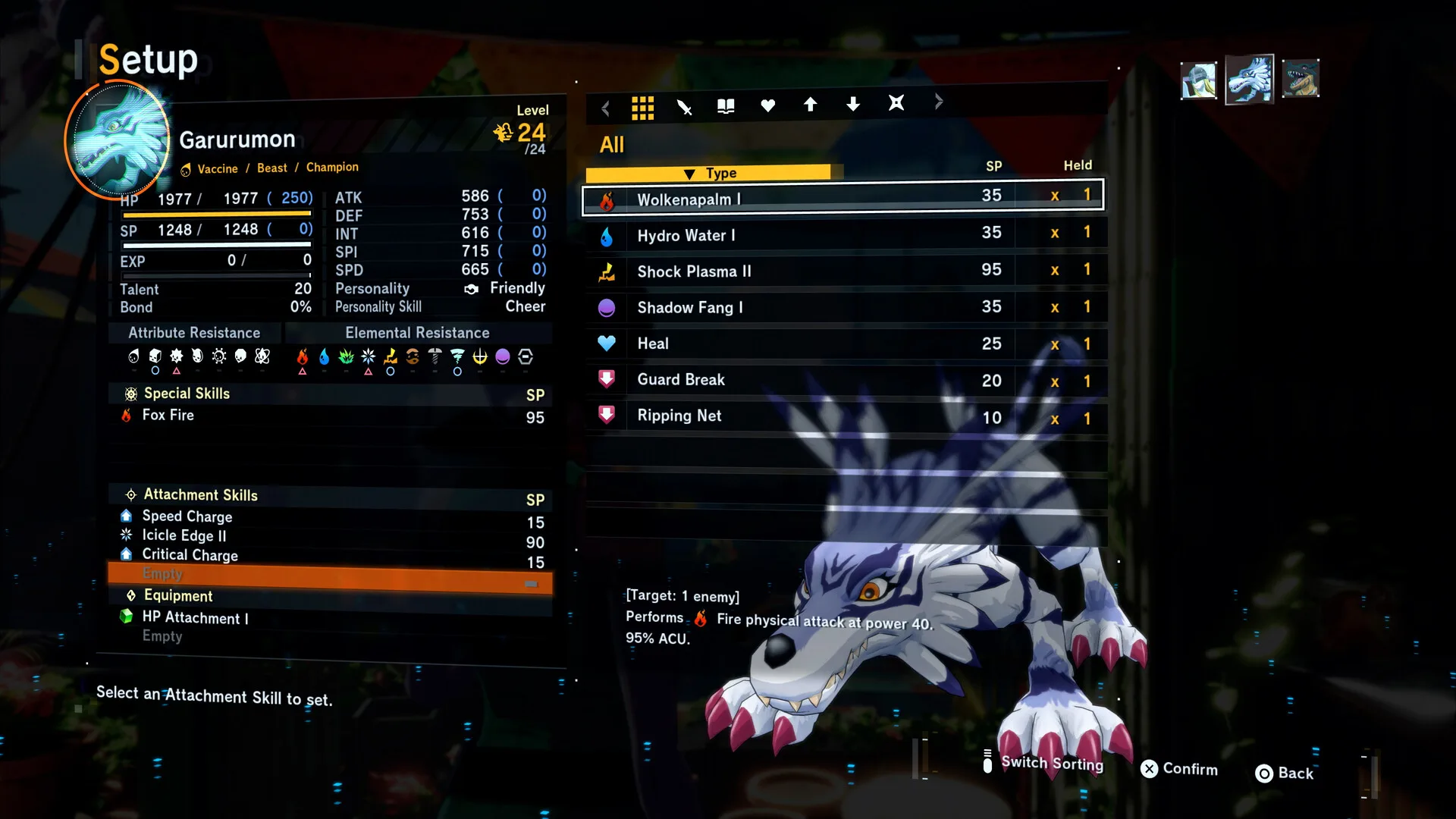
Attachment Skills provide the deepest customization layer. Similar to Pokemon’s TMs but without usage restrictions, Skill Discs allow any Digimon to learn any move. This freedom enables creative solutions to type coverage problems. Building a Dark-type Digimon with Light attacks to counter its own weakness represents the system working at full potential, rewarding players who engage with evolution chains specifically to harvest diverse skill sets.
Collection Systems: Addiction Refined Through Iteration
The scanning recruitment mechanic removes traditional monster collection’s most frustrating element: accidental knockouts. Each defeated Digimon contributes percentage points toward unlocking that species for recruitment. Reach 100% and the creature joins your roster; wait for 200% and it arrives with enhanced stats. This approach transforms every random encounter into meaningful progress, creating the addictive loop of clearing dungeons just to check acquisition percentages afterward.
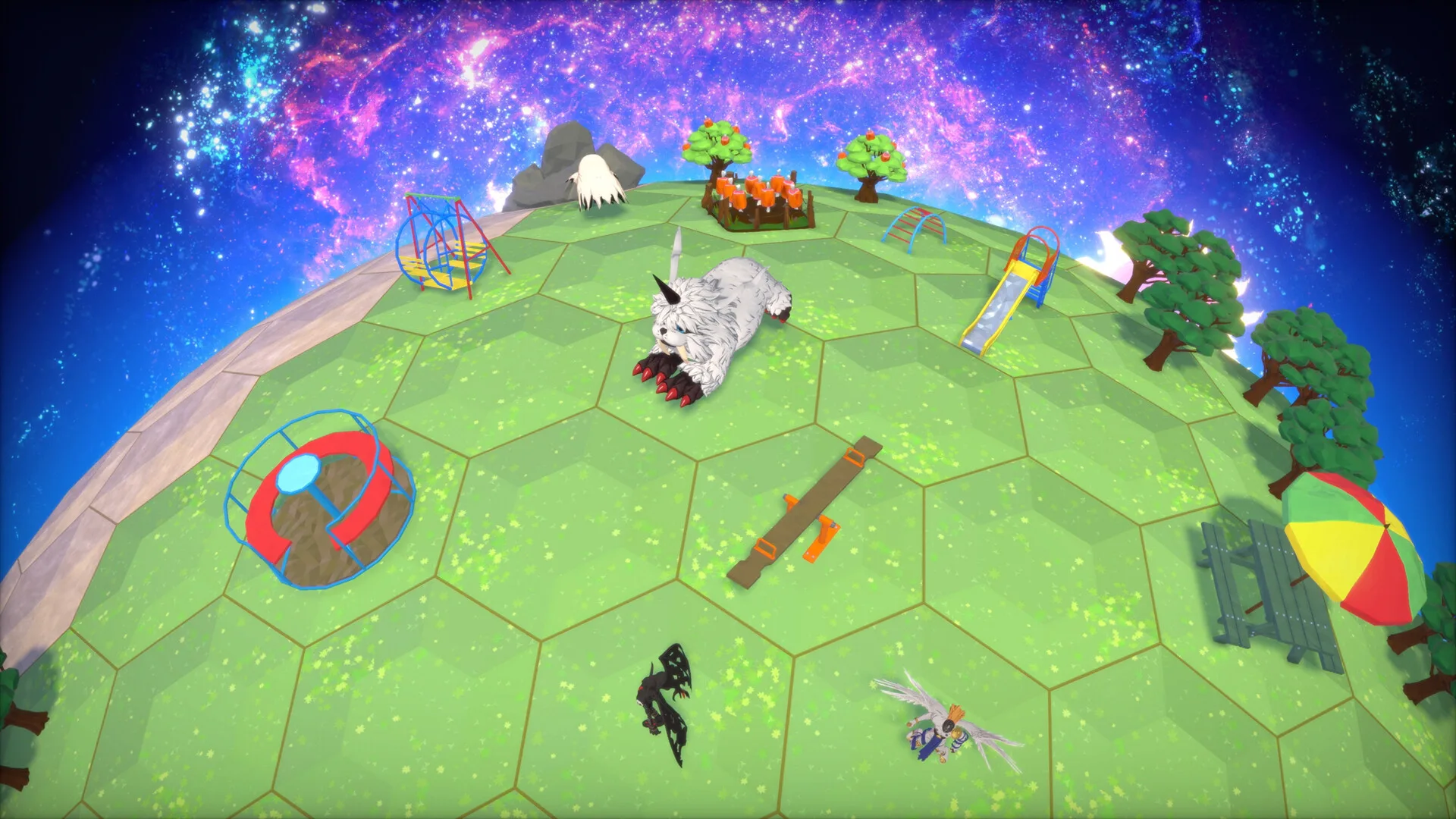
Digivolution abandons linear progression for branching possibilities. Each Digimon can evolve into multiple forms based on meeting specific requirements: stat thresholds, Agent Rank milestones, or particular ability unlocks. The evolution preview system shows silhouettes of未discovered forms without revealing their identities, preserving the series’ signature mystery. Discovering that your carefully raised creature can become something unexpected mirrors the anime’s best transformation moments.
The ability to Digivolve and De-digivolve freely, with cumulative stat bonuses transferring between forms, encourages constant experimentation. Players can explore multiple evolution branches from a single base creature, then break down excess copies for experience or currency. This flexibility removes the fear of “wrong” choices that plagues Pokemon, though it does slightly diminish the emotional weight of evolution decisions.
Agent Rank provides the game’s primary progression gate, a smarter solution than previous entries’ capacity limitations. Advancing through story missions and completing side content increases this rank, which in turn unlocks higher evolution stages and provides passive bonuses through a multi-threaded skill tree. This system cleverly incentivizes side mission engagement by tying crucial progression (accessing Ultimate and Mega forms) to Anomaly points earned outside the main narrative. The compromise feels fair: players can rush the story with mid-tier teams or invest in side content for endgame power.
The Personality system adds Pokemon Nature-style stat growth modifiers but suffers from poor explanation. Four categories (Philanthropy, Valor, Understanding, Heart) contain four specific personalities each, influencing which stats receive growth emphasis. Text message interactions with your Digimon allow personality adjustments, giving player control over this dimension. The depth exists for min-maxing enthusiasts, yet the game never adequately tutorializes these mechanics, leaving casual players to ignore the system entirely.
Digifarm training spaces offer alternative stat development paths, letting Digimon passively gain experience or run targeted exercises to meet evolution thresholds. The option to accelerate this process with in-game currency (not real money) prevents waiting from becoming tedious. Compared to Cyber Sleuth, where the Digifarm felt mandatory, Time Stranger makes it optional, demonstrating improved core system balance.
The streamlined management interface represents the collection system’s greatest triumph. Over 1000 Digimon can be stored with evolution history tracking, removing the previous games’ frustrating menu navigation and location-based management requirements. What was once a compelling but unwieldy mess now realizes its potential, supporting hours of optimization without fighting against its own interface.
Narrative Ambitions Meet Structural Limitations
Time Stranger opens with exposition-heavy clumsiness, introducing the silent protagonist, their tragic backstory, and organizational affiliations through awkward dialogue dumps. The initial hours struggle to establish tone, bouncing between apocalyptic stakes (the Shinjuku Inferno) and generic monster-collection tutorial beats. This rough start masks the story’s eventual quality, which improves through three distinct phases as characters find their footing and themes coalesce.
The time travel framework creates opportunities for meaningful character development. Digimon encountered as rookies in the past reappear as evolved forms in the present, explicitly acknowledging the protagonist’s impact on their growth. These moments work because they mirror the game’s mechanical loop: you literally raised these creatures through evolution systems, and the story recognizes that investment. It’s a rare alignment between gameplay and narrative that monster collection games often promise but rarely deliver.
The Olympus XII, twelve Mega-level deity Digimon managing the Digital World, provide the cast’s most memorable personalities. Bacchusmon’s carefree demeanor and constant hunger contrast with Vulcanusmon’s love of action figures, giving these literal gods relatable quirks. They carry conversations that the forgettable human cast cannot, compensating for Public Safety team members who barely register as characters. Monica Simmons stands out through screen presence alone, while colleagues like Kodai Kuremi and Shota Kuroi fade into indistinguishable background roles.
The silent protagonist actively damages emotional resonance. Key dramatic moments fall flat when other characters emote around a mute player stand-in. This design choice, common in JRPGs aiming for player projection, undermines Time Stranger’s ambitions toward mature storytelling. You cannot tackle themes like alcoholism and suicide, explore the consequences of conflict, or develop partnerships tested by adversity when half of every conversation consists of implied responses.
Inori Misono and Aegiomon’s bond forms the narrative core, tested through revelations about Aegiomon’s mysterious origins and his convenient amnesia. The script leans sappy, with repeated declarations of mutual protection, yet the relationship ultimately earns its emotional beats through consistent development across both time periods. Their arc demonstrates the story’s slow-burn approach: patient setup that pays off if you endure the awkward early hours.
The narrative’s most critical flaw stems from the same time travel conceit that enables its best moments. Dungeons repeat with minimal variation as players bounce between past and present, killing pacing and creating “been there, done that” exhaustion. One particularly egregious instance requires immediately replaying a dungeon after defeating its boss. While thematically justified, this structural repetition drags the second half down, retreading locations with only superficial changes. Cutting these duplicates entirely would have strengthened the experience more than any narrative justification preserves.
Thematically, Time Stranger aims higher than typical monster collection fare. It explores what people lose when they choose conflict, examining how ancient grudges perpetuate suffering across generations. The story shifts structural approaches multiple times, paralleling its themes of transformation and temporal manipulation. These ambitions succeed more often than they fail, elevating the game above genre peers even when individual scenes stumble.
Presentation: Budget Limitations Finally Lifted
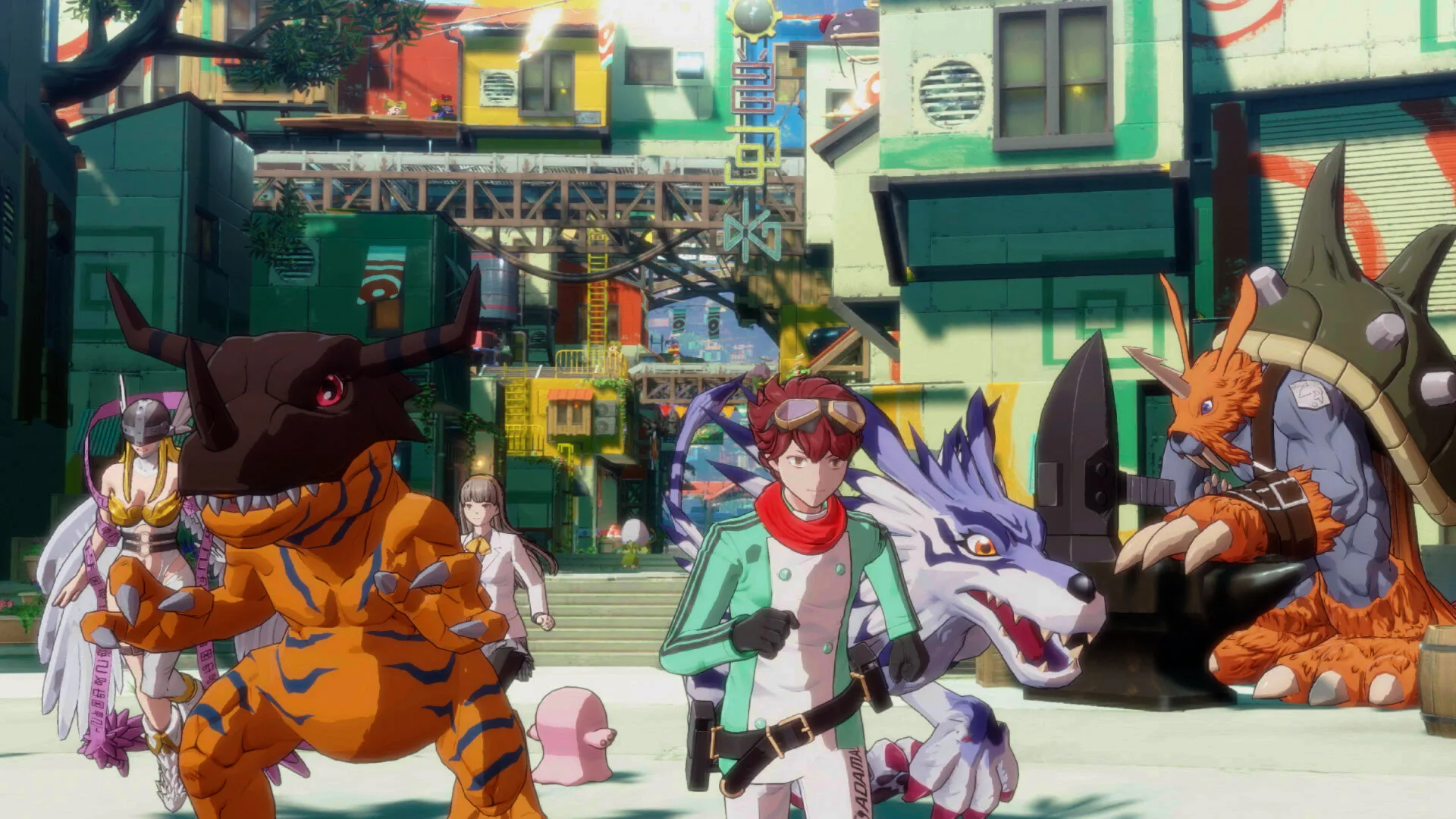
Visually, Time Stranger represents a generational leap from its PlayStation Vita predecessors. New Digimon models feature enhanced textures, detailed facial features, and elaborate animations that make the roster’s 450+ creatures feel distinct. Discovering favorites from the anime rendered with current-generation fidelity satisfies longtime fans, while newcomers benefit from clear visual communication of each species’ personality and capabilities.
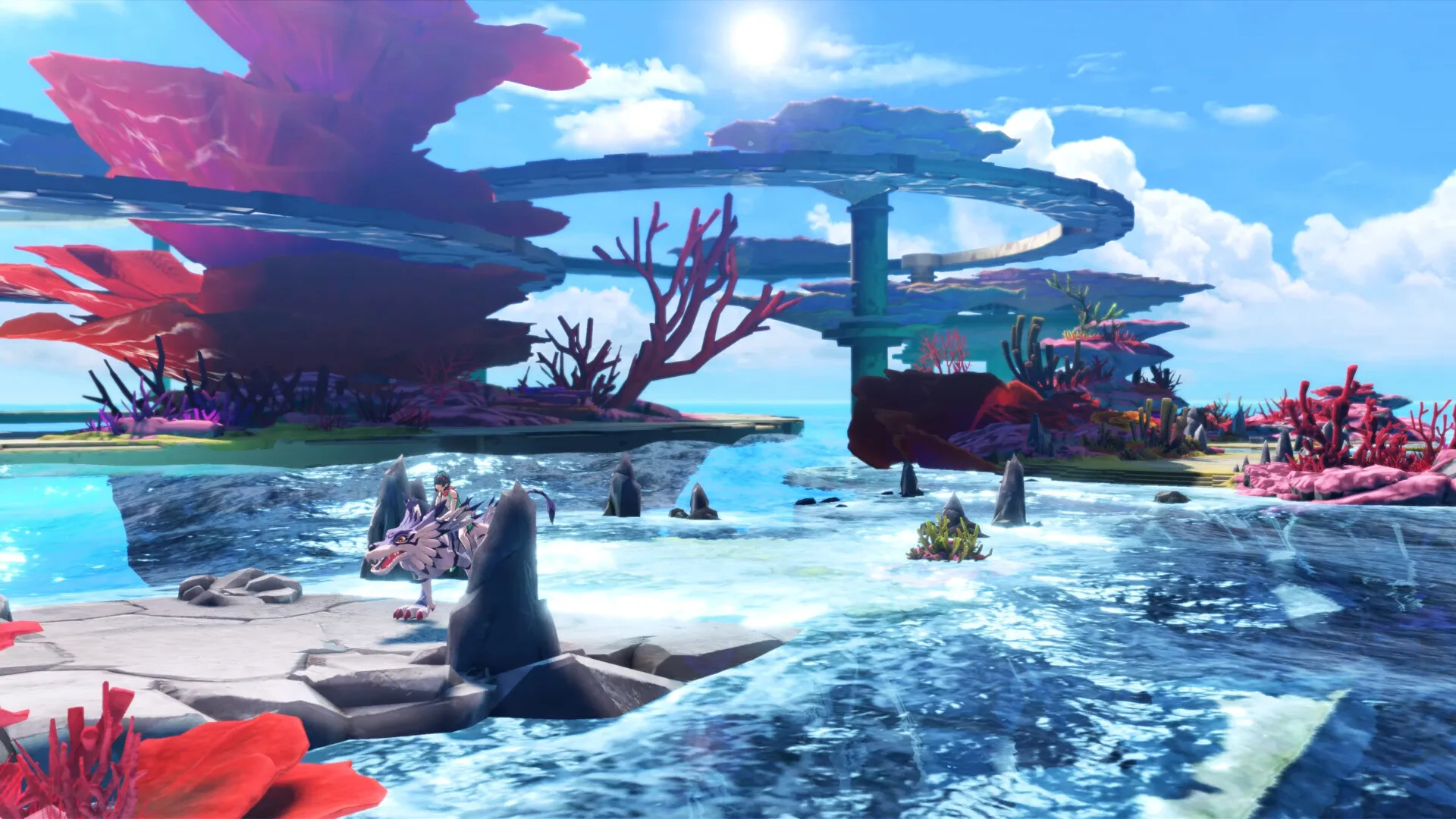
Environmental design varies dramatically in quality. The Abyss’s coastal aesthetic and Gear Savanna’s rustic nature create memorable spaces that justify exploration. These creative digital realms demonstrate what the series can achieve when freed from budget constraints. However, generic hallways and repetitive corridor design persist in other areas, revealing incomplete escapes from past limitations. The contrast becomes jarring: one moment you’re marveling at impossible geometry in imaginative spaces, the next you’re trudging through bland dungeon layouts that could belong to any budget JRPG.
Cutscene scale impresses consistently. The opening sequence crowds people watching a Digimon incident unfold in real-time, establishing stakes through visual spectacle. Set pieces like hanging onto flying Digimon or fleeing from gigantic threats leverage production values effectively, creating memorable moments that elevate standard plot beats.
Composer Masafumi Takada returns but takes a different approach than his Danganronpa-influenced Cyber Sleuth work. The soundtrack emphasizes wonder and scale over chaos and weirdness, supporting the slower, more grounded tone. Most tracks range from decent to excellent, with one particularly grating piece standing out as an unfortunate exception. The musical shift reflects Time Stranger’s identity: less eccentric than its predecessor, more ambitious in scope.
Nostalgic touches reward franchise familiarity without alienating newcomers. Kuwagamon as the first boss references the anime’s initial episode, while Season 2 partner Digimon appear together in hub areas. The ride mechanic, allowing players to mount various Digimon for traversal, seems minor but enhances the feeling of genuine partnership. These details accumulate into an experience clearly built by people who understand what makes Digimon resonate beyond simple monster battles.
Side Content: Necessary Engagement Without Compelling Execution
Side missions follow predictable fetch quest structures, offering glimpses into Digimon daily life without crafting memorable narratives. Their primary value lies in Anomaly point rewards, which feed Agent Rank progression and unlock higher evolution tiers. This makes them functionally mandatory for players pursuing Mega-level Digimon, creating engagement through necessity rather than intrinsic interest. Quality improves slightly in the campaign’s latter half, though standout examples remain rare.

The game’s aggressive notification system removes discovery from side content. Players receive alerts whenever missions become available, and moving between screens triggers Digivice reminders. This handholding approach prevents anyone from missing content but strips away the satisfaction of finding optional activities organically. For a game already struggling with pacing, the constant interruptions to highlight mediocre side missions exacerbate structural problems.
Outer Dungeons provide hidden challenge areas for testing optimized endgame teams. These encounters reward in-game currency and offer the game’s toughest battles, satisfying for players who enjoy party optimization. They represent Time Stranger’s understanding of its own systems: veterans who ignored side missions for story completion can still find meaningful difficulty through optional content.
Jogmon, the card game minigame using real Digimon Card Game artwork, exemplifies style over substance. Matches look stylish but play tediously, with minimal rules creating shallow gameplay. Victory claims cards from opponent decks, yet no tangible rewards like items or battle benefits justify the time investment. Collecting every card becomes a completionist chore rather than an engaging diversion, functioning purely as distraction without meaningful connection to core systems.
The bond system, where feeding Digimon in the Digifarm increases their likelihood of executing follow-up attacks, occasionally determines battle outcomes. Higher bonds trigger support actions at crucial moments, creating satisfying synergy between management sim elements and combat. This system works because it’s straightforward and impactful without demanding excessive attention.
Difficulty skews easy throughout, accessible for RPG newcomers but potentially monotonous for veterans. Maintaining type advantages and regular Digivolution carries players through most content comfortably. Few bosses demand serious preparation, leaving the game’s complex evolution and skill customization systems underutilized.
This design choice makes sense for a franchise targeting younger audiences, yet it prevents Time Stranger from fully realizing its mechanical depth. The option to complete the game using only naturally obtained resources, without exploring optimization possibilities, highlights this accessibility-versus-depth tension.
Battle animations default to sluggish pacing despite speed options partially addressing this issue. Even at accelerated rates, the cumulative time spent in combat during a 30-50 hour campaign creates fatigue. The game seems designed for shorter play sessions, tackling single dungeons per sitting rather than extended marathons. This pacing consideration works against players accustomed to longer RPG binges.
Monetization Concerns and Technical Performance
Standard pricing sits at $69.99, with Deluxe ($99.99) and Ultimate ($119.99) editions including Season Pass coverage for post-launch content. The pricing structure itself doesn’t offend, but implementation choices create uncomfortable moments. Day-one DLC locks quick side missions behind paywalls, while the In-Between Theatre features three microtransaction-fueled mini-dungeons offering accelerated progression. An NPC directly prompts visiting the digital storefront, creating what feels like a free-to-play waiting room aesthetic in a full-priced game.
These decisions don’t fundamentally break the core experience. The game provides sufficient progression without paid shortcuts, and locked content doesn’t gate story completion. However, the intrusive implementation leaves a bad taste, particularly when combined with dungeon repetition and weak side content. Players already frustrated by pacing issues encounter reminders that faster progression exists behind additional paywalls.
Performance remains stable across modern platforms, representing significant improvement over previous entries’ budget limitations. The 30-50 hour main campaign length fluctuates dramatically based on speed setting usage, with players running battles at 5x speed completing content far faster than those experiencing standard animation timing. This variance makes estimating playtime difficult, though the flexibility benefits different player preferences.
Level design variability extends beyond environmental aesthetics into structural choices. Creative, diverse zones impress when they appear, showcasing what the development team can achieve given resources and time. However, dungeon recycling stemming from time travel narrative demands mars the second half. Players revisit locations with minimal changes beyond stronger enemy encounters, creating pacing problems the story cannot justify. The mix of inspired design and repetitive corridors mirrors the game’s broader identity: ambitious vision constrained by execution limitations.
Final Thoughts: Potential Realized, Flaws Persistent
Time Stranger succeeds as the best Digimon RPG to date while remaining frustratingly imperfect. The streamlined evolution and collection systems finally realize the franchise’s mechanical potential, removing friction that plagued previous entries without sacrificing depth. Quality-of-life features like speed settings and unlimited skill learning acknowledge player time, while the Agent Rank progression gate smartly encourages side content engagement through meaningful rewards rather than arbitrary restrictions.
Boss battles provide genuine challenge within an otherwise easy experience, and Digimon character personalities carry narrative weight that forgettable human cast members cannot. Visual presentation impresses in scope and detail, elevating the series beyond budget constraints that defined earlier entries. Nostalgic touches reward longtime fans without alienating newcomers, and the grinding loop remains satisfying across dozens of hours.
Yet dungeon repetition damages pacing severely enough to make the second half feel like a chore. Low difficulty leaves complex systems underutilized, while weak side content fails to justify aggressive notification prompting. The silent protagonist reduces emotional engagement in key moments, DLC implementation feels predatory despite not breaking core progression, and some environmental design remains generic despite visual upgrades elsewhere.
The decade-long wait between major entries feels justified for dedicated Digimon fans who can overlook these flaws. Turn-based RPG enthusiasts seeking deep monster collection mechanics will find satisfaction despite pacing frustrations. Newcomers should approach with awareness that the game improves significantly after rough opening hours and repetitive second half dungeons.
Time Stranger represents meaningful evolution for the series, establishing a foundation that suggests promising futures if future entries can address persistent issues. The 20-50 hour experience demands patience, but rewards come for those willing to endure structural limitations for mechanical satisfaction and genuine franchise love.
Digimon Story: Time Stranger is a monster-taming role-playing game (RPG) and the latest entry in the Digimon Story subseries. It was released worldwide on October 3, 2025, and is playable on PlayStation 5, Xbox Series X|S, and Windows (PC via Steam). The story centers on an agent of a secret organization in Tokyo who is sent eight years into the past after a catastrophic, city-leveling explosion. Players embark on an epic adventure that spans across time, parallel human worlds, and the Digital World of Iliad, tasked with uncovering the mystery of the world’s collapse. The gameplay features strategic turn-based battles and classic monster-taming elements, allowing players to collect, raise, and evolve over 450 unique Digimon to fight and alter fate.
Full Credits
Director (Creative/Game Director): Yusuke Tomono
Writers (Lead Writer/Narrative Designer): None listed
Producers/Studio Leadership (Producers, Executive Producers, and Key Studio Heads): Ryosuke Hara, Kazumasa Habu
Lead Voice Cast: Hiro Shimono, Marina Inoue, Kana Ichinose, Shuka Saito, Aya Endo, Kenji Nomura, Tatsumaru Tachibana, Yui Ishikawa, Eiji Hanawa, Mutsumi Tamura
Art Director/Lead Artist: Suzuhito Yasuda
Key Engineering/Technical Leads: None listed
Composer/Sound Director: Masafumi Takada
Developer, Publisher: Media.Vision Inc., Bandai Namco Entertainment Inc.
Release Date: October 3, 2025
The Review
Digimon Story: Time Stranger
Digimon Story: Time Stranger delivers the franchise's strongest RPG experience through streamlined collection mechanics and satisfying evolution systems, yet stumbles through repetitive dungeon design and low difficulty that underutilizes its depth. The ten-year wait pays off for dedicated fans willing to forgive pacing issues, though newcomers should expect rough opening hours and a tedious second half. It's a flawed achievement that finally realizes the series' potential while exposing limitations that hold it back from greatness.
PROS
- Streamlined evolution and collection systems remove previous entries' friction
- Over 450 Digimon with satisfying scanning recruitment mechanics
- Layered weakness systems create engaging combat puzzles
- Quality-of-life features (speed settings, auto-battle, unlimited skill learning)
- Strong Digimon character personalities and improved visuals
CONS
- Severe dungeon repetition kills pacing in second half
- Low difficulty leaves complex systems underutilized
- Forgettable human cast and silent protagonist reduce emotional impact
- Weak, fetch-quest-heavy side content