
























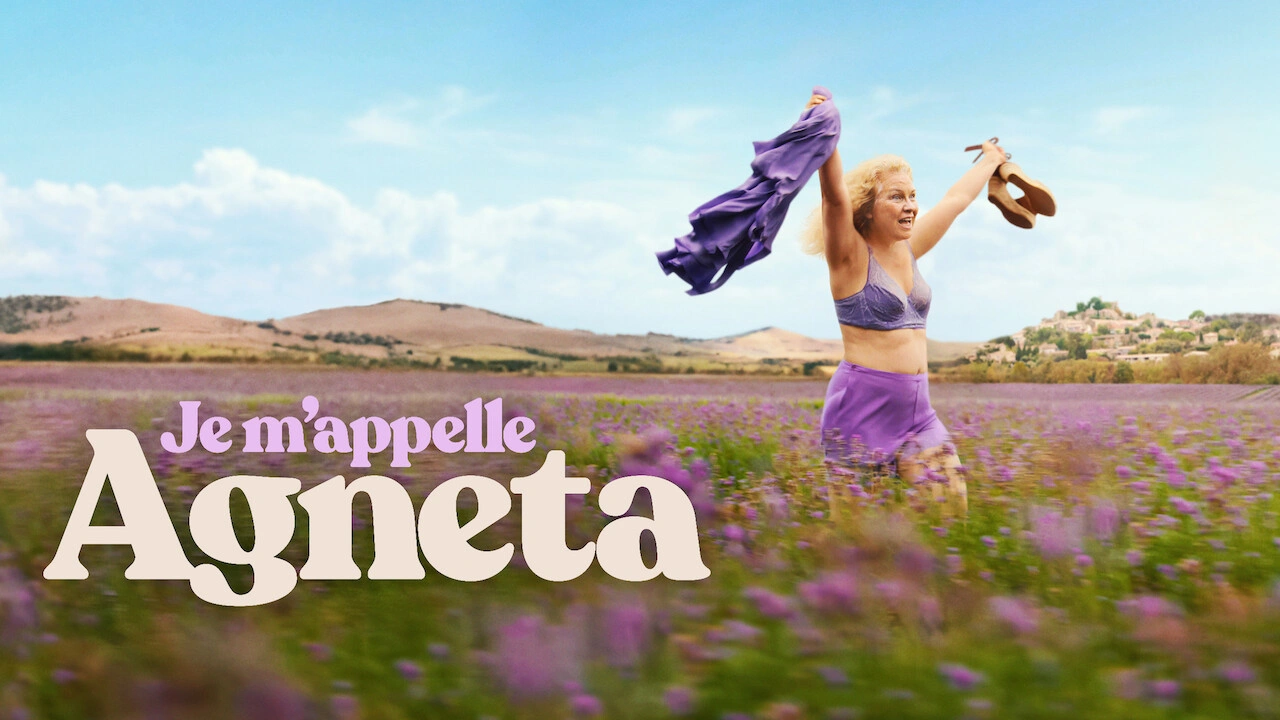

Agneta lives at the edge of her own life. At forty-nine, she has become a human placeholder inside a household shaped by Swedish domestic sterility. Her marriage to Magnus has the dry texture of a room where nobody has opened a window in years. He tracks health metrics with devotional zeal, while she runs furtive missions involving brie and red wine. She hides these fatty contraband objects in her bedroom like a private detective stashing evidence before the police arrive. A small rebellion, yes. Also a rather delicious one.
This secrecy reveals a woman pressed into silence by a spouse who prefers biking companions to his wife. Her home life carries the grammar of a low-stakes psychological thriller, where routine performs the slow violence and the camera might as well be watching from a fixed corner.
The professional trap closes when her twenty-five years at the Transport Administration end. Faced with a blank future, she obeys a wine-soaked impulse and applies for an au pair position in Provence. That sudden turn carries her to a crumbling monastery and a major reversal. The child she expected to guide is Einar, an elderly man living inside a carefully arranged disorder. The switch jolts her out of invisibility. She enters a place where the rules that governed her former life lose their authority.
Kinetic Portraits of Emergent Identity
Eva Melander gives Agneta a beautifully controlled study in inner erosion and late regrowth. At first, the performance is all compression. Her body seems edited down. She moves with the guarded precision of a woman in a classic thriller, someone braced for interruption, dismissal, or the minor humiliation of being unseen. Melander’s face holds the ethical fatigue of a person who has spent years asking permission without saying the words aloud.
Once the story shifts to the French countryside, her physical language loosens. Her shoulders lower. Her gaze gains weight. The change arrives through small adjustments, which makes it feel earned. A lesser performance would announce liberation with trumpets. Melander lets it arrive in posture, tempo, breath.
Claes Månsson gives Einar the ideal counter-pressure. He occupies a charged space between theatrical madness and buried grief. Månsson sidesteps the easy caricature of the manic elder. He reveals a man marked by the sacrifices demanded by authentic living. His estrangement from his son gives the eccentricity a grave undertow. The humor has splinters in it.
The rapport between Melander and Månsson plays like a pact between two discarded souls. Each sees in the other a history of being placed aside by a world obsessed with usefulness. Their connection grows from the wreckage of former social roles. Their scenes have the feel of a slow-motion collision between two separate kinds of loneliness. Melander traces Agneta’s movement from existing for others to existing for herself. By the end, she has found a rhythm that belongs to her alone.
Chromatic Shifts and the Architecture of Pleasure
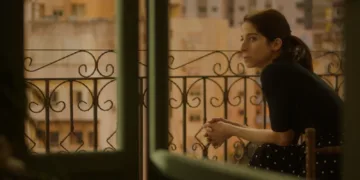
The film’s visual design builds Agneta’s inner state through stark chromatic division. The Swedish passages use a clinical palette. The lighting is flat, scrubbed, nearly airless. Interiors resemble tasteful holding cells, expensive surfaces arranged around spiritual vacancy. Shot composition reinforces this feeling of containment, placing Agneta inside domestic frames that seem to shrink around her. The effect is quiet, icy, and faintly accusatory.
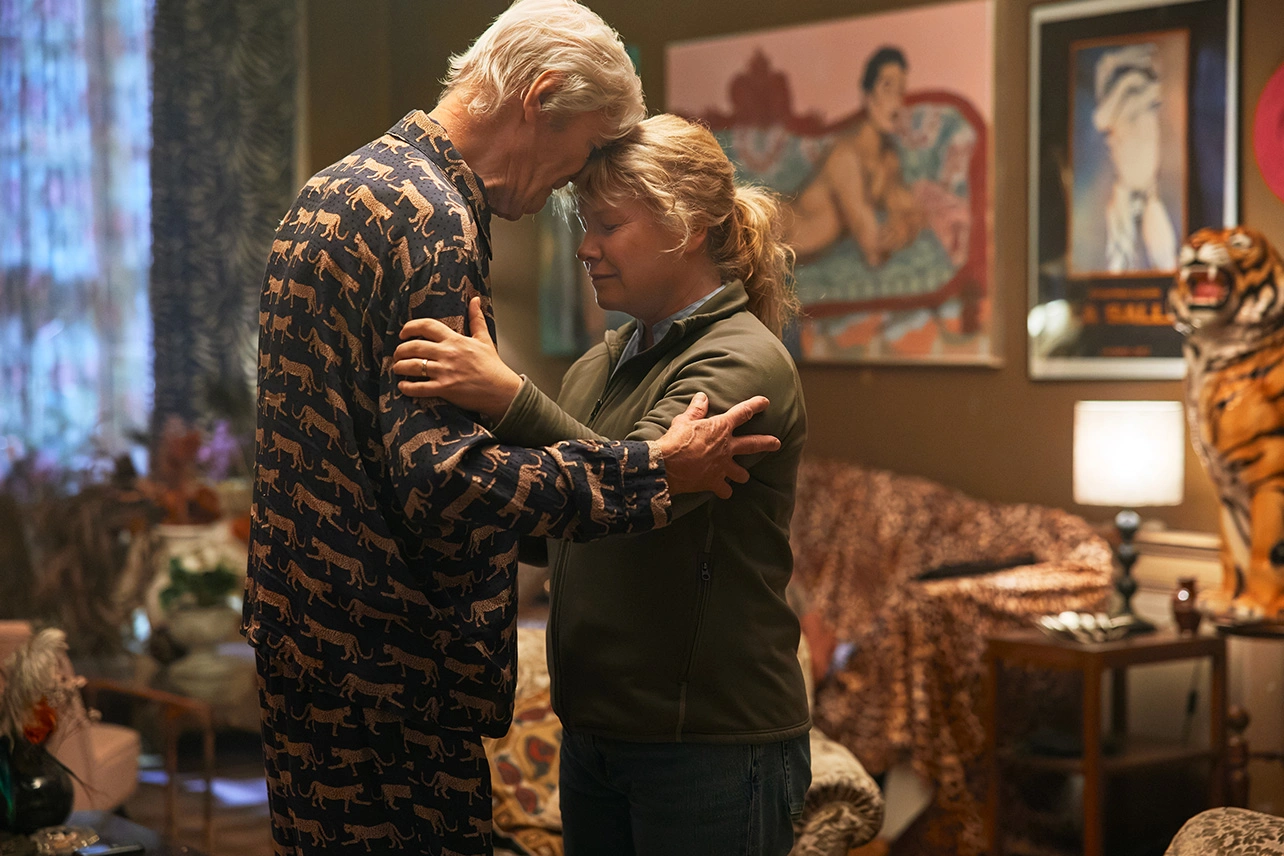
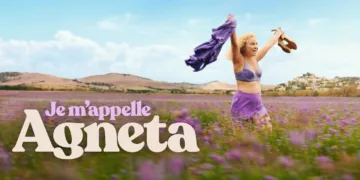
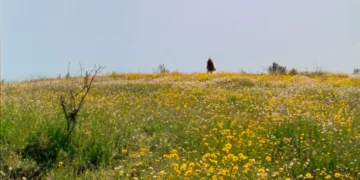
The move to Provence changes the film’s visual temperature. Color floods the image. The camera welcomes golden hour and studies damp stone, markets, wine, cheese, and weathered walls with tactile attention. The film’s pleasure in surface has a moral function. It shows Agneta learning to trust sensation again.
The French light becomes a physical expression of her thawing ego. The monastery extends Einar’s personality into architecture. It is messy, suggestive, intimate, and alive with unruly detail. Its disorder challenges the sterile order she left behind.
The cinematography favors sensory contact: the viscous softness of cheese, the weight of wine as it hits the glass, the haptic pull of place. Chiaroscuro gives way to sunlit excess, a modern deviation from noir’s shadow logic, yet the old thriller structure lingers beneath the warmth. The mystery here concerns identity.
Characters such as Fabien and Bonibelle give the setting a grounded social texture. They form a community that prizes presence over performance. The environment becomes the agent of Agneta’s sensory awakening. She begins to perceive through taste and touch, through light on skin, through appetite released from guilt. Obligation loses its monopoly on perception.
The Existential Sovereignty of Being Too Much
The narrative studies the moral necessity of self-actualization. It refuses the idea that identity becomes fixed and unusable at middle age. Agneta’s arc becomes a manifesto for claiming one’s own history after years of quiet surrender. The film treats pleasure with a bracing lack of judgment. Butter, wine, and bodily appreciation become acts of defiance. Modest weapons. Highly effective ones.
The script is striking in its absence of traditional villains. The conflict lives inside Agneta. She fights the entropy of a life conducted by proxy, the dull ethical fog of letting others define the limits of desire. The film argues for the necessity of being “too much.” Loud laughter, appetite, and unapologetic wanting emerge as sane responses to a world that rewards silence.
The ending avoids easy geographical fantasy. The change is internal. Agneta finds herself because she stops apologizing for occupying space. France supplies light, texture, and permission, yet the decisive act belongs to her. Her contentment has the force of a quiet victory. A long self-imposed exile ends. She finally becomes the protagonist of her own story.
Je m’appelle Agneta reached audiences on the Netflix platform yesterday, April 29, 2026. This production translates the emotional narrative of Emma Hamberg’s literature into a visual experience. It presents a transition from Northern Europe to the sunny French countryside. You can watch this film now on Netflix.
Where to Watch Je m’appelle Agneta (2026) Online


Full Credits
Title: Je m’appelle Agneta
Distributor: Netflix, SF Studios
Release date: April 15, 2026 (Theatrical), April 29, 2026 (Netflix)
Rating: TV-14
Running time: 1 hour 53 minutes
Director: Johanna Runevad
Writers: Johanna Runevad, Isabel Nylund, Emma Hamberg
Producers and Executive Producers: Anna Sofia Mörck, Mia Uddgren
Cast: Eva Melander, Claes Månsson, Jérémie Covillault, Anne-Marie Ponsot, Björn Kjellman, Richard Forsgren, David Fukamachi Regnfors, Richard Ulfsäter
Director of Photography (Cinematographer): Andréas Lennartsson
Editors: Andreas Jonsson Hay
Composer: Mats Lundgren
The Review
Je m'appelle Agneta
This is a graceful study of late-stage self-discovery. It anchors its midlife awakening in tactile, sensory reality. The narrative avoids the glossy trap of a fairy tale by providing a grounded foundation through Eva Melander. It rejects external villains to focus on the quieter terror of being forgotten. The shift from Swedish sterility to Provencal warmth feels earned and authentic. It is a quiet victory for the invisible.
PROS
- Eva Melander provides a nuanced, physical performance that tracks her internal thawing.
- The sharp visual contrast between Sweden and France effectively mirrors the protagonist's psychic shift.
- The script treats the pursuit of pleasure and the consumption of food without any moralizing guilt.
CONS
- The narrative relies on established tropes of the "finding yourself in an exotic locale" subgenre.
- Supporting family members remain underdeveloped and function mostly as flat caricatures of neglect.