
























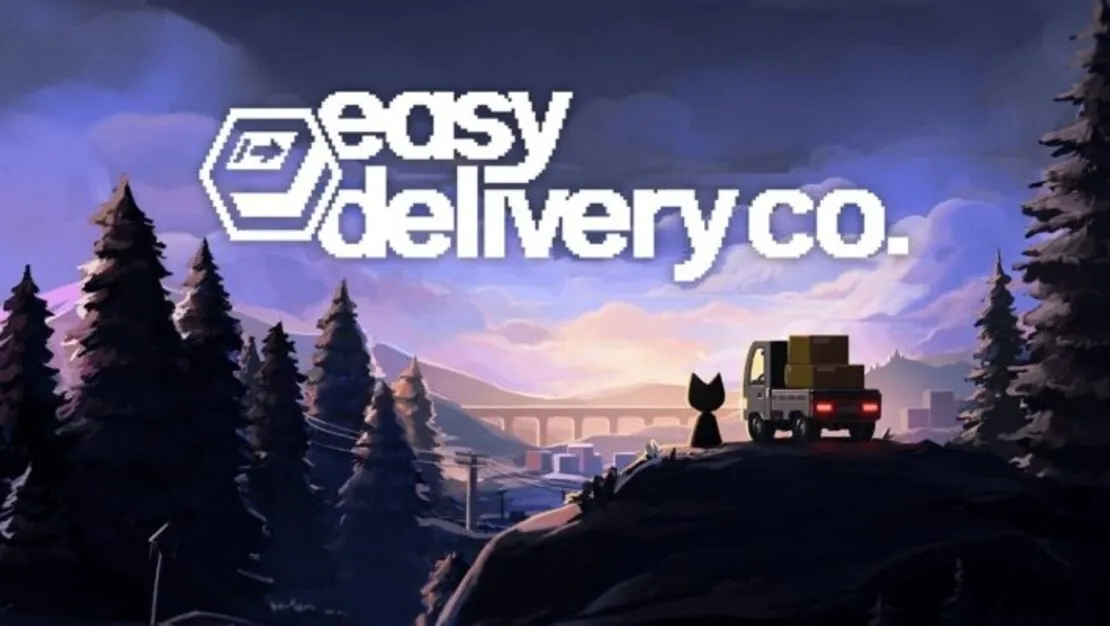

Easy Delivery Co. presents itself with disarming honesty: a “calming driving game with definitely no secrets.” The irony hits immediately. This is a game that knows exactly what it is and precisely what it pretends to be. You slip into the role of a cat delivery driver, maneuvering a tiny Kei truck through snow-covered mountain villages while working for the cheerfully dystopian Easy Co. corporation.
The retro computer interface greets you with executable files (play.exe, settings.exe) displayed on a curved CRT monitor, immediately establishing the game’s PlayStation-era aesthetic commitment. This visual language serves a dual purpose: it evokes nostalgia while creating distance from modern convenience, mirroring how the corporate world often masks harsh realities behind familiar, comforting interfaces.
Set against brutal winter conditions in isolated mountain communities populated entirely by cats, Easy Delivery Co. operates within a three to five hour timeframe that feels both compressed and expansive. The game’s brevity becomes a strength, allowing its themes to breathe without overstaying their welcome. Here lies a world where atmospheric storytelling and mechanical simplicity create space for something far more complex than its surface suggests.
The Rhythm of Labor
The delivery cycle forms Easy Delivery Co.’s mechanical backbone: select a job, collect a package, transport it safely, and receive payment. This loop gains depth through what the game deliberately withholds. There’s no GPS system, no glowing waypoints, no hand-holding navigation assistance. Players must genuinely learn the town’s layout through careful observation of road signs and environmental landmarks.
This design choice transforms routine deliveries into acts of spatial memory and navigation skill. The satisfaction of recognizing a familiar intersection or successfully navigating to a distant location without consulting the map creates a genuine sense of place-based learning. The game rewards patience and attention with increasing navigational confidence.
Package physics add tactile personality to each delivery. Items rattle authentically in the truck bed, flower pots shift during sharp turns, and beer bottles clink against each other over bumpy terrain. Drive too aggressively, and your cargo tumbles onto the road, forcing you to step into the freezing weather to retrieve it. The manual tailgate operation (open before loading, close before driving) seems trivial until you forget and watch packages scatter across the pavement.
Also Read






Weather survival mechanics create urgency without panic. Your character freezes rapidly when exposed to the elements, with screen edges icing over to communicate the danger. This limitation encourages efficient movement while discouraging leisurely exploration. Energy drink consumption becomes necessary for maintaining work efficiency, creating a dependency loop that mirrors real workplace exploitation.
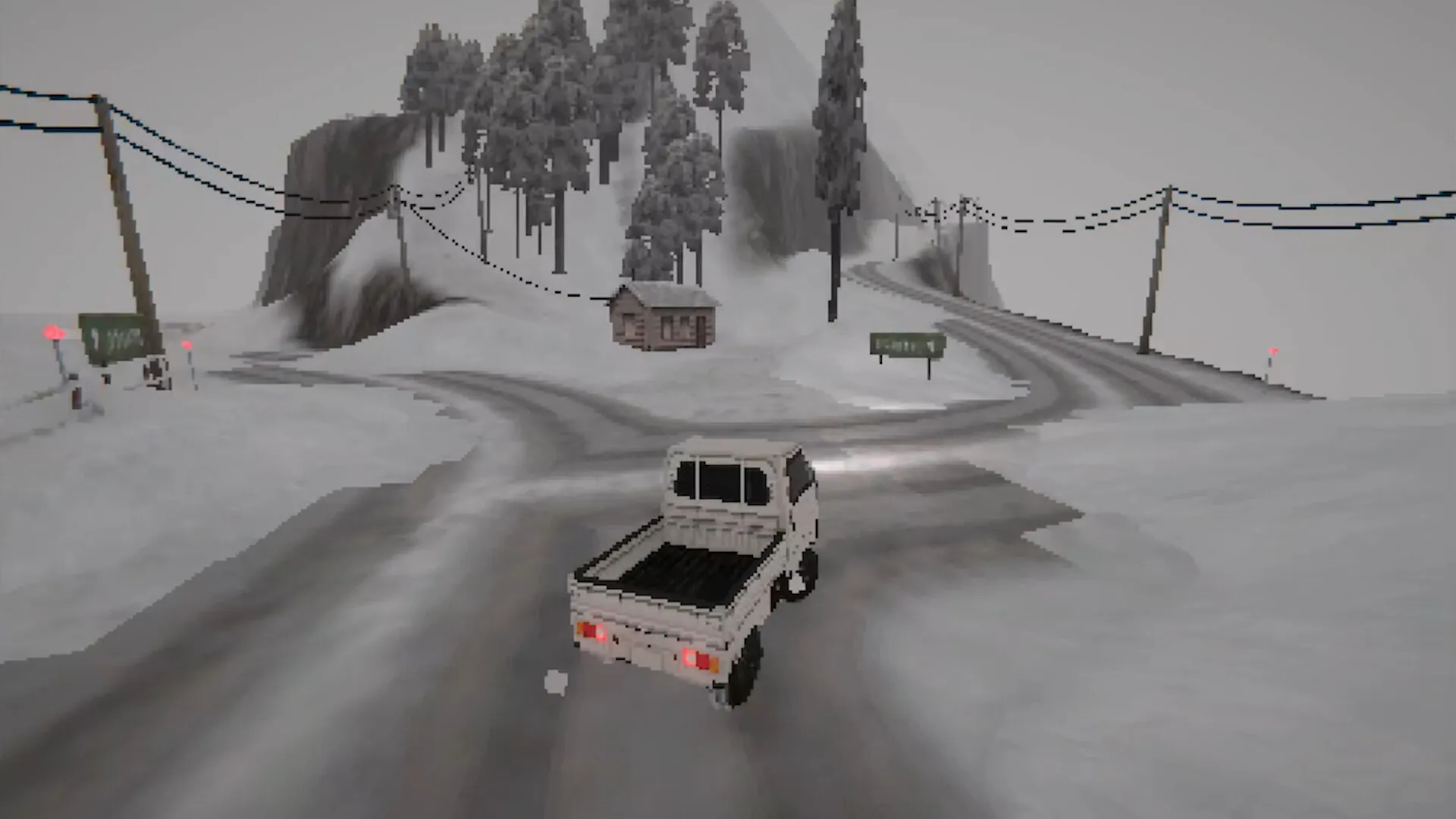
The driving physics balance accessibility with authenticity. Snow and ice affect handling predictably, wooden bridges feel precarious underfoot, and the first-person view includes a functional rearview mirror showing packages bouncing in the truck bed. These details accumulate into a driving experience that feels both gamified and grounded.
Visual Poetry of Oppression
Easy Delivery Co.’s PlayStation-era aesthetic serves its thematic content with remarkable precision. The deliberately low-poly graphics and blocky textures create a world that feels simultaneously nostalgic and alien. This visual approach removes players from contemporary gaming conventions while establishing a specific emotional register: detached, slightly surreal, vaguely unsettling.
The color palette dominates through grays and whites, punctuated by the warm yellows of headlights and building illumination. Snow effects impact visibility naturally, creating driving challenges that feel environmental rather than artificial. When your character steps outside, the screen’s gradual icing communicates physical discomfort through visual metaphor.
Corporate branding saturates the environment with EZ-Energy drink vending machines and Easy Co. signage, creating visual reminders of institutional presence. The contrast between cheerful corporate design language and the harsh mountain environment becomes a form of environmental storytelling. Bright, friendly logos exist alongside survival conditions, highlighting the disconnect between corporate messaging and worker reality.
The sparse world design works in the game’s favor. Rather than feeling empty, the minimal NPC presence and limited interactive elements reinforce the isolation central to the experience. Radio stations provide lo-fi and breakcore soundtracks that complement the visual aesthetic while offering respite from wind howling and engine noise. The audio landscape balances atmospheric immersion with musical relief.
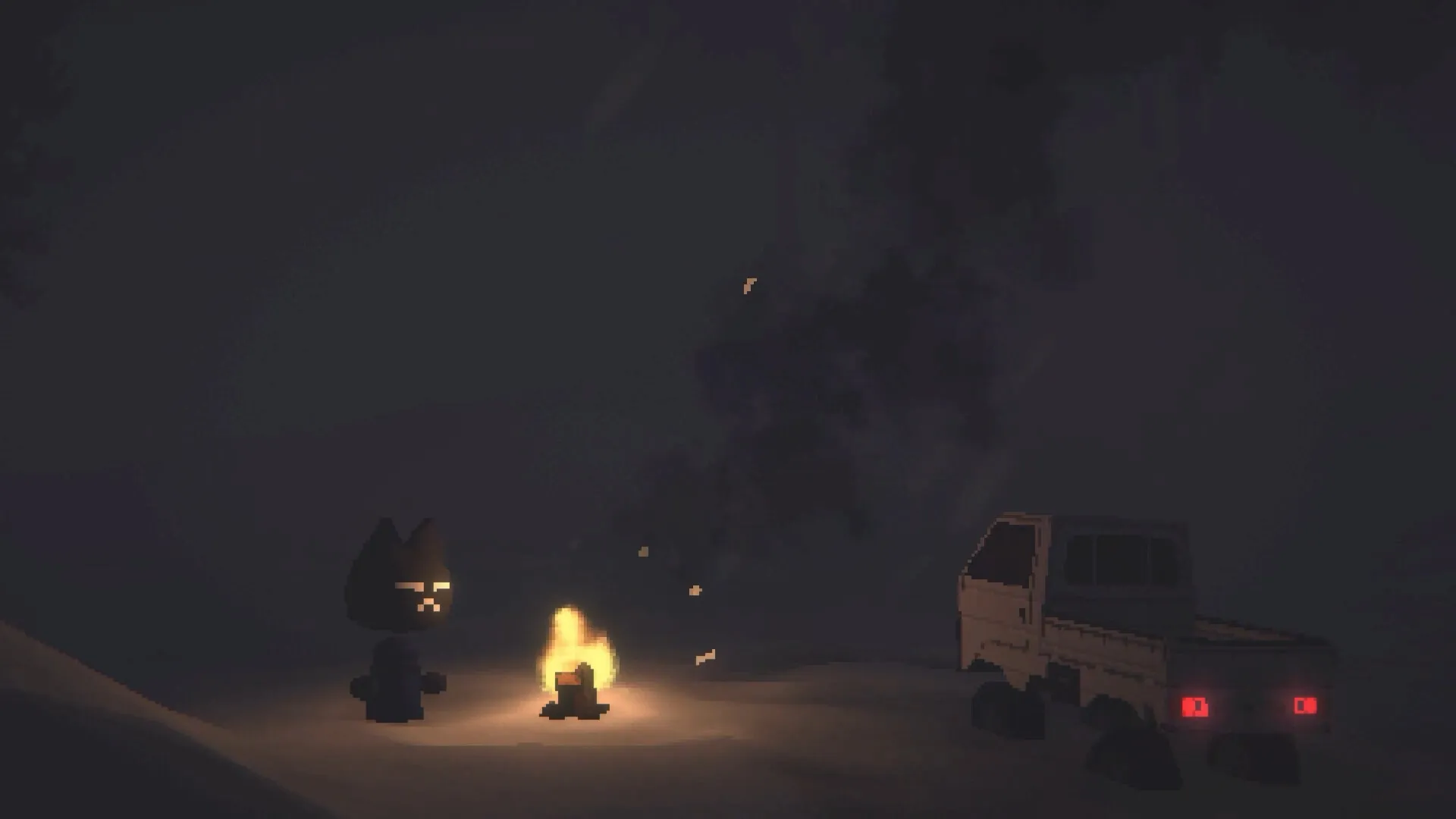
Lighting effects create mood through practical necessity. Headlights carve through snowfall, building lights offer waypoints in the darkness, and the day/night cycle impacts both visibility and atmosphere. These technical elements support the narrative without drawing attention to themselves, allowing players to focus on the driving and delivery tasks while absorbing environmental storytelling.
Commentary Through Mechanics
Easy Delivery Co. embeds its social criticism within its mechanical structure rather than through explicit narrative exposition. The cheerful corporate emails describing brutal weather conditions as “beautiful” create cognitive dissonance between management language and worker experience. Your character earns minimal wages while necessities like fuel and energy drinks carry inflated prices, creating a resource management challenge that mirrors economic inequality.
The energy drink dependency system functions as workplace exploitation metaphor. Easy Co. mandates consumption of company products to maintain efficiency while paying wages insufficient for comfortable survival. This creates a closed economic loop where workers remain perpetually dependent on their employer for basic functionality.
Mystery elements reward exploration without overwhelming the core experience. The dog character MK offers map upgrades in exchange for energy drinks, creating optional narrative threads that enhance understanding without requiring completion. Hidden story content exists for players who seek it, while others can focus purely on delivery efficiency.
The game’s technical stability supports its themes effectively. A minor package spawning bug occasionally prevents job completion, but this feels appropriate within a world where corporate systems fail workers regularly. The glitch becomes part of the experience rather than detracting from it.
The repetitive delivery grind serves thematic purpose while risking player engagement. The monotony reflects real service work experiences, but some may find the pace too deliberate for sustained entertainment. The game’s short length prevents this repetition from becoming overwhelming, allowing the mechanical metaphor to make its point without exhausting player patience.
Easy Delivery Co. succeeds as both atmospheric experience and social commentary. It appeals to players seeking cozy gaming experiences with conceptual depth, those interested in workplace criticism through interactive media, and anyone drawn to retro aesthetic presentations. The game requires tolerance for slower pacing and minimal action sequences, but rewards attention with a cohesive vision of corporate alienation wrapped in deceptively simple mechanics.
The Review
Easy Delivery Co.
Easy Delivery Co. transforms mundane delivery work into meaningful commentary through clever mechanical design and atmospheric presentation. While its repetitive core loop and sparse interactivity may deter action-focused players, the game rewards patient exploration with genuine emotional resonance. The PS1 aesthetic perfectly complements its themes of corporate alienation, creating an experience that lingers long after the final delivery.
PROS
- Atmospheric world building with strong thematic coherence
- Clever integration of social commentary into gameplay mechanics
- Authentic PS1-era aesthetic that serves the narrative
- Satisfying package physics and driving mechanics
- Perfect length that prevents repetition fatigue
CONS
- Limited world interactivity and sparse NPC presence
- Repetitive delivery loop may feel monotonous
- Slow pacing not suitable for all players
- Minimal action or variety in core activities
- Some technical hiccups with package spawning